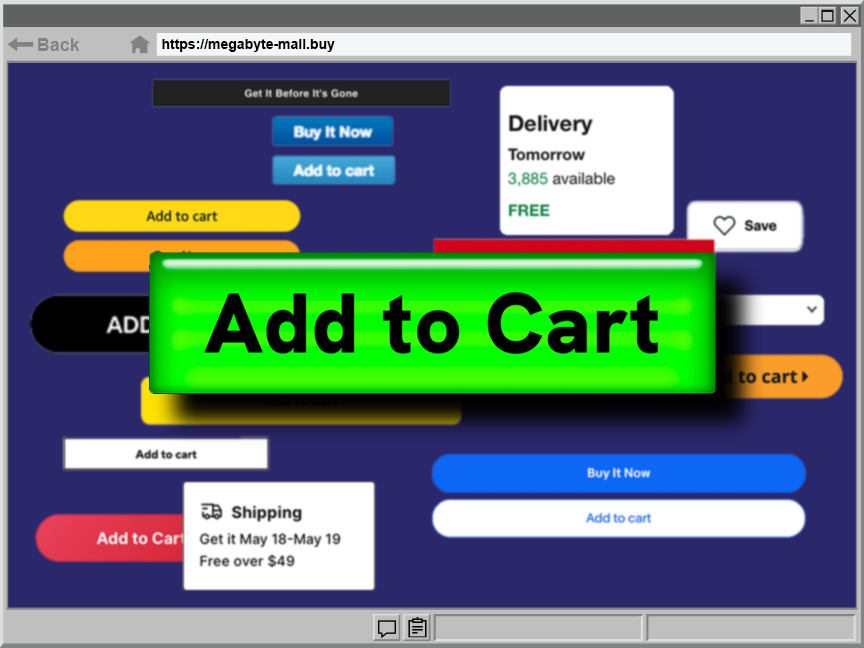
add to cart
Thesis Faculty:
Alexander Kinghow does ecommerce alienate its users from processes of labor, extraction, and logistics that make digital shopping possible? “add to cart” is an interactive PC shopping experience that examines object fetishism, supply chain alienation, and other mechanisms of contemporary capitalism
abstract
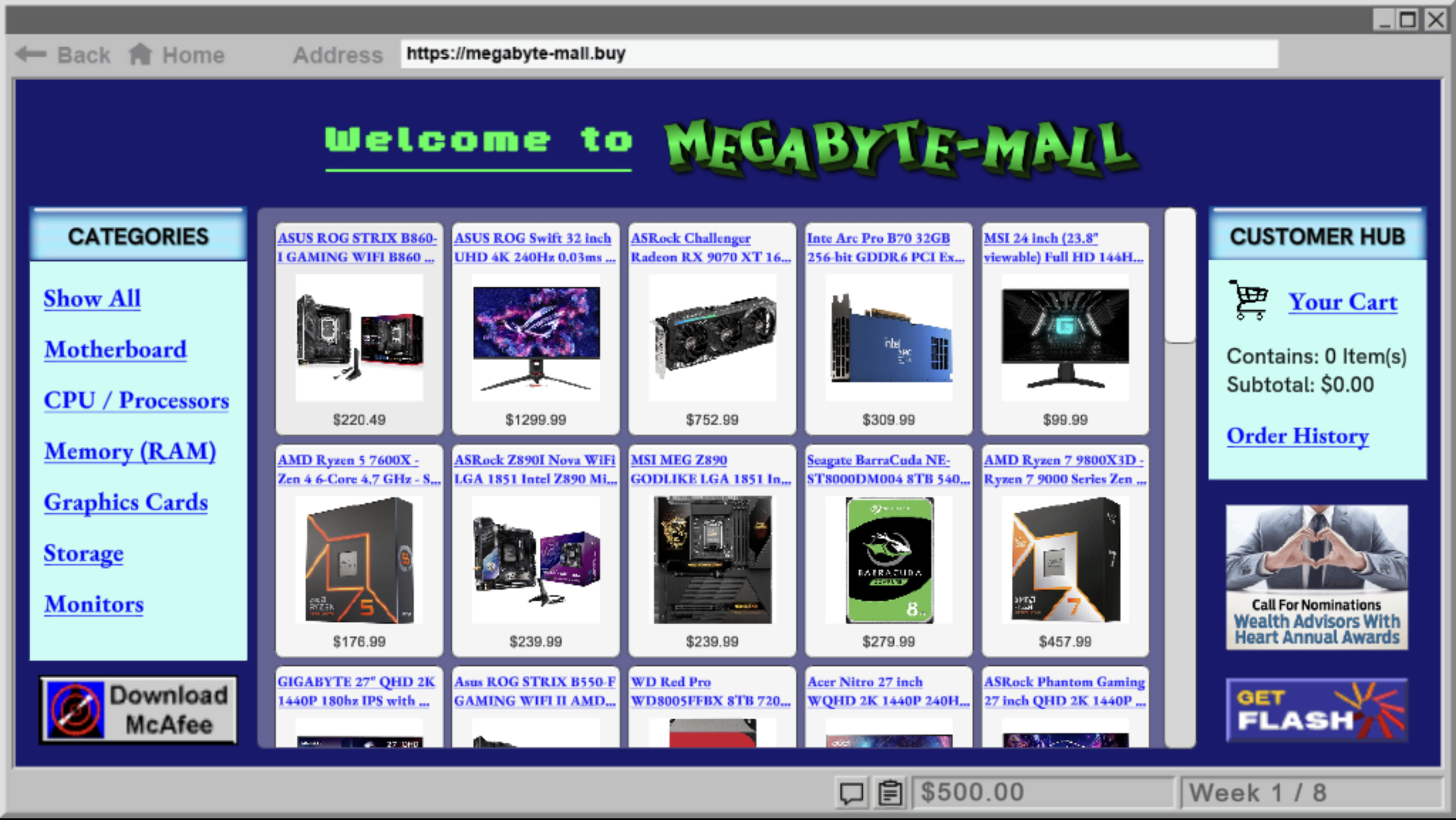
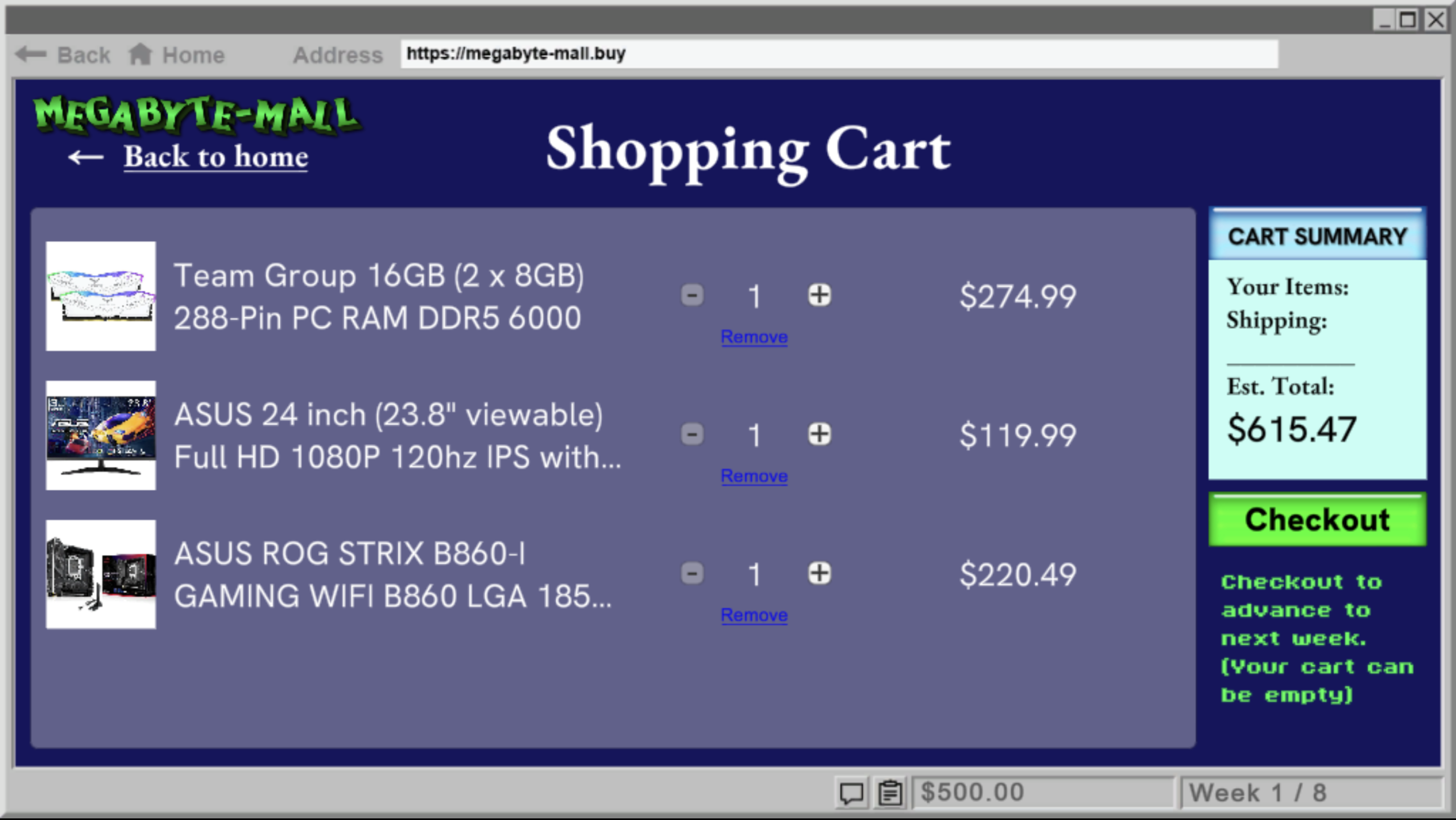
How does ecommerce alienate its users from processes of labor, extraction, and logistics that make digital shopping possible? “add to cart” is an interactive PC shopping experience that examines object fetishism, supply chain alienation, and other mechanisms of contemporary capitalism. This project takes the form of a browser-like game in which players are given a limited number of in-game weeks to purchase the components necessary to assemble a functioning computer. Each week the player earns a fixed income and must navigate product listings, weigh trade-offs between price and quality, and decide to buy now or wait for a sale.
The central issue “add to cart” explores is the structural abstraction built into e-commerce platforms. Online retail in its current form has perfected the art of stripping their commodities of their histories. Two-day shipping, one-click purchase, infinite scroll, and personalized recommendations are all systems that obscure the logistical, extractive, and human systems that make each purchase possible.
glossary
Alienation:
The estrangement of individuals from the products of their labor, the consumption process, and human connections, driven by capitalist production and modern electronic marketplaces. (Marx identified four types: product of labor, the process of labor, fellow humans, and one’s own potential.) In digital consumer contexts, alienation extends into the shopping experience itself: platforms like Amazon or Taobao facilitate transactions without physical contact with goods, without meaningful interaction with sellers, and without any encounter with the conditions under which products were made.
Commodity fetishism:
A concept from Karl Marx’s Capital describing the way commodities appear in capitalist economies as objects with intrinsic value, concealing the social relations and labor that produced them. In the context of Add to Cart, commodity fetishism describes the mechanism by which e-commerce interfaces present products as self-sufficient objects, stripped of their production histories.
E-commerce:
The buying and selling of goods and services over the internet. Add to Cart is primarily concerned with consumer-facing e-commerce platforms of the Amazon/Newegg type, characterized by personalization, abundance, and removal of purchasing friction.
Interface-driven storytelling:
A mode of narrative in which meaning is communicated primarily through the structure, behavior, and aesthetics of an interface rather than through conventional exposition or cutscenes. Games like Hypnospace Outlaw and Orwell build their worlds almost entirely through screens and menus. “add to cart” works in this mode.
PC components:
The hardware parts required to assemble a personal computer: CPU (processor), GPU (graphics card), RAM (memory), storage (SSD or HDD), motherboard, power supply, and case. Add to Cart uses PC components as its primary commodity.
Supply chain:
The full network of extraction, production, transportation, and logistics connecting raw materials to a finished consumer product. For PC components, this spans cobalt and lithium mining, semiconductor fabrication, overseas assembly, and global shipping.