A Better Past Tomorrow
Thesis Faculty:
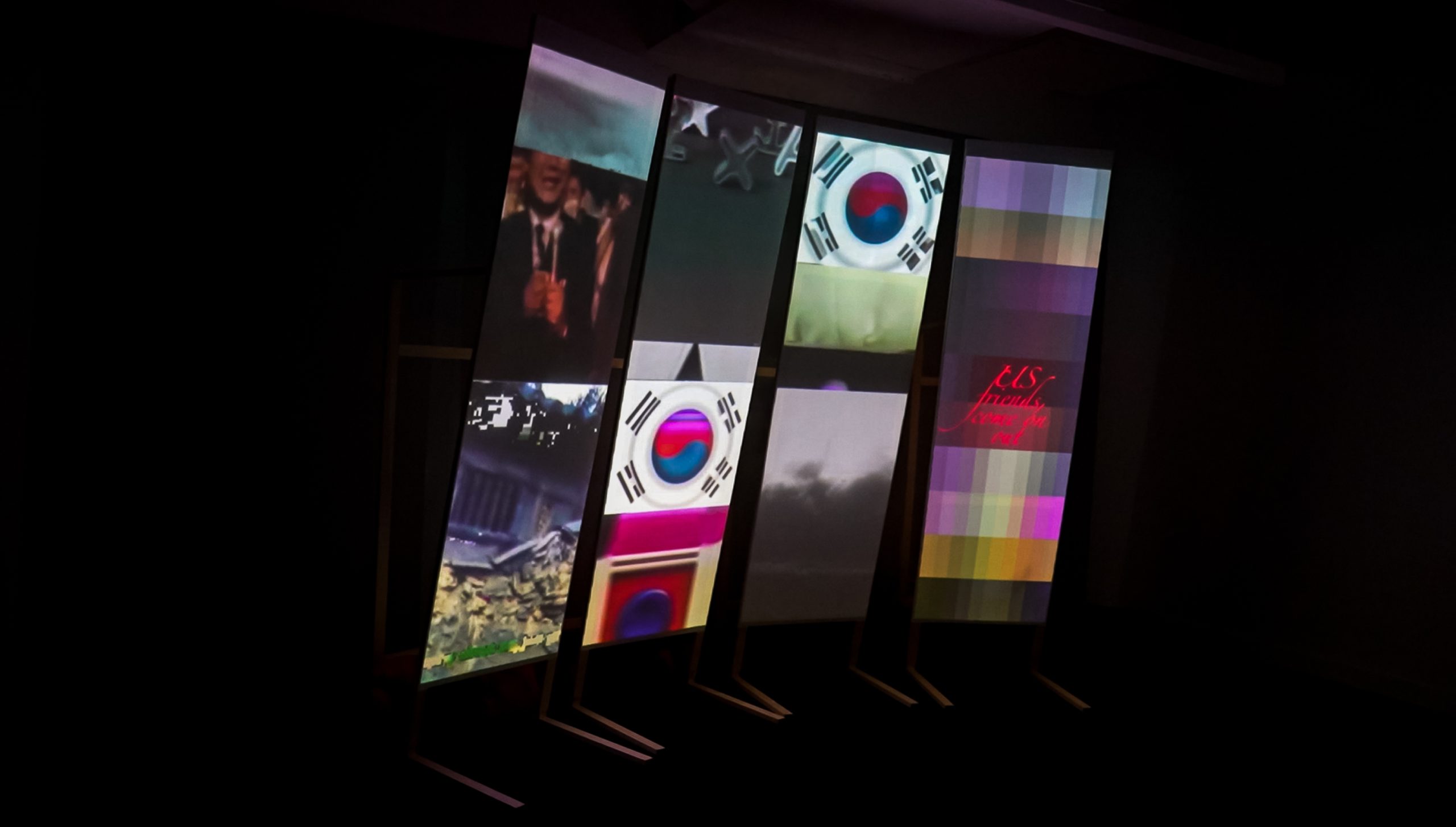
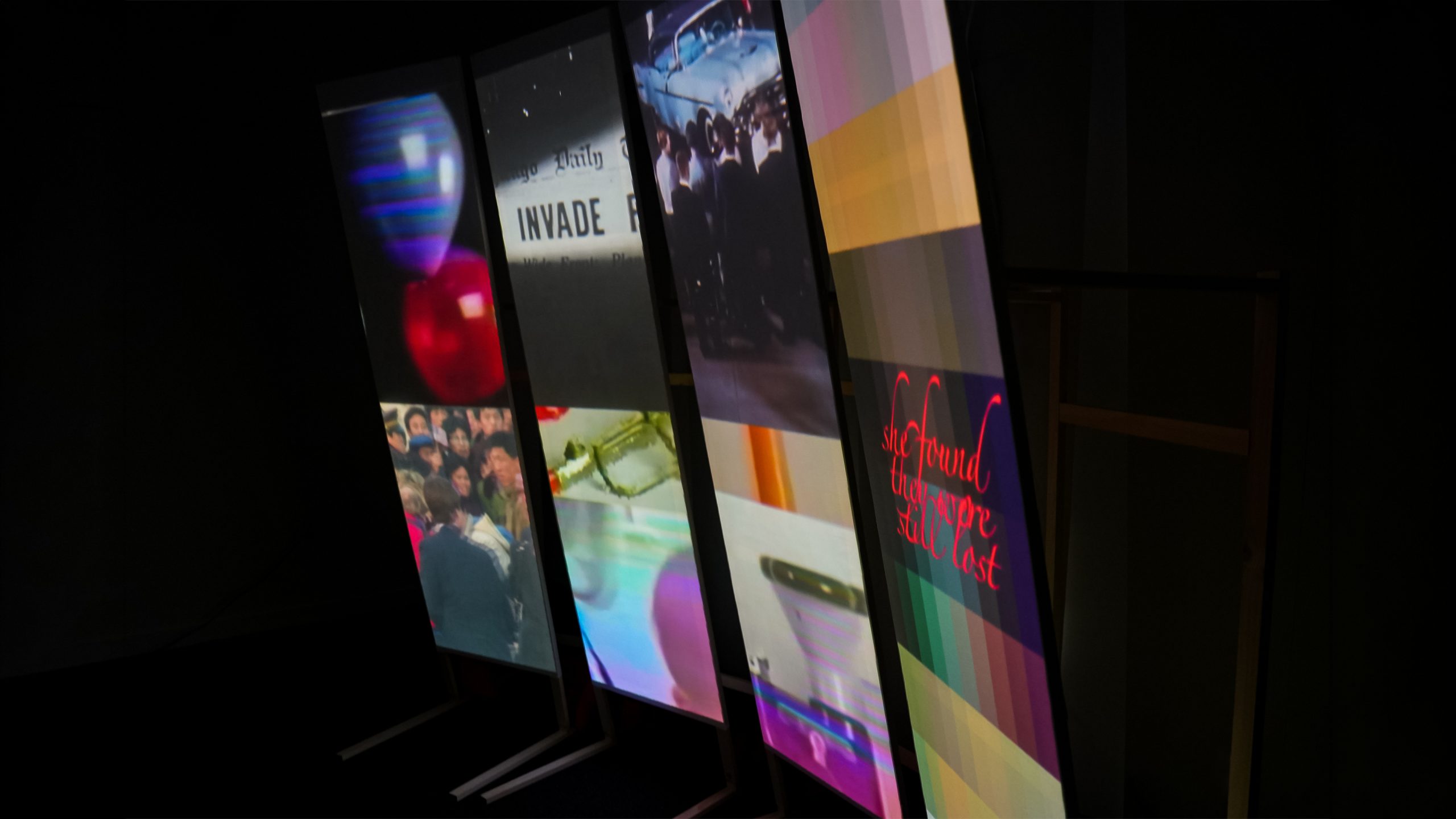
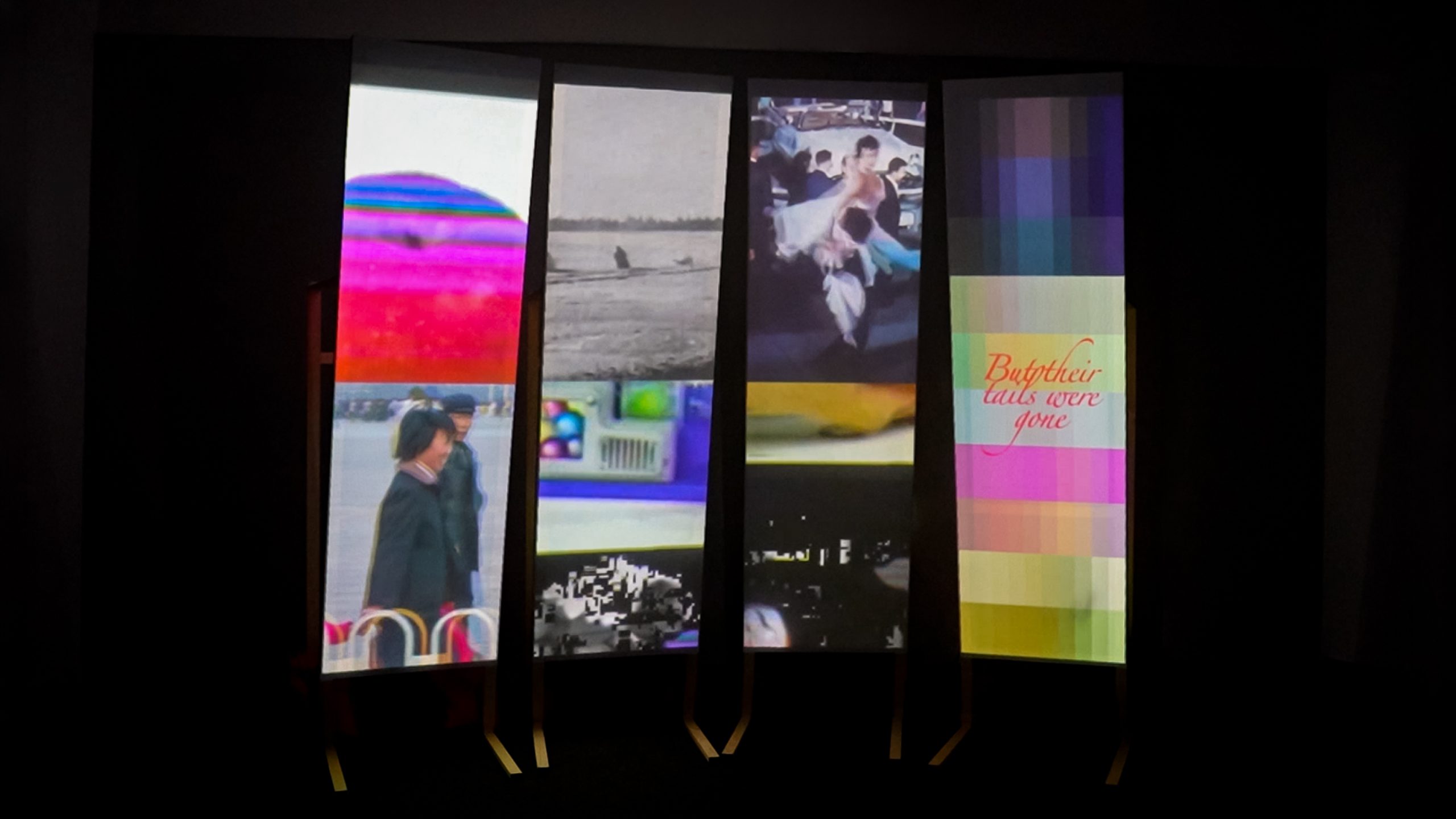
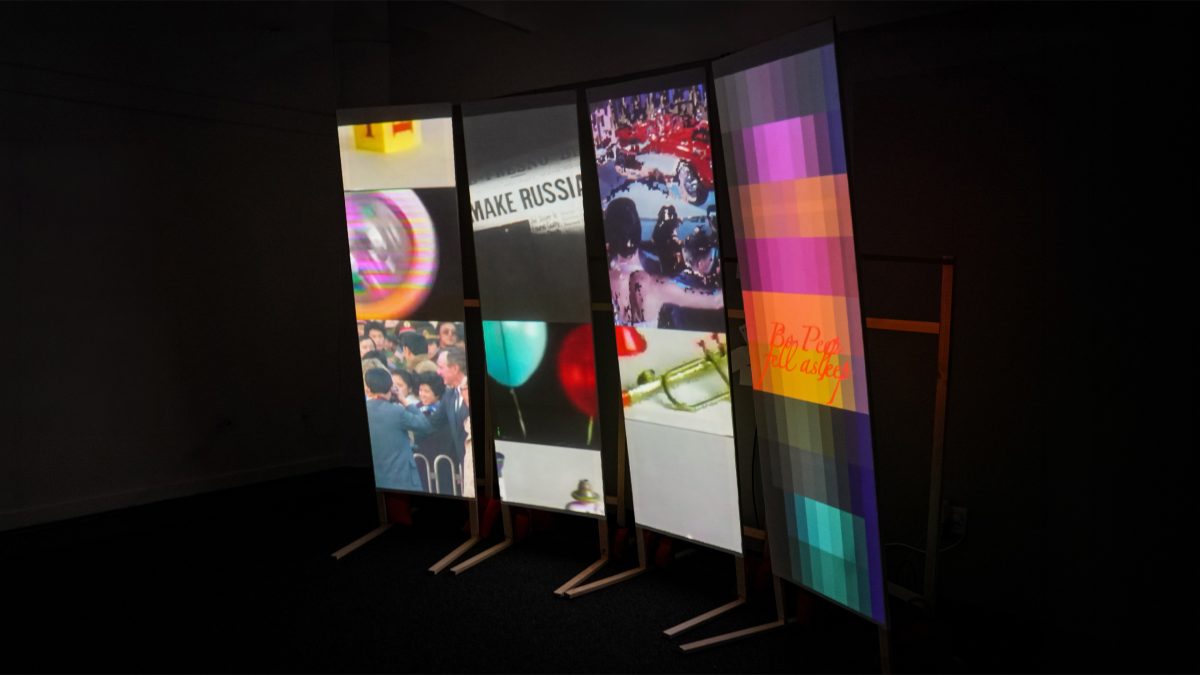
Nancy Valladares, Loretta WolozinA Better Past Tomorrow is a four-channel moving-image installation built from post–Cold War educational and state-produced footage. Across vertical screens, archival images continuously move upward, connecting historical narratives of progress to contemporary habits of scrolling. The work examines how repetition, fragmentation, and omission shape what remains visible and what recedes from view.
A Better Past Tomorrow is a four-channel moving-image installation that examines how images organize perception not only through what they show, but through what they repeat, align, and leave outside the frame. Drawing on post–Cold War educational videos, state promotional films, and public campaign footage, the work traces a recurring visual grammar of peace, development, technological progress, multicultural harmony, and global connectivity. Rather than treating optimism as a false message to be exposed, the installation asks what kinds of absence allow these images to appear coherent. Rupture, violence, inequality, failure, and contradiction are not directly disproved; they are reduced to low signals.
The project is grounded in the relationship between postwar visual culture in the United States and South Korea. These contexts are not presented as a symmetrical national comparison. Instead, the work considers how images associated with American power entered South Korea’s sense of futurity amid national division, anticommunism, developmentalism, and rapid globalization. Through television, classrooms, cinema, and VHS, images of education, refinement, technological advancement, and global citizenship became attached to the feeling of a better future. The installation approaches this history as a perceptual inheritance that continues under altered technological conditions.
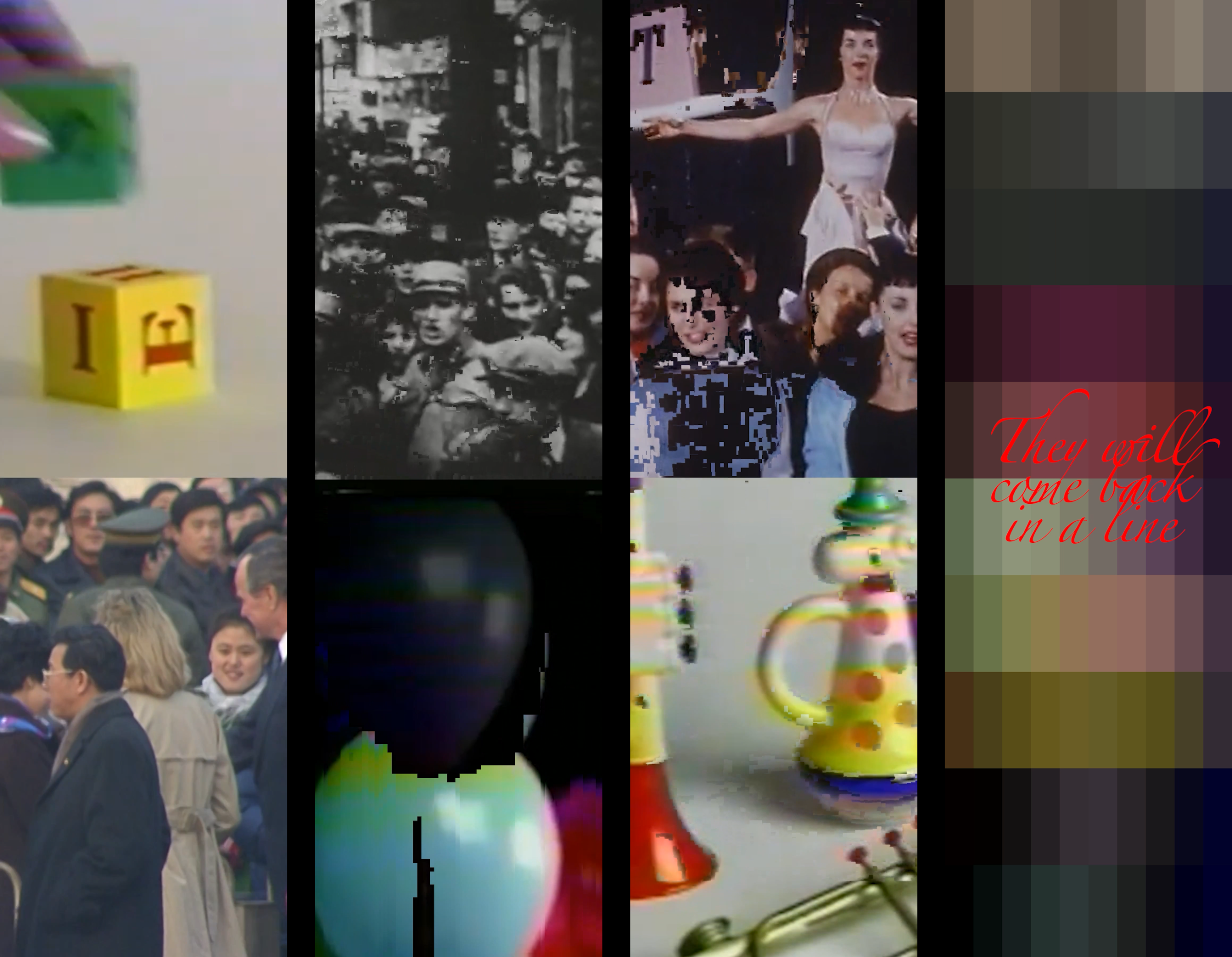
A central source is a late-1990s Korean multilingual educational video that presents the flexible, multilingual child as an ideal subject of globalization. Its gentle instructional voice and repeated fables suggest that the world can be learned and cultural difference harmoniously integrated. In the installation, this voice overlaps with political and military footage: speeches about peace, anti-communist instruction, artillery, and explosions. The subtitles primarily follow the language-learning narration, while other voices remain untranslated or fragmented. The viewer can read a kindly educational message while simultaneously hearing violence that remains less legible. Partial translation therefore becomes a way of showing which signals are brought forward as understandable and which are allowed to recede.
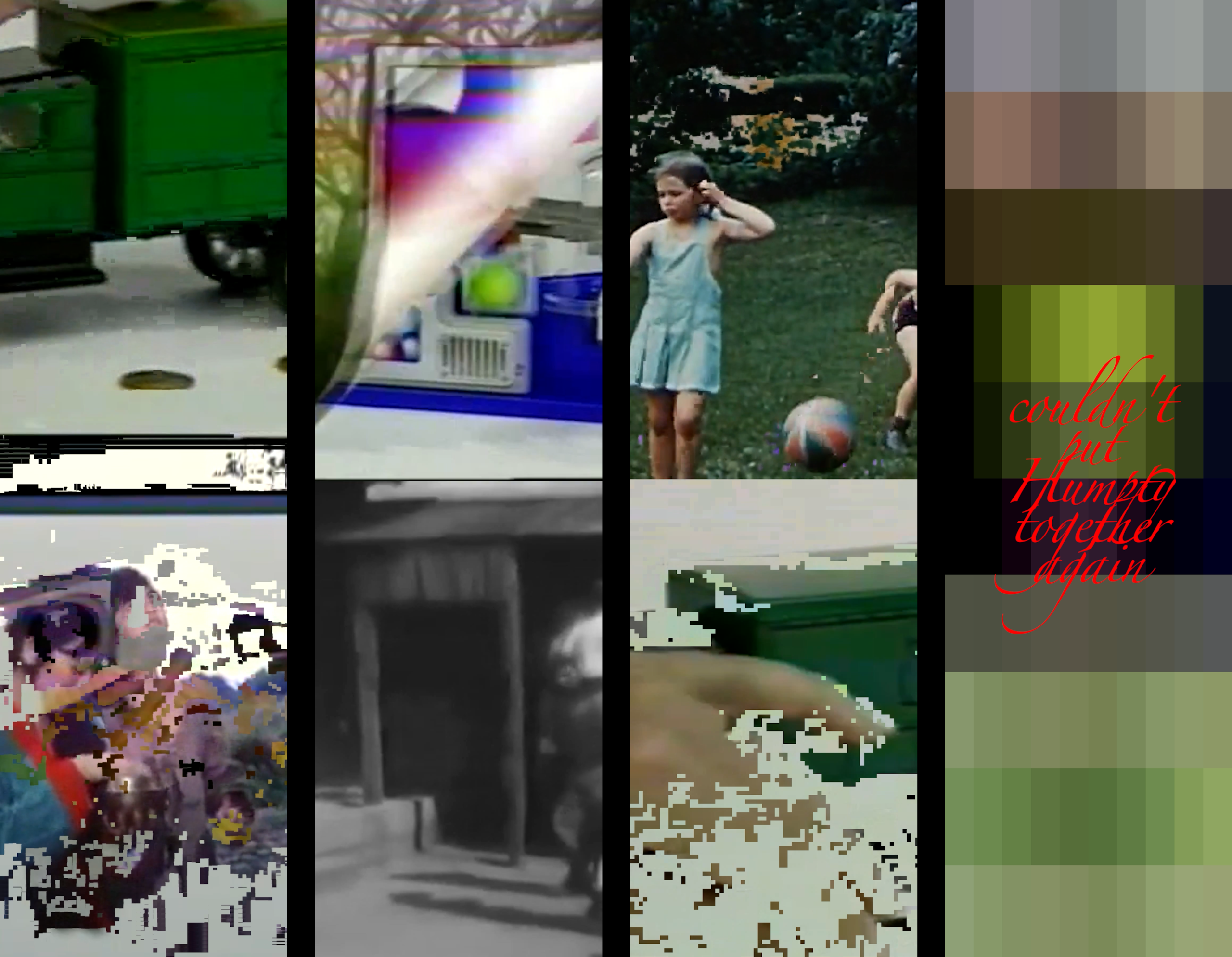
Across four vertically oriented screens, the images move upward in a continuous flow. This ascent recalls both the historical rhetoric of progress and the contemporary gesture of scrolling. Archival footage is repeated, compressed, pixelated, and datamoshed. By deliberately disrupting video reference frames, traces of one scene bleed into the next: an image that should have disappeared remains as a technical afterimage. Degradation functions not simply as visual style or destruction, but as a method for showing how past images lose stability while continuing to shape the present.
The four-channel structure makes complete attention impossible. Following one screen means missing movement on another; reading subtitles can mean overlooking changes in image texture; listening to sound can pull attention away from both. The work develops the concept of a perceptual track: a path in which viewers can choose, pause, and redirect their attention, while the possible directions, rhythms, and transitions of that movement have already been partially organized. Rather than explaining its argument through a linear narrative, A Better Past Tomorrow places the viewer inside a system of choosing and missing. It treats archival footage as historical visual data and montage as a form of critical visualization. Ultimately, the work asks not only what images represent, but which futures they amplify and which realities become quiet in the process.