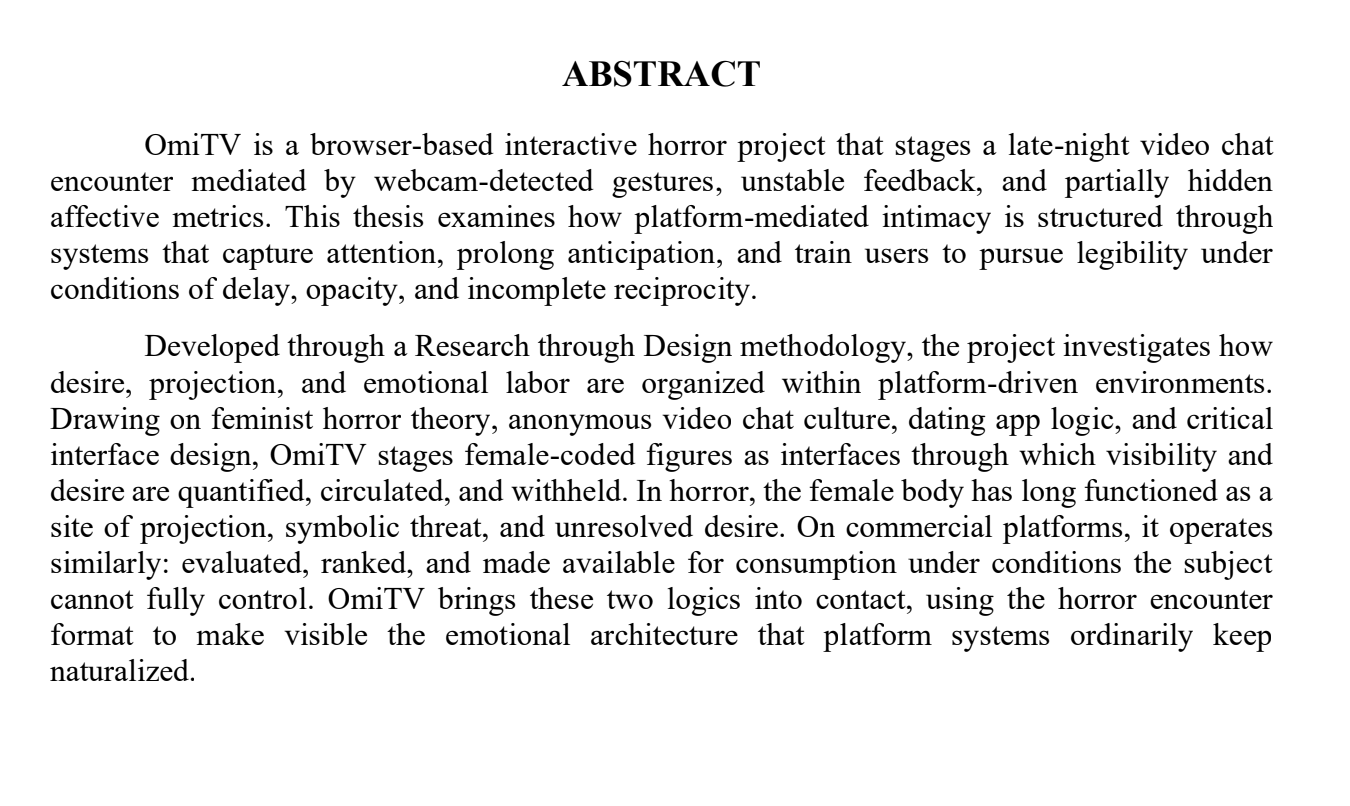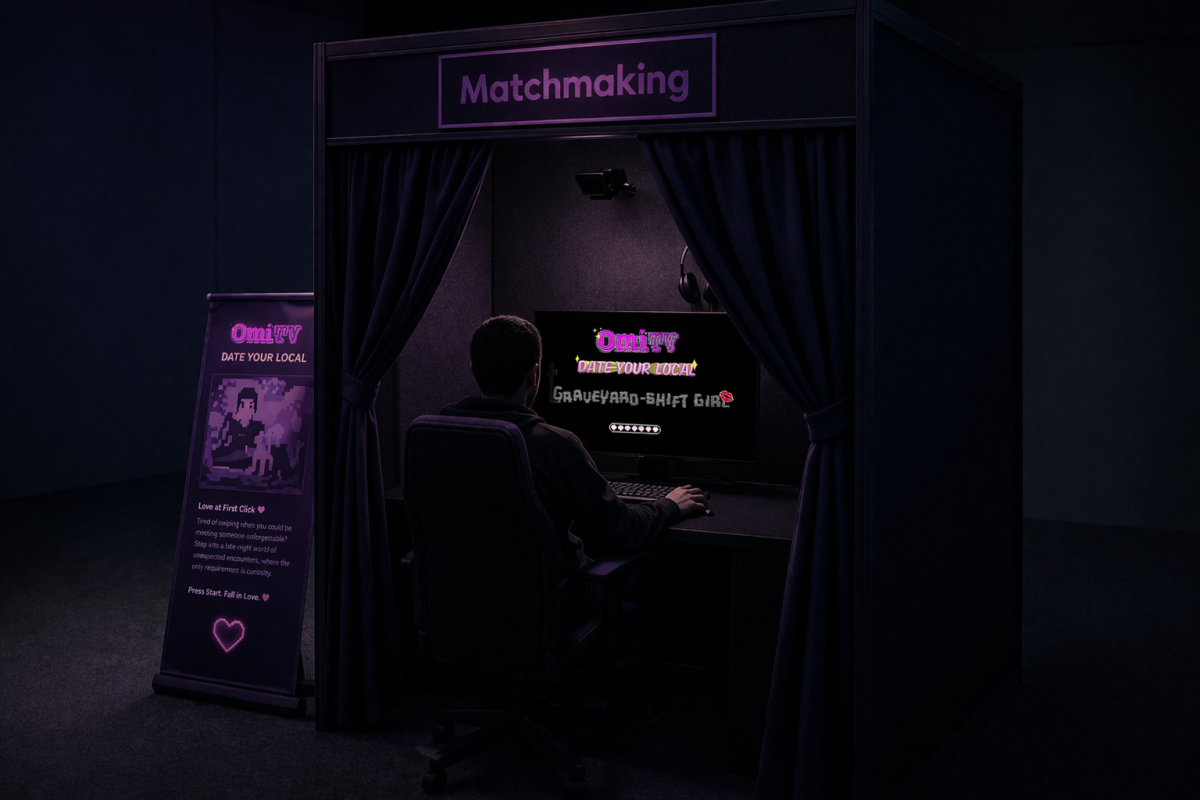
OmiTV: Date Your Local Graveyard-Shift Girl
Thesis Faculty:
Nancy Valladares, Loretta WolozinA browser-based horror chat experience where webcam gestures, unstable feedback, and hidden affective metrics expose how platforms capture attention and structure digital intimacy.
Concept Statement
OmiTV is a browser-based interactive horror project that stages a late-night video chat encounter mediated by webcam-detected gestures, unstable feedback, and partially hidden affective metrics. This thesis examines how platform-mediated intimacy is structured through systems that capture attention, prolong anticipation, and train users to pursue legibility under conditions of delay, opacity, and incomplete reciprocity.
Developed through a Research through Design methodology, the project investigates how desire, projection, and emotional labor are organized within platform-driven environments. Drawing on feminist horror theory, anonymous video chat culture, dating app logic, and critical interface design, OmiTV stages female-coded figures as interfaces through which visibility and desire are quantified, circulated, and withheld. In horror, the female body has long functioned as a site of projection, symbolic threat, and unresolved desire. On commercial platforms, it operates similarly: evaluated, ranked, and made available for consumption under conditions the subject cannot fully control. OmiTV brings these two logics into contact, using the horror encounter format to make visible the emotional architecture that platform systems ordinarily keep naturalized.
Website Link
Demo Video
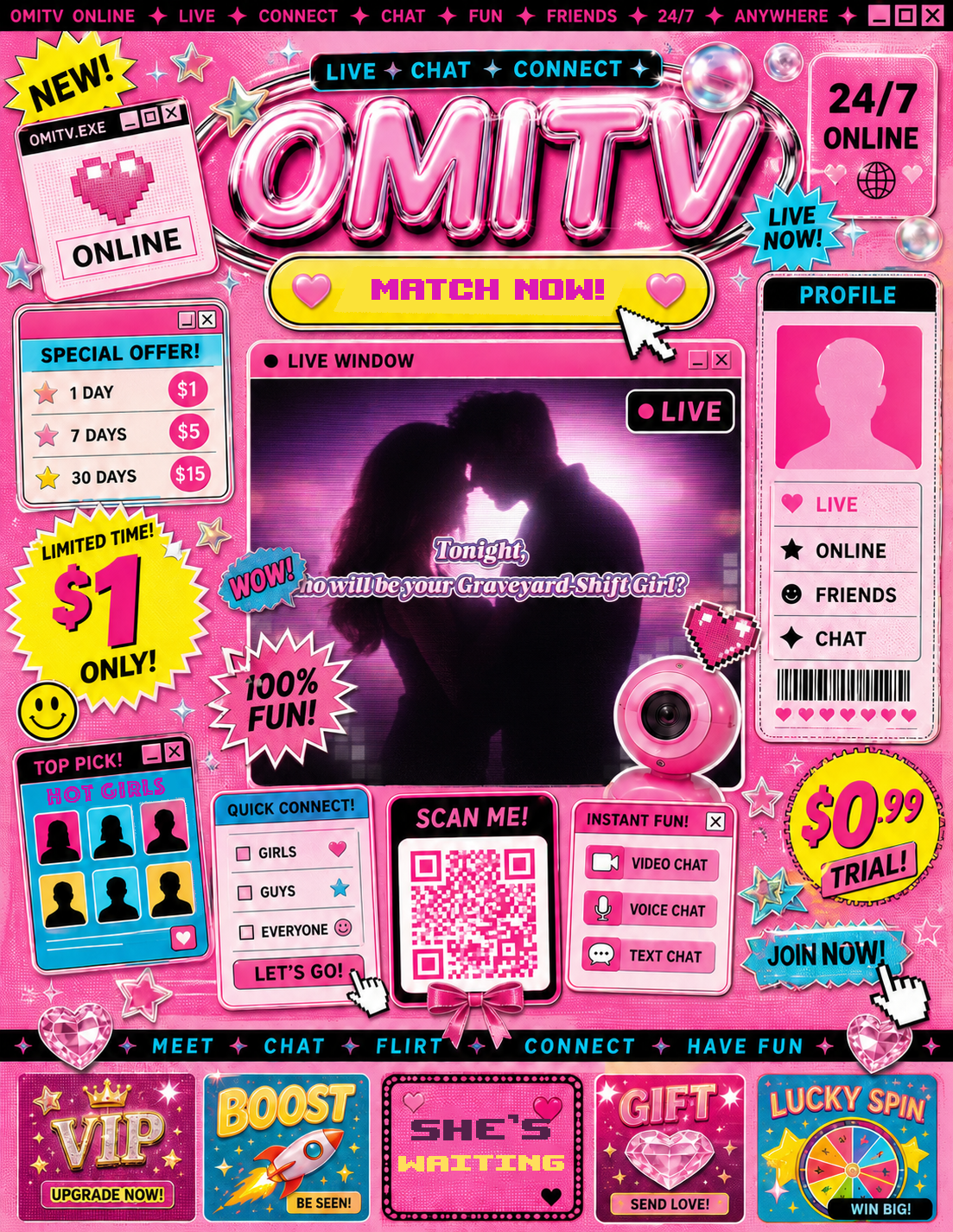
Promotional Visual Design
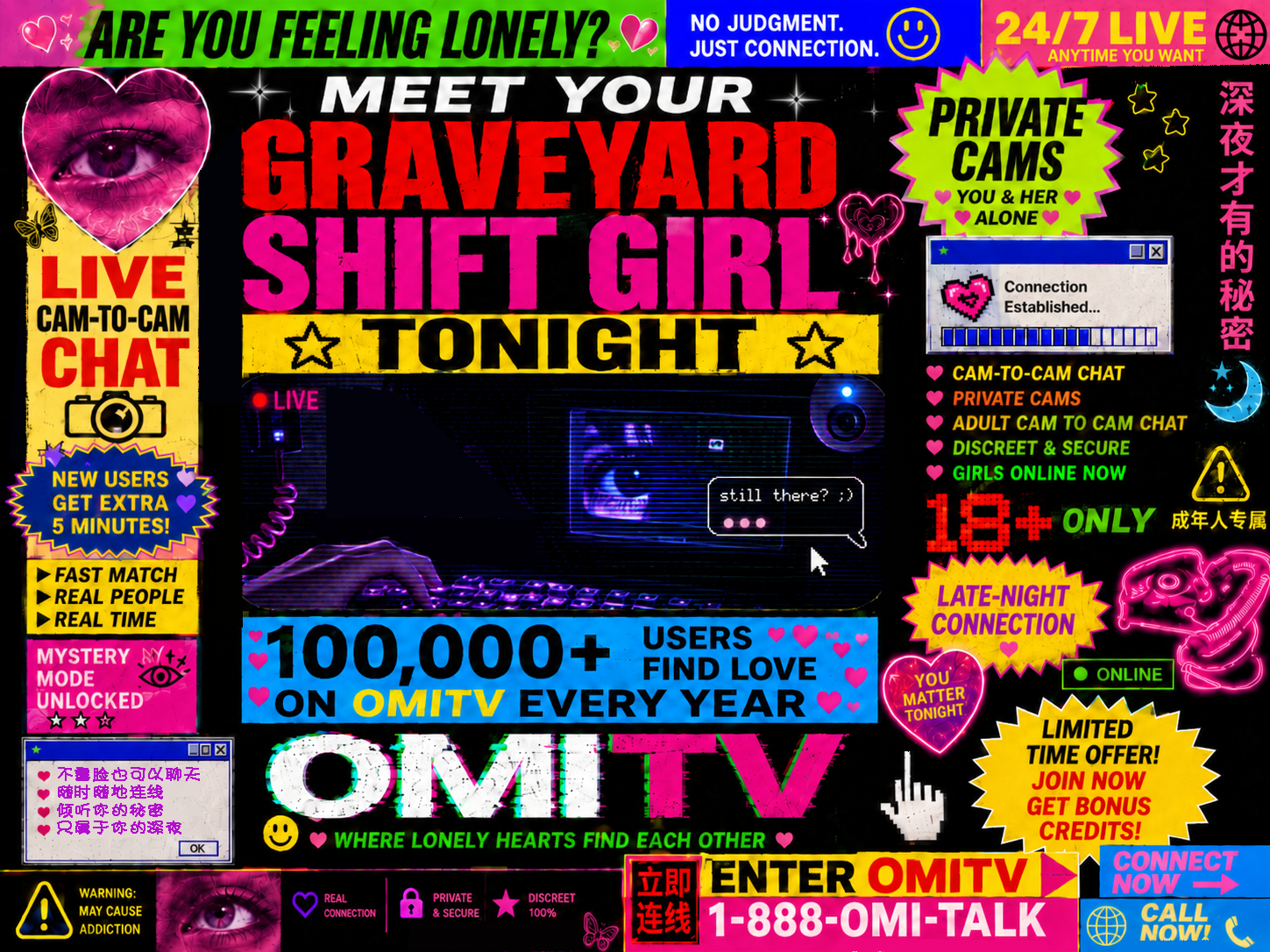
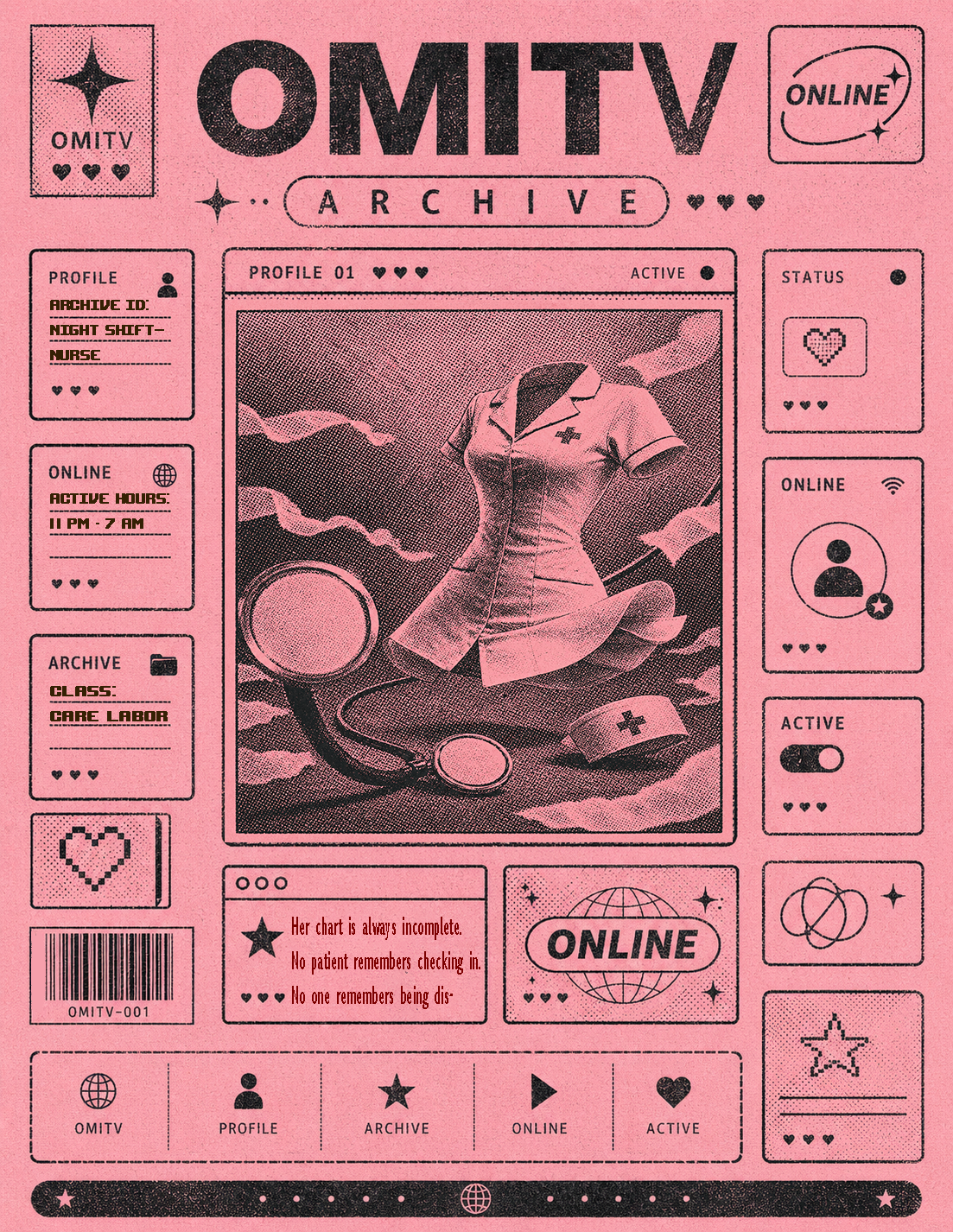
This section collects the fictional posters, profile cards, banners, and printed advertisement created for OmiTV. Rather than functioning as neutral promotional materials, these designs extend the world of the project. They borrow from early internet ads, cam-site banners, dating-app interfaces, and spam pop-ups to construct a visual economy of desire. Through exaggerated promises of instant connection, privacy, and emotional availability, the materials frame intimacy as something that can be matched, purchased, ranked, and archived.

.jpg)
.jpg)
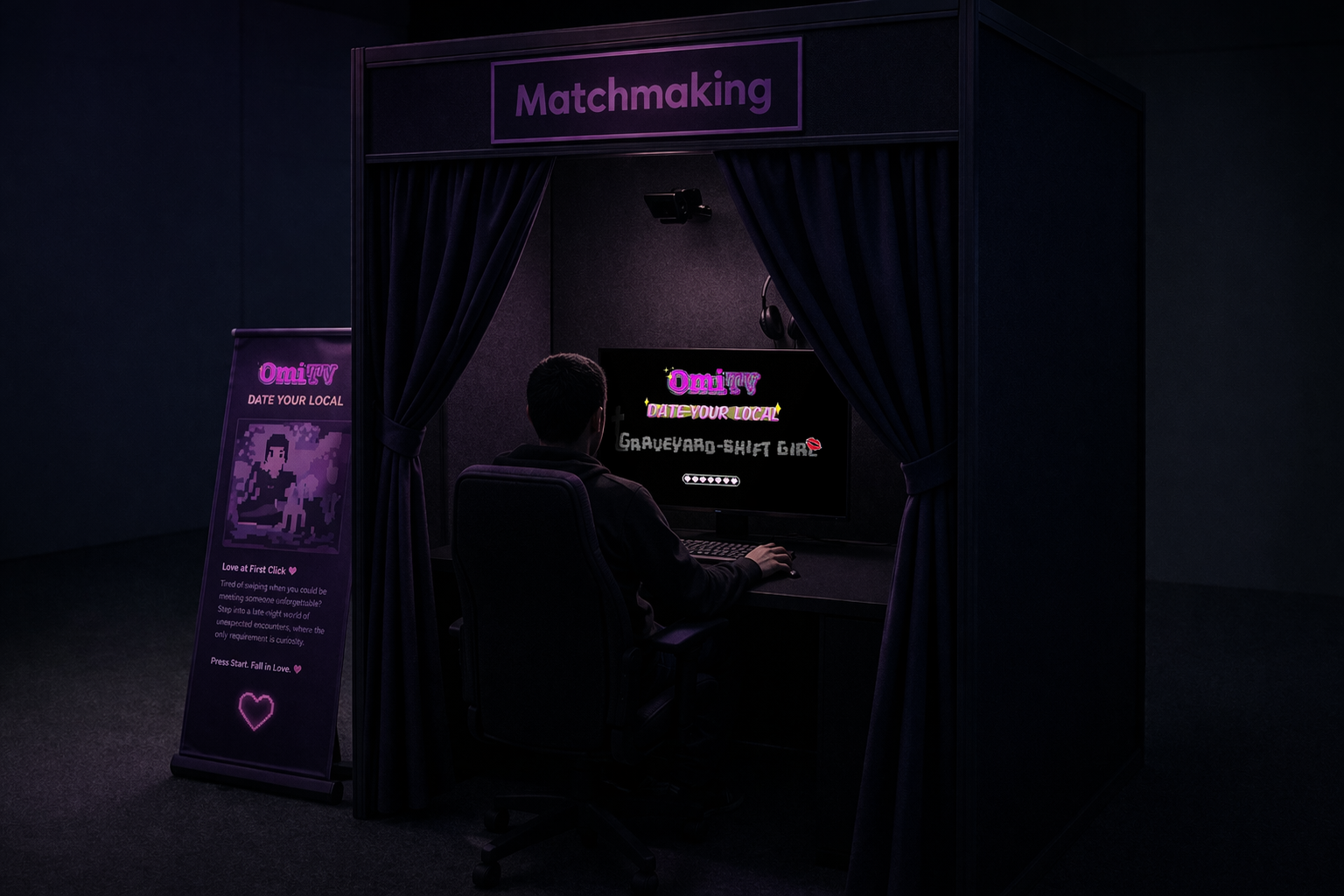
Installation View & Exhibition Documentation
The actual documentation will be updated after the thesis show! stay tuned! 🙂
Research Paper
This thesis paper expands on the conceptual and theoretical framework behind OmiTV, examining how platform interfaces transform intimacy, visibility, and affective labor into measurable forms of participation. The paper situates the project within critical interface design, feminist horror, webcam culture, and platform studies, while reflecting on the development of the interactive browser-based installation.