The Loops.
Thesis Faculty:
Harpreet Sareen, Namreta Kumar, Mani Nilchiani, Ethan SilvermanLoops is a collection of interactive digital artworks about repetition. Some loops in our lives are chosen, but many are not: the routines we slide into, the screens we keep returning to, the same gestures repeated without much thought. Drawing on Albert Camus’s writing on absurdism, this collection treats repetition not as a problem to solve but as a condition to inhabit and reflect on. Each piece presents a simple, abstracted scene that loops without a clear beginning or ending, inviting viewers to step into the cycle, notice it, and decide for themselves how to respond.
Loops.
The struggle itself toward the heights is enough to fill a man’s heart.
The Myth of Sisyphus
One must imagine Sisyphus happy.
Albert Camus, 1942
Details
Year: 2025–2026
Medium: Interactive digital artwork
Tools: JavaScript, p5.js, ml5.js
Pieces: 7
Background
This project began in a stretch of feeling stuck. Inside an intense phase of creative work, the same questions kept circling: what does any of this mean? Why are we surrounded by products and tools that promise to solve problems we did not know we had? Are we just lazy beings who need a tool for everything? The questions did not lead anywhere. They just looped.
At some point a different question surfaced: why not make a project out of this? Around the same time, Albert Camus’s writing on absurdism, read years earlier in undergraduate French courses, came back into focus. His framing of Sisyphus, condemned to push a boulder up a hill forever, did not offer an escape from repetition. It offered a way to sit with it. Loops started there.
The Collection
Seven pieces, each approaching repetition from a different angle.
Engage as long or as briefly as you like.
There is no prescribed way to interact, and no correct way to experience them.
Myth of Sisyphus
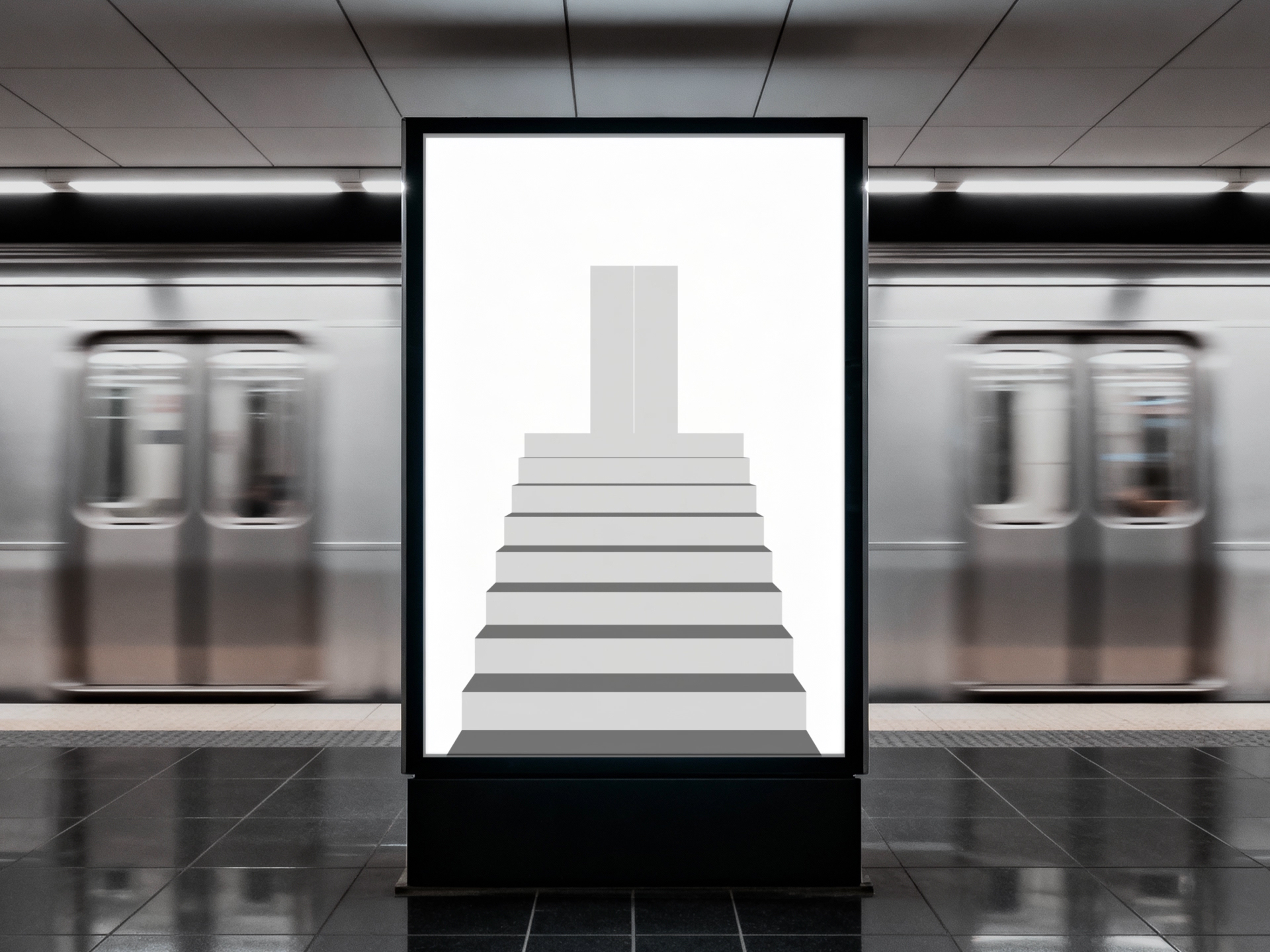
In Camus’s retelling of the Greek myth, Sisyphus is condemned to push a boulder up a hill, only to watch it roll back down, endlessly. Camus finds in this not tragedy but defiance: the act of pushing becomes its own purpose. This piece translates the myth into something you can touch. Push the boulder up the slope with your hand or mouse; when it reaches the top, the hill flips and the cycle continues. There is no score, no ending. The choice of whether to keep pushing, stop, or hold the boulder still belongs entirely to you.
Doors
A door is one of the most ordinary objects we encounter, yet every doorway marks a small shift: from work to home, from public to private, from one phase of life to another. Doors stretches this quiet transformation into an infinite corridor. Black and white thresholds alternate as the viewer drifts forward, the colors standing in for the dualities that frame any transition: light and dark, presence and absence, beginning and ending. There is no final room. The loop continues because transition itself never ends.
Accumulation
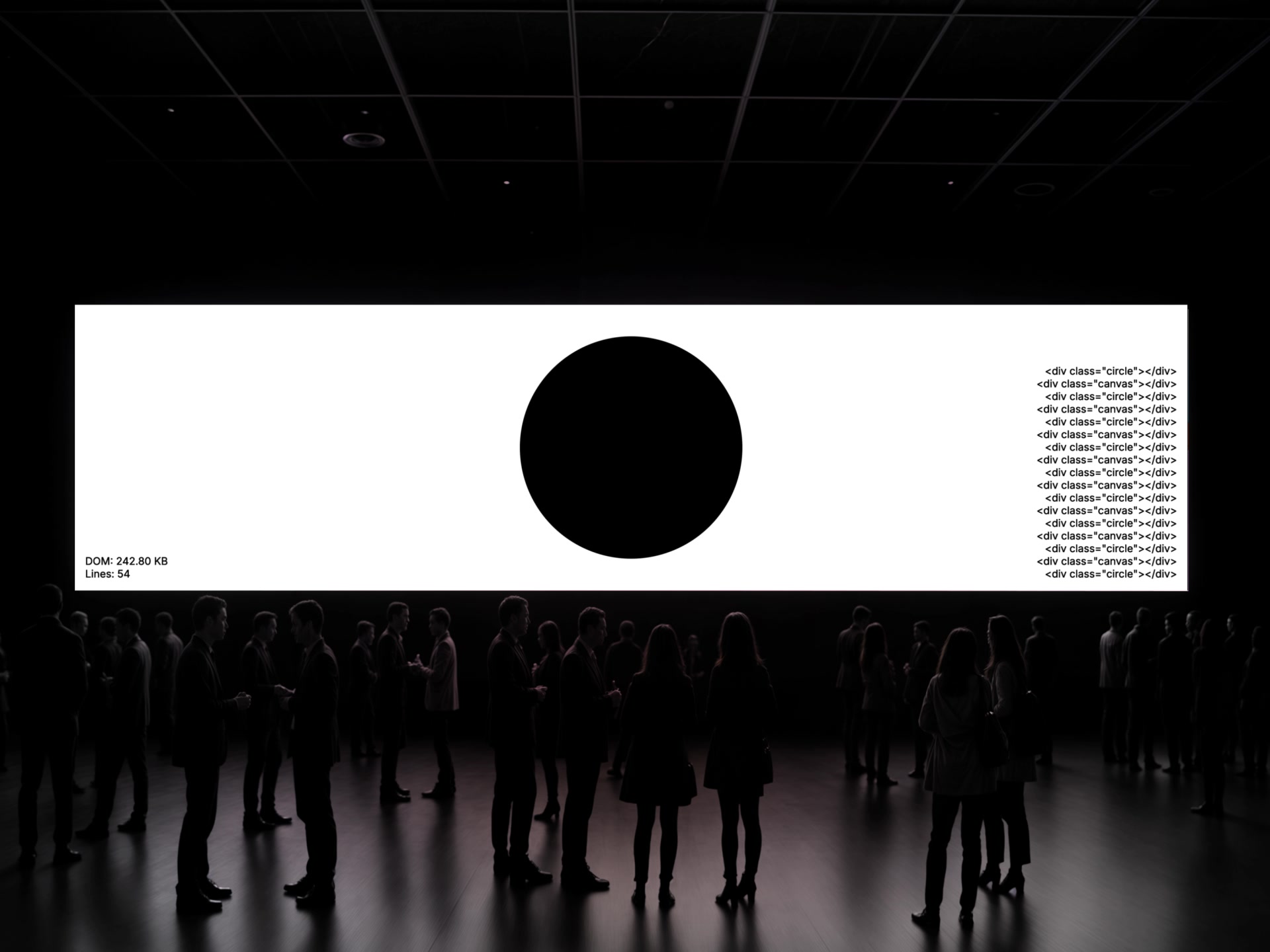
This piece began as a painting exercise: drawing black circles on a canvas, covering them with white paint, and repeating until the canvas appeared blank again. From a distance, nothing seemed to have changed. Up close, the surface had grown heavier with every layer. Accumulation recreates that logic on screen. Layers stack invisibly, one each second, never erased, only added. The work asks what it means to accumulate without leaving a visible record, and how much of who we become is built from cycles that quietly pile up beneath the surface.
Zen Garden
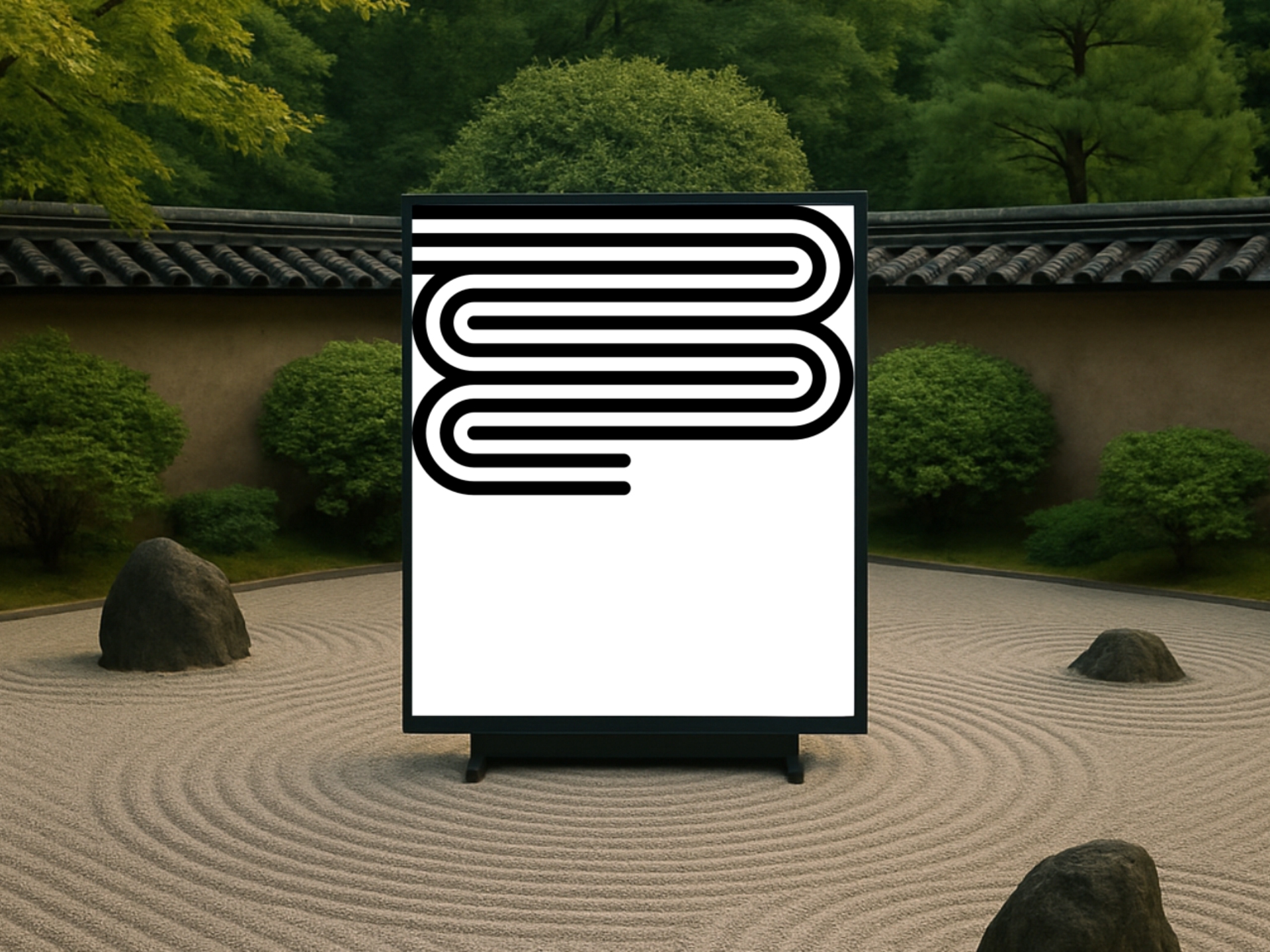
The dry landscape garden is built on the practice of raking. The same gesture, drawn across sand again and again, produces lines that are both marks of labor and objects of contemplation. Nothing is planted and nothing grows. The work is the maintenance, and the maintenance is the point. Zen Garden takes that ritual as its material. Curved lines appear band by band across the screen, hold for a moment, fade, and begin again. There is nothing to do here, only the choice of how long to stay.
Incense
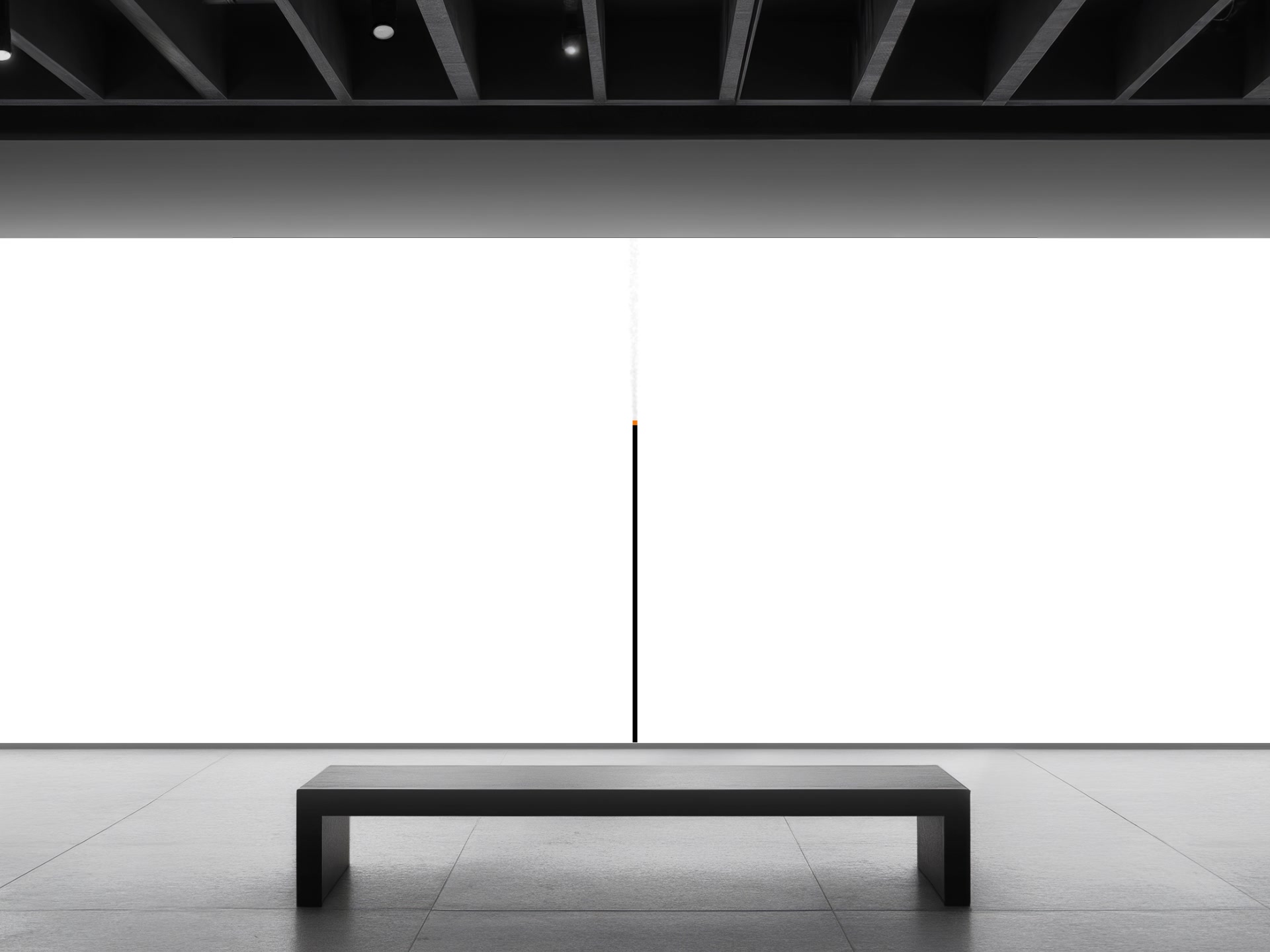
In many East Asian cultural practices, incense is burned during ceremonies and rituals as a way of connecting the living with those who have passed. The smoke is read as presence: when it drifts toward someone, it is sometimes understood as a sign that an ancestor has arrived. The act of burning is itself a kind of loop, the same ritual repeated across generations. Incense renders that loop digitally. A stick fades in, glows, burns down, and the cycle begins again. The smoke shifts in response to the viewer’s position, as real smoke would.
Playground Spinner
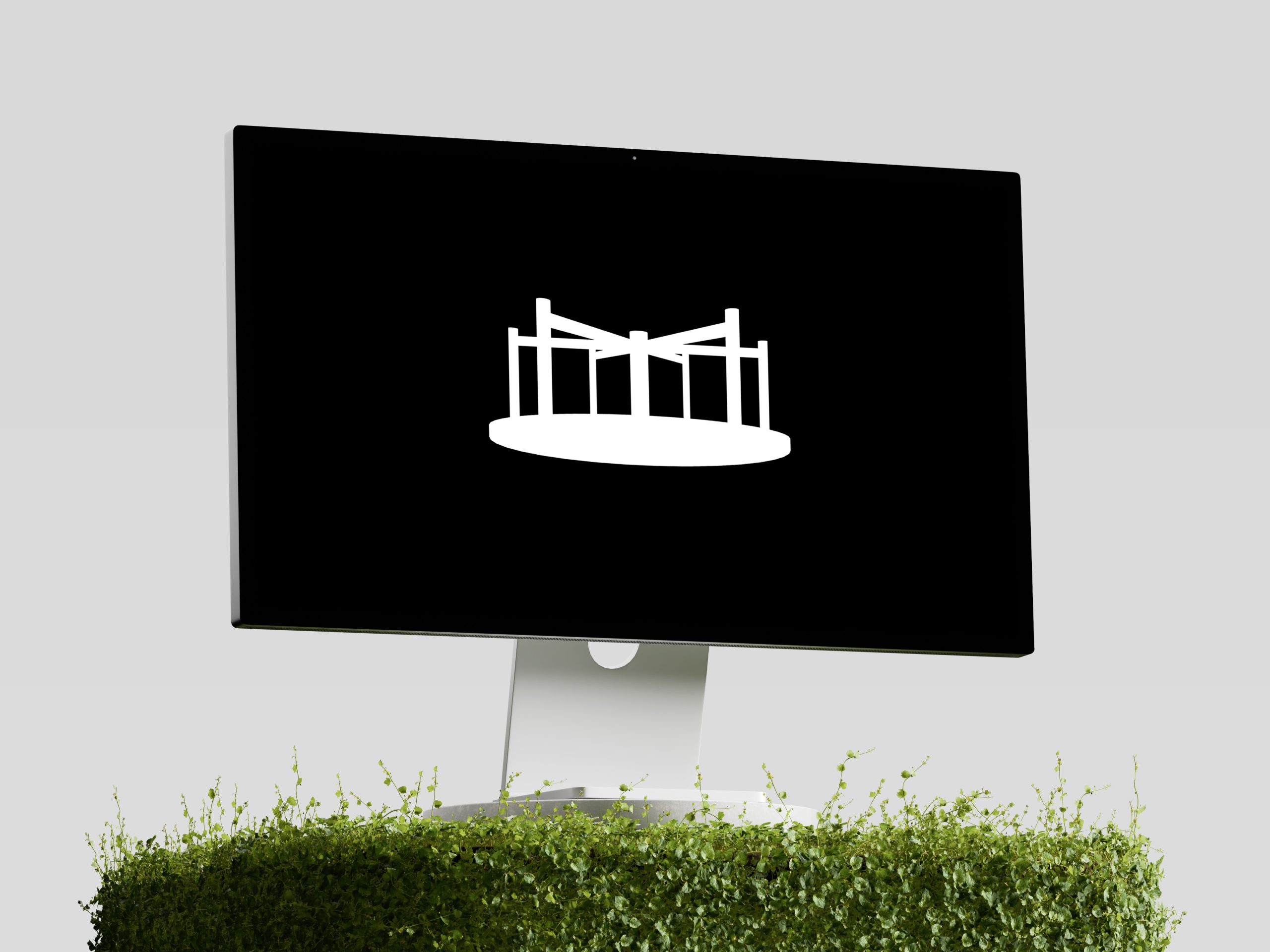
The playground spinner, also known as a merry-go-round, is one of those objects whose entire purpose is the act itself. There is no goal in spinning it, no score, no destination, only the spin. For many people it is also a shared childhood memory: you ran toward it, grabbed a handle, and pushed. Playground Spinner renders that object digitally. Move your hand in front of the screen and it spins, slows, and waits for the next push. The loop has no purpose beyond its own continuation, much like the spinning we did as children.
Meaning
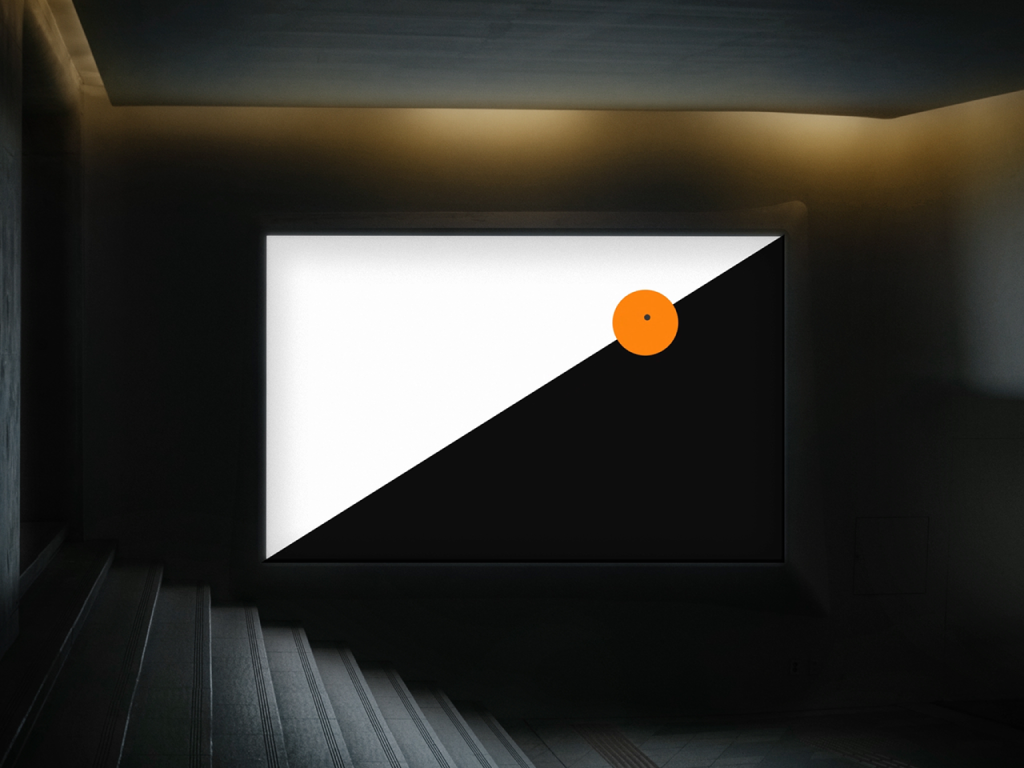
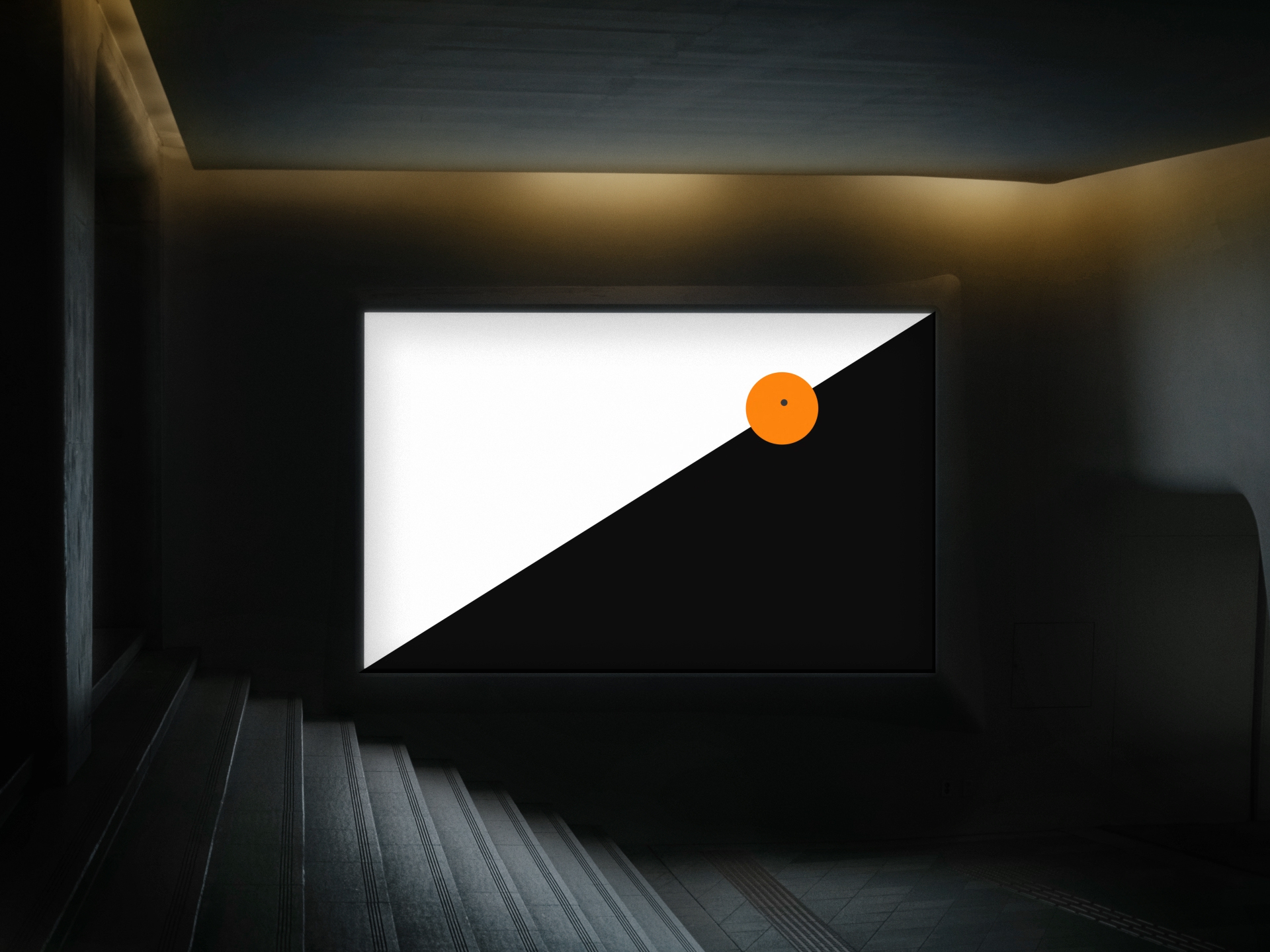
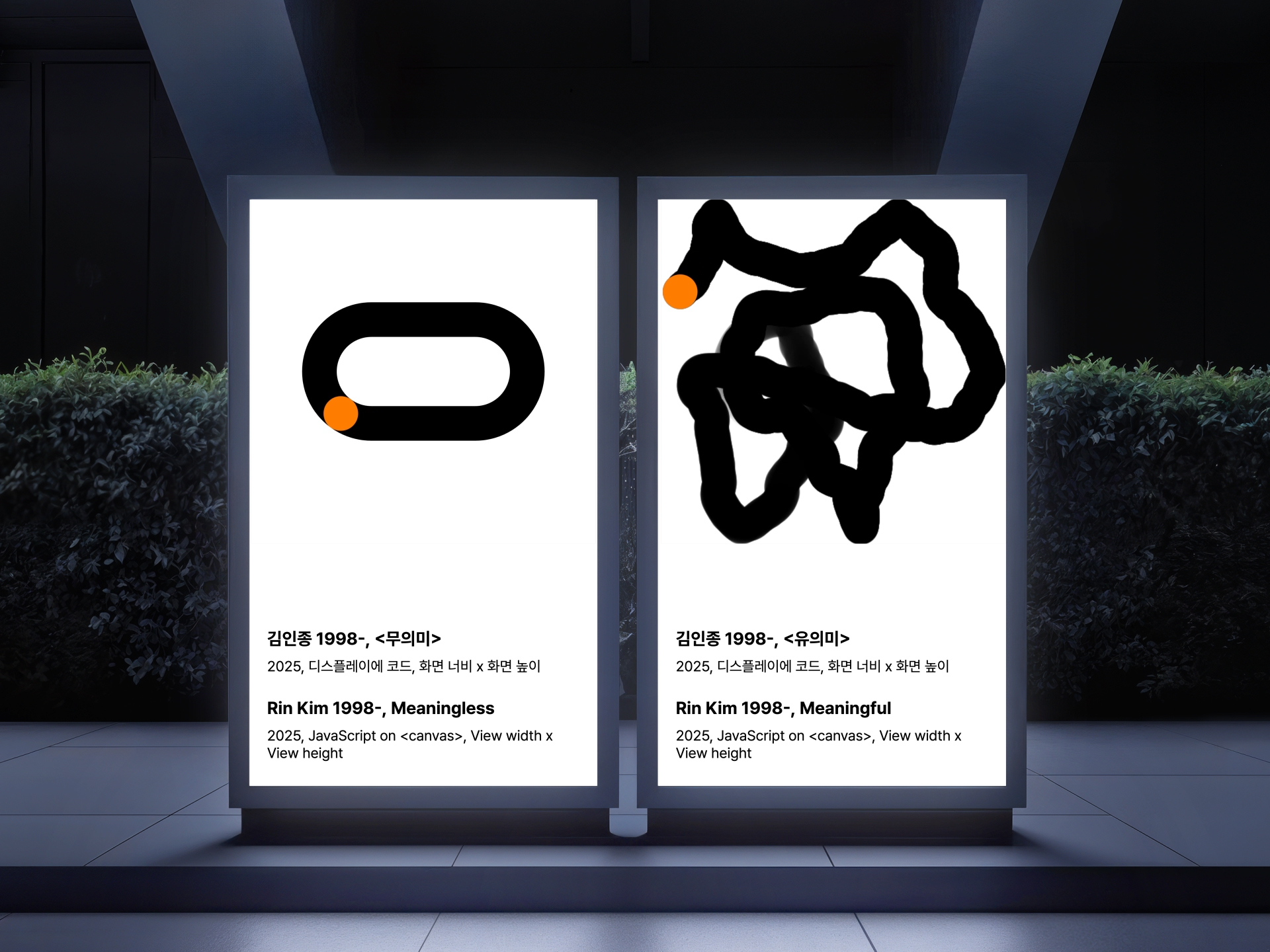
This piece grew out of a simple observation. When asked to draw “meaningful” and “absurd,” people consistently drew structure for the first and randomness for the second, even when their reasoning differed. Meaning takes that finding and reverses it: the structured canvas, an orange dot circling a fixed track, is titled Meaningless. The chaotic canvas, an orange dot drifting unpredictably, is titled Meaningful. The piece asks how quickly meaning is assigned to a form, and what happens when the labels don’t match what the eye expects. Meaning, it suggests, is less in the form than in the looking.
Publication (ACM)
Rinchong Kim. 2026. The Loops: An Interactive Artwork on Reclaiming Agency in Involuntary Repetition. In Proceedings of the Twentieth International Conference on Tangible, Embedded, and Embodied Interaction (TEI ’26). Association for Computing Machinery, New York, NY, USA, Article 134, 1–5. https://doi.org/10.1145/3731459.3786210
Documentation
More information about the project can be found on https://loops.rin.kim/documentation.
Special Thanks
Special thanks to Harpreet Sareen, Namreta Kumar, Mani Nilchiani, Ethan Silverman, Andrew Zornoza for guiding me through this project. And to my friends, Pranav Chaparala, Peggy Cheng, Sindhu Kruttiventi, Aashita Verma who inspired me with ideas for 3 semesters of this project.