
African Headrest
Giovanna Eley
My object of research: 3D model of the African Headrest at NYU
Curatorial Introductory Statement
Learning about an object starts from learning its culture, history, and origin. Which is why the Peabody Museum of Archaeology & Ethnology states that:
“Your goal is not to speak for the object, or for the peoples or cultures an object may represent, but to place yourself in your experience of research.”
When initially hearing about headrests, my mind made comparisons to a pillow or a bonnet, but headrests are so much more than that. According to the AU Journal, headrests in Africa represent status and wealth. Especially if you owned livestock, and young male warriors were responsible for protecting these herds while living a nomadic lifestyle. Lightweight and custom-made, headrests helped preserve their elaborate hairstyles, which were time-consuming to do and difficult to maintain in rural environments with limited access to water.
Beyond practicality, headrests also reflected personal pride and artistry. Often intricately carved with symbols reflecting specific tribes/cultures, they served as cultural objects believed to connect people with their ancestors through dreams, offering guidance and spiritual communication.
As you progress through the rest of the webpage, you’ll be immersed in knowledge about headrests across both the African and Asian continents. Art and influence are not just local, but global, and there are many similarities between cultures that I want readers to recognize. At the same time, I want readers to consider the land, cultures, languages, and people who create these artifacts, because the context of the people and land plays a major role in the creation and meaning of the object itself.
Throughout this reading, you’ll learn more about Bamana culture, people, and architecture, which are subjects I find are often overlooked in research surrounding African art. Lastly, you’ll encounter my own research discovery about the piece, which reveals why understanding a place and its people matters when researching these objects, because it can uncover the significance an artifact holds within a community or whether it holds any significance there at all.
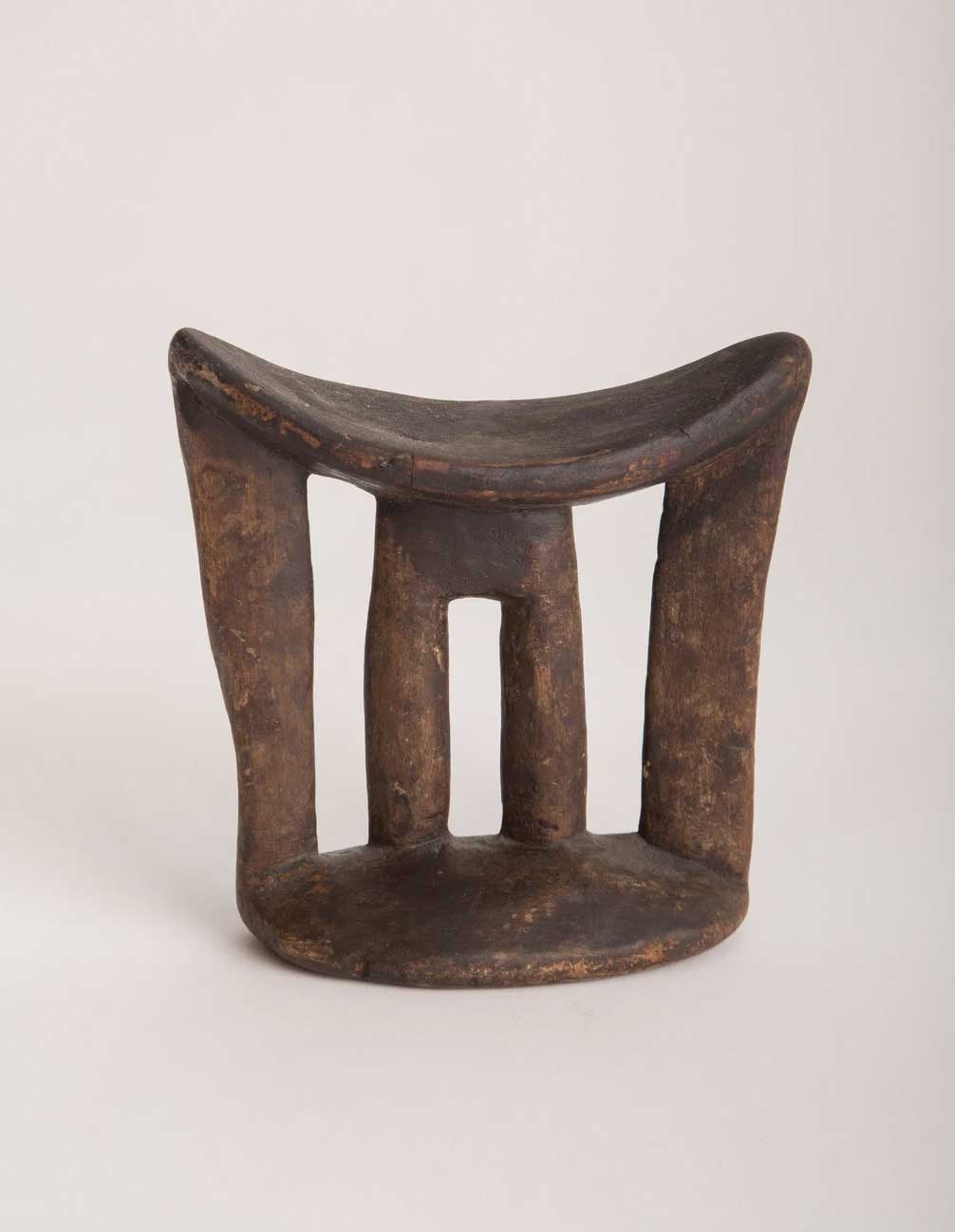
West Africa Headrest
Bamana, Mali
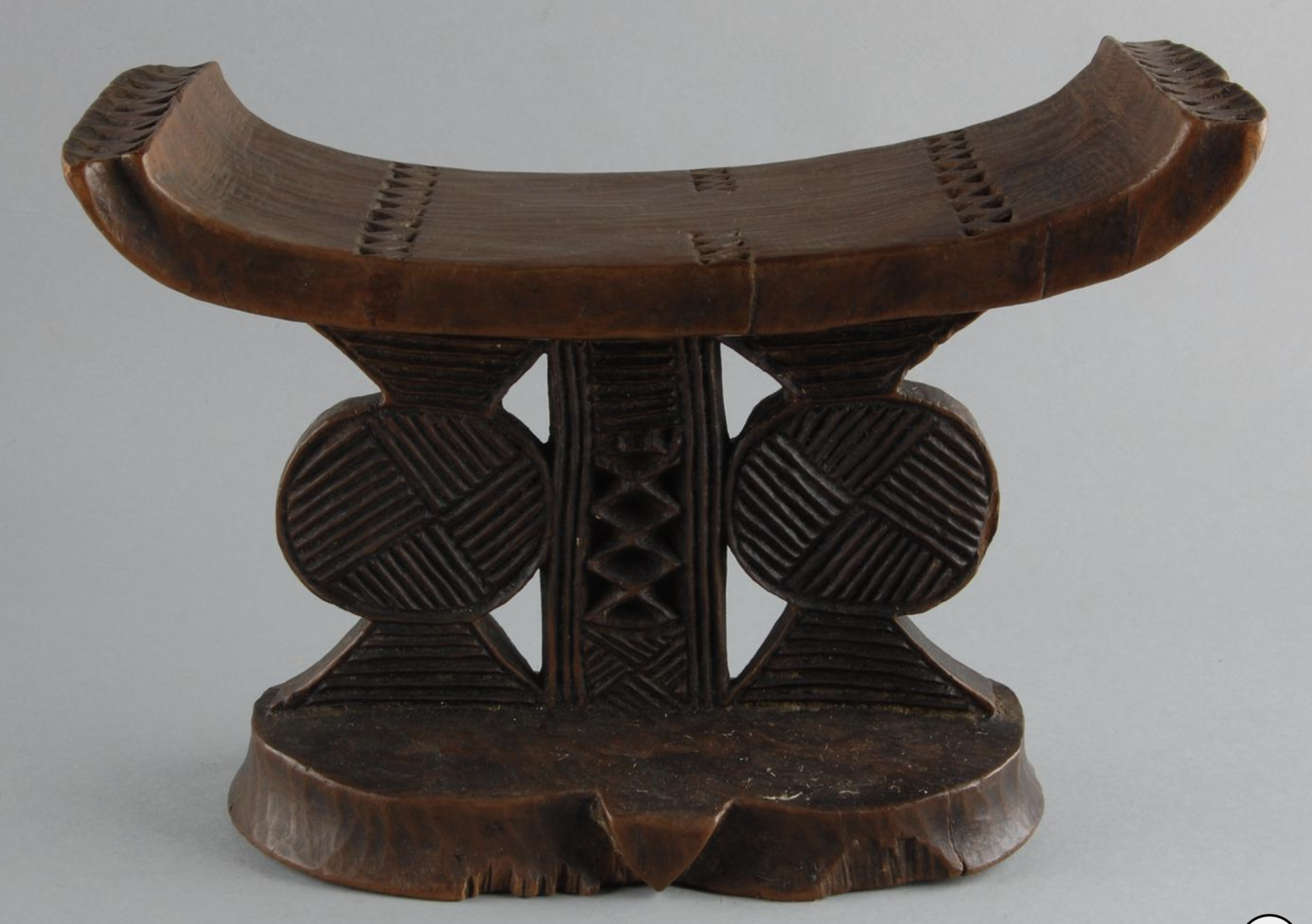
Headrest made of wood with incised line, triangle, and zig-zag design.
Made by the Shona people of Zimbabwe
1900 (circa)
Each headrest has meaning to each ethnic group, like the Shona people of Zimbabwe believe that a person walks and talks with their ancestors in their dreams.
Headrests are also made from a variety of materials, including wood, bone, and metal. The design of headrests allowed for airflow, keeping the head cool at night. While also providing good spine alignment that reduces neck pain.
In many African societies, the head is considered the center of one’s identity and spirituality. Elevating one’s head while they sleep can be seen as a way to protect one’s spiritual essence from the impurities of the earth. Additionally, headrests are sometimes used as offerings during spiritual ceremonies or as burial items, symbolizing the journey of the soul to the afterlife (Africa Direct).
Headrests weren’t just limited to Africa; it’s a global work of art, culture, and functionality. The exhibition, Sleeping Beauties: Headrests from the Fowler Museum at UCLA, points out how these wooden supports would protect hair that was intricately braided or embellished with clay, beads, and other decorative materials for weeks or even months at a time. However, Africans were not the only ones to use headrests to preserve their hairstyles. During Japan’s Edo (1603–1867) and Meiji (1868–1912) periods, elaborate hairstyles, especially among geishas, samurai with their topknots, and courtesans (who were sex workers for wealthy, noble, or powerful individuals), were preserved with raised pillows that supported the neck. Across the world, people have used headrests for a long time, with a variety of materials like wood, stone, or clay, with early examples found in ancient Egypt, including in the tomb of Tutankhamun. Most of the ancient Egyptian headrests were made of stone (particularly in the Old Kingdom) or of wood. Many of them are decorated with depictions of protective gods such as Bes and Taweret, who banished evil from the dark night, and were popular. However, Egyptians were not necessarily the first to have used them in Africa. The dry, tomb climate helped preserve them, whereas in damper regions south of the Sahara, wooden headrests would have rotted away or been eaten by pests.
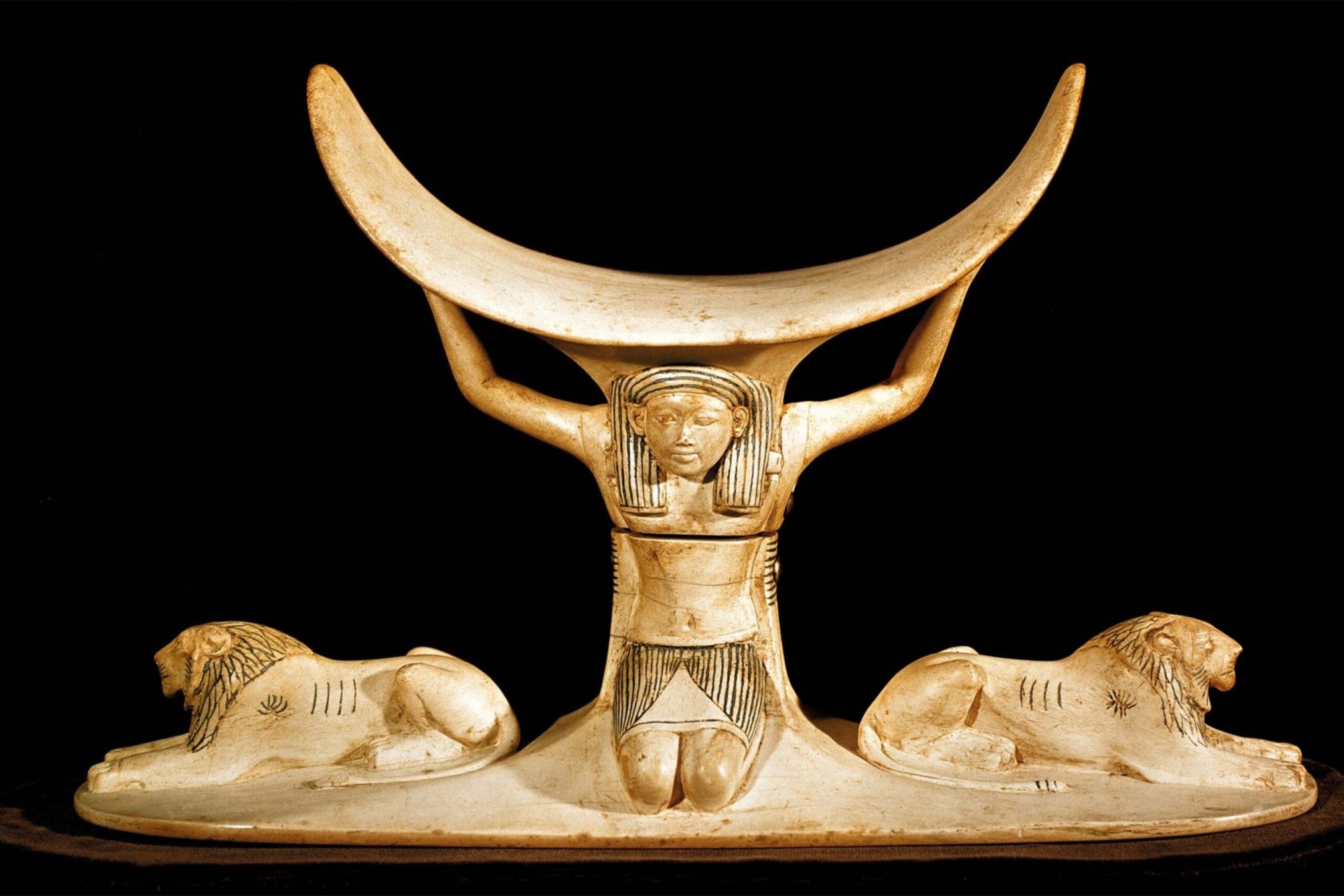
Made of Ivory
Depicting the god Shu holding up the sky.
This piece dates back to the 18th Dynasty, around 1325 BC.
Location: Tomb of Tutankhamun in Egypt
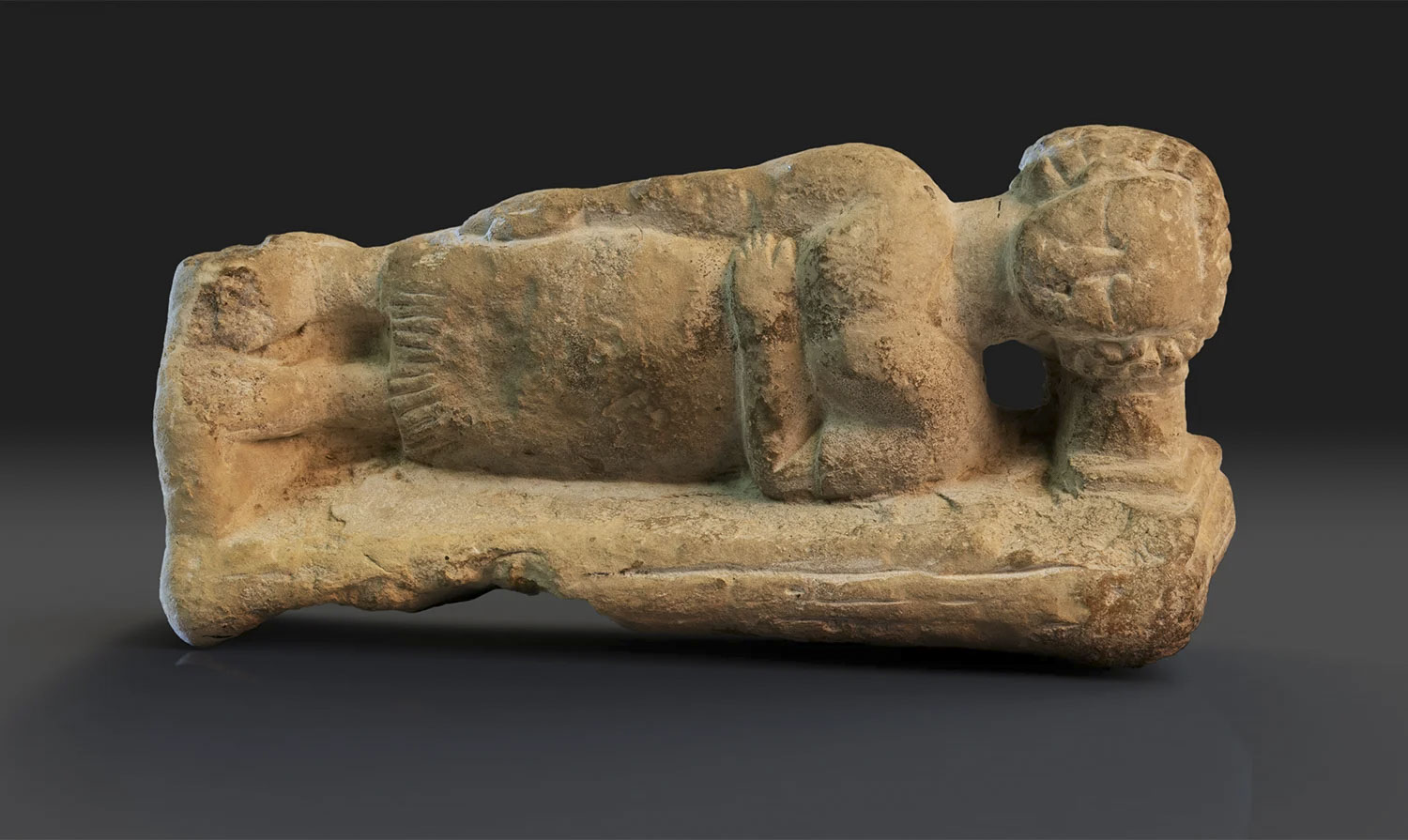
Limestone figure of a sleeping woman using a headrest in the collection of Glencairn Museum
Egypt
Beyond comfort, just like in Africa, people of Oceania also believed headrests help to connect users with ancestors through dreams, while in China, similar to Africa, they were commonly placed in tombs as funeral objects. Since so many headrests were discovered in Chinese burial grounds, scholars once believed they were used mainly for burials.
In China, hard pillows were believed to preserve energy, improve circulation, and ward off evil spirits. Made from materials like jade, ceramic, and bronze, though porcelain became most common, these headrests were often intricately decorated with symbolic imagery. They were also thought to influence dreams and serve as spiritual tools, which is why scholars believed that they were often buried with their owners to guide them in the afterlife.
According to Archaeology & Civilizations, different regions have distinct styles when it comes to headrests. In Ethiopia, Oromo, Amhara, and Gurage headrests often have a curved platform with symbolic carvings, which I’ll do a deeper dive on later. In Somalia, the Barkin headrests are lightweight, portable, and favored by nomadic groups for that reason. In Uganda, the Karamojong, Turkana, and Pokot people create simple yet durable designs, while in Southern Africa, Zulu, Shona, and Tswana headrests are sometimes elaborately carved and used in initiation ceremonies, which is a rite of passage, marking one’s transition in life.
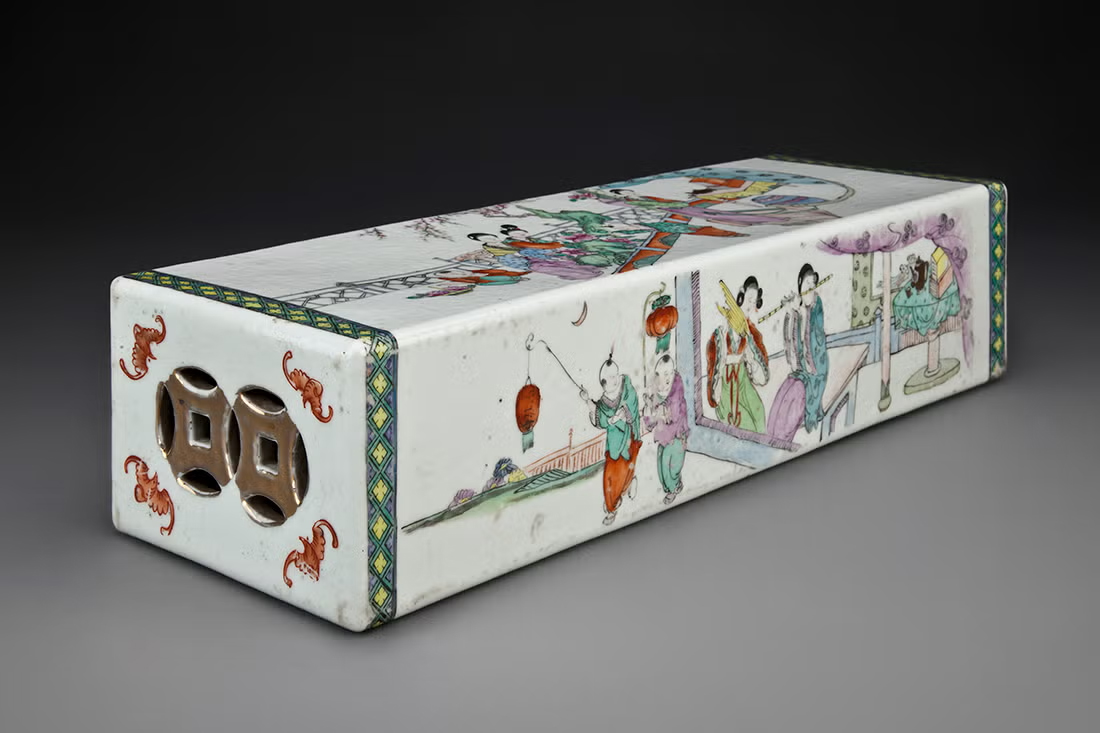
Ceramic pillow, 19th century
China
Ceramic, Glaze
Fowler Museum at UCLA; Transfer from the UCLA Japanese Gardens
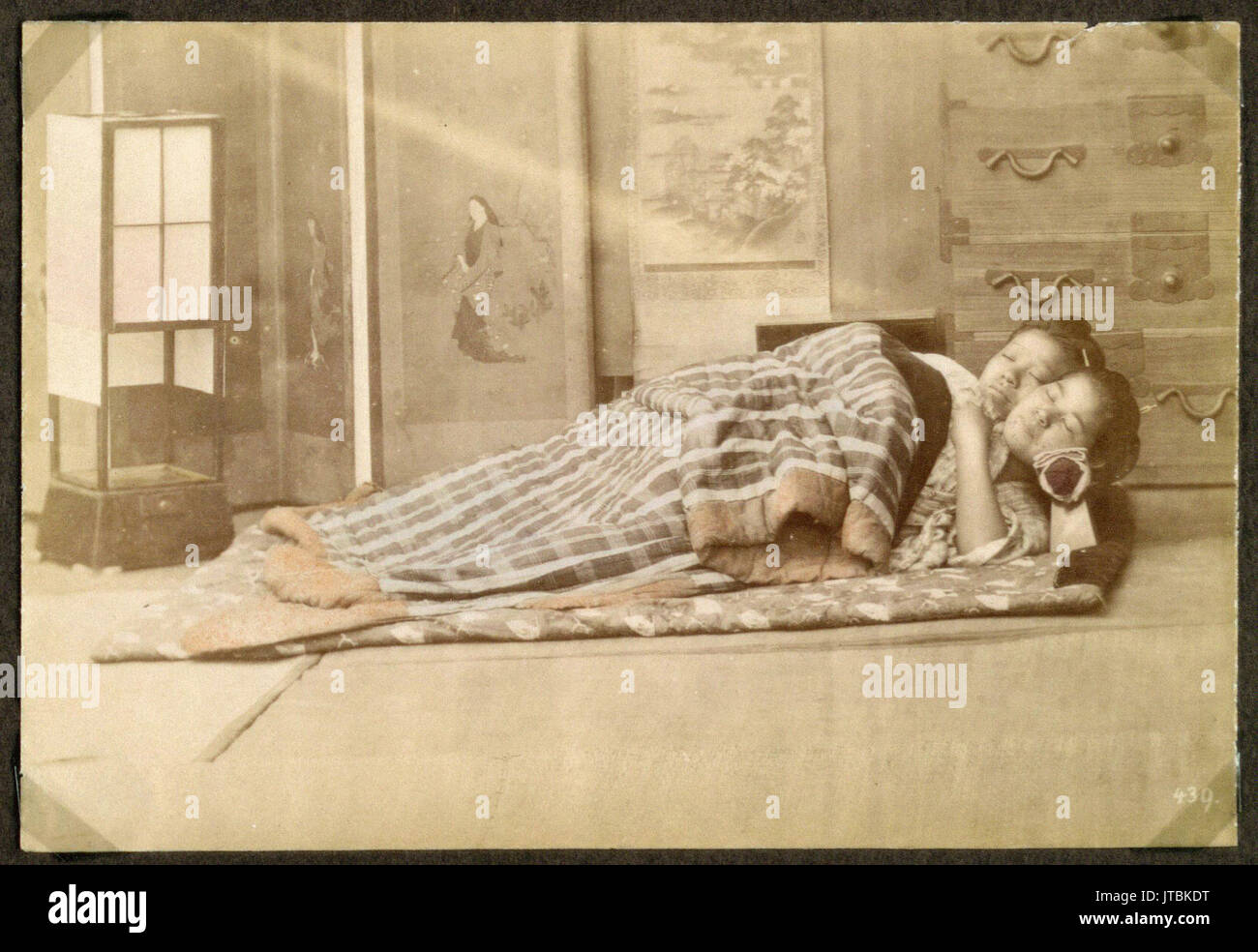
Makura ( Wooden Pillow) Sleeping women with their heads on the makura, in Japan
Credit: Alamy
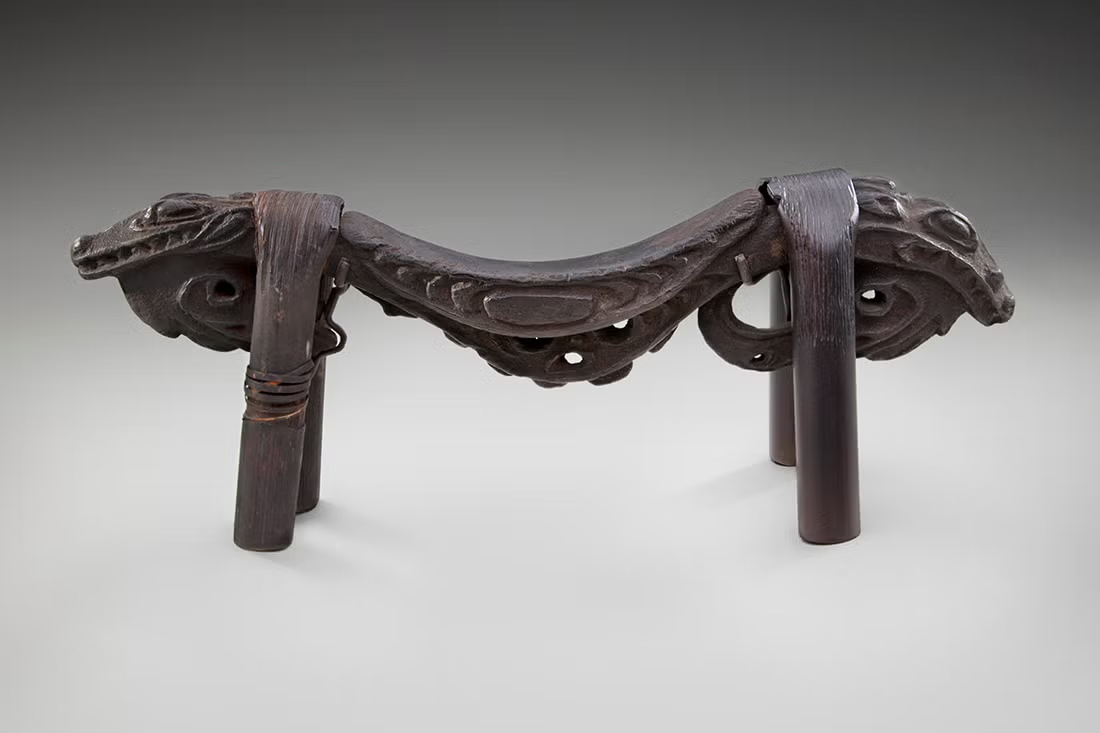
Headrest 19th–mid-20th century
Imbuando people, Lower Sepik,
Papua New Guinea
Wood, Cane
Fowler Museum at UCLA; The Jerome L. Joss Collection
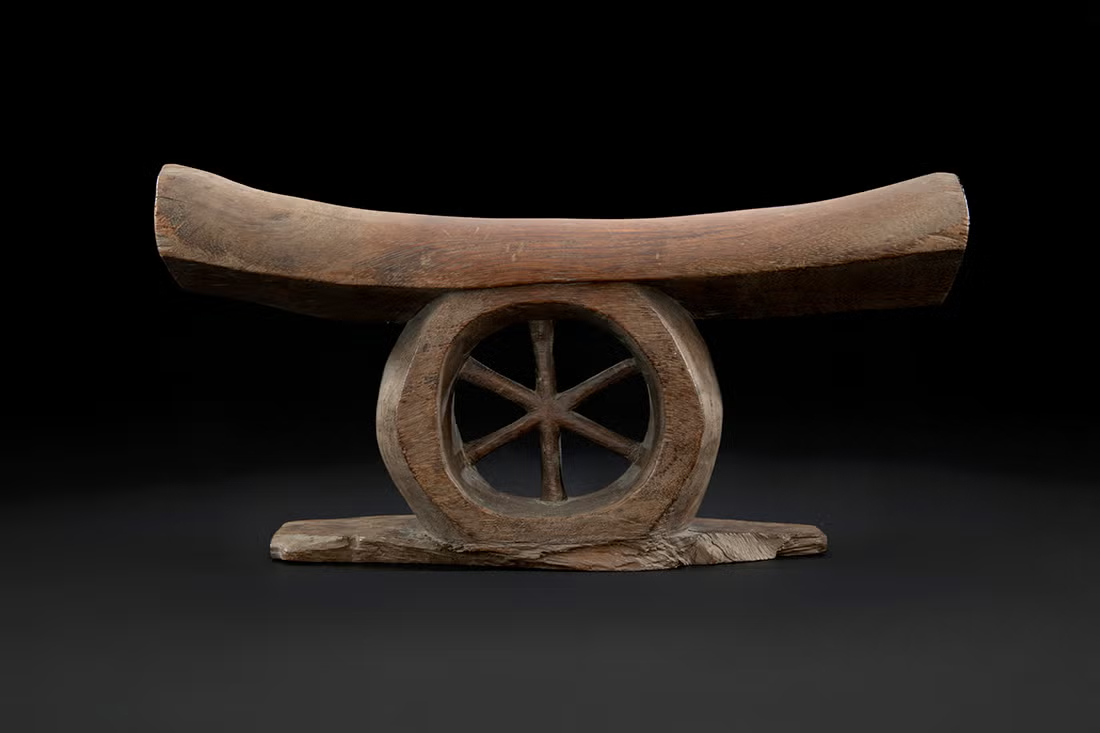
Headrest (kali)
Fiji
Wood
Fowler Museum at UCLA; The Jerome L. Joss Collection
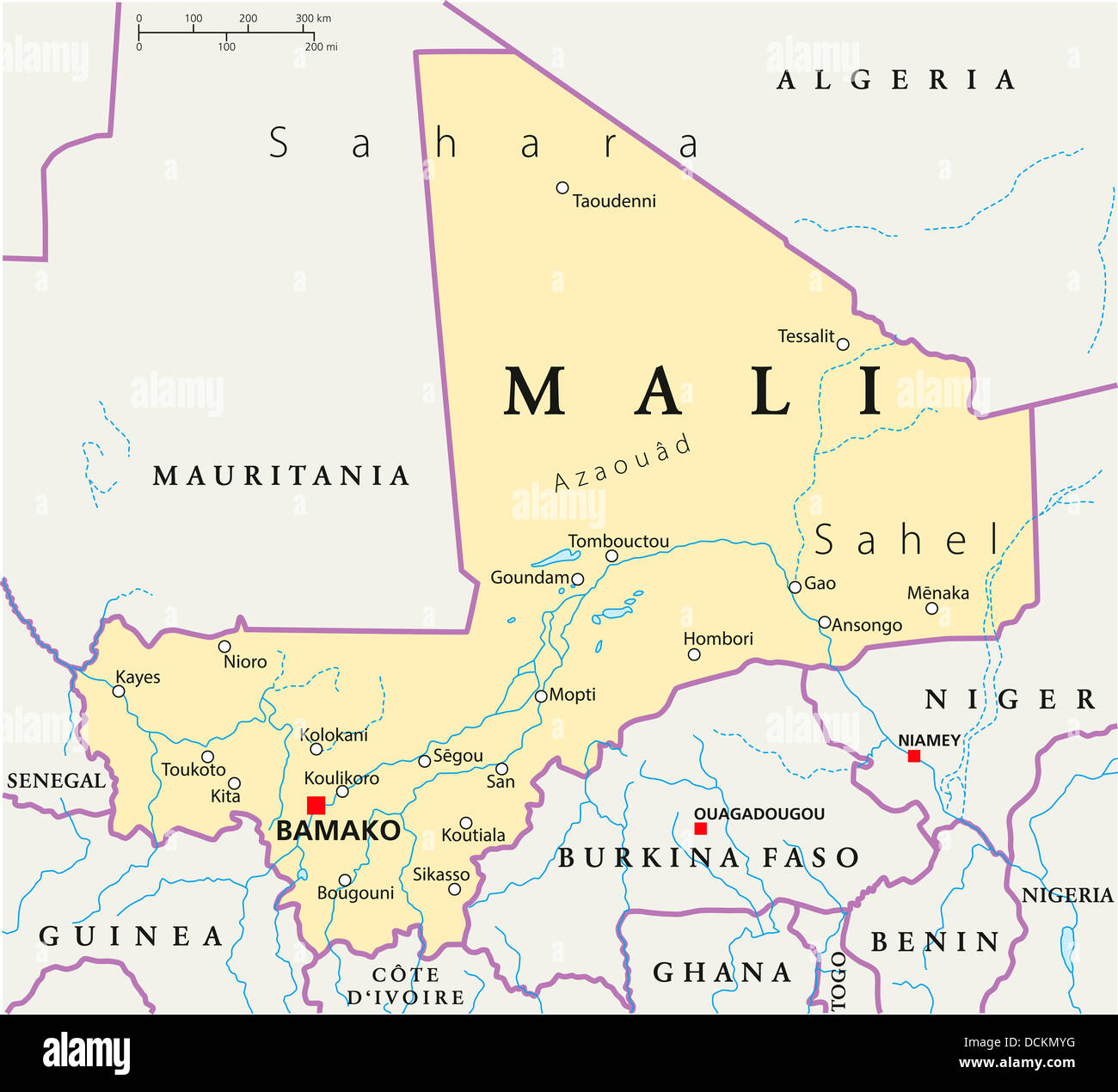
Now that you know the cultural significance behind headrests, we can discuss the location from which NYU says it’s from, Bamana, Mali.
When it comes to discussing identity, I think back to Jean-Paul Colleyn and Laurie Ann Farrell’s (from Bamana: the art of existence in Mali) question, “Who is classifying whom?” This made me want to do a deeper dive into Bamana culture and people.
Mali, a landlocked country in West Africa, is situated between Algeria to the north, Niger to the east, Burkina Faso and Côte d’Ivoire (Ivory Coast) to the south, Guinea to the southwest, and Senegal and Mauritania to the west. Mali is home to the Bamana (Bambara), the largest Mande ethnic group in Mali, making up around 33.3% of the total population. Bamana (meaning “rejection of a master” or “those who refused to be dominated”). The Mandinka and Bambara people are closely related West African ethnic groups within the broader Mandé ethno-linguistic family, sharing a common history, culture, and descent from the Mali Empire. The Bambara emerged as a subgroup of the Mandinka. The Mandinka people are an ancient West African ethnic group, with roots stretching back to at least the 3rd century BC in the Mande region, and a major presence since the rise of the Mali Empire in the 13th century.
Even though the official language of Mali is French, 80% of people speak Bambara (Mande language). Most of the Bamanans are Muslims, but many people still follow their traditional and spiritual beliefs in honoring their ancestors.
According to Dr. Teferi Abate Adem, Bamana (often called Bambara by French colonizers) villages are usually made up of extended families within the father’s lineages, each identified by a totem called a jamu (often animals like lions or panthers). Some villages also include groups like the Fulani if given permission by the village chief. Community life centers around spirituality, and each village has a sacred woodlot or a dwelling place used for rituals and initiations. Spiritual beliefs shape daily life, like birthmarks, timing of birth, and natural signs, which are seen as meaningful. Especially in relation to societies that include the symbolic death and rebirth, like Kore (Kore was a society for uncircumcised boys). Children are examined at birth for physical abnormalities, which could be signs of artistic capacity, excellent memory, or psychic abilities. For instance, a child born with a birthmark similar to that of their grandfather, who was a famous sculptor, could be a sign that that child will be a great sculptor too.
Religion is deeply tied to ancestors, who are honored through ceremonies and believed to guide the living, and village chiefs act as the medium between the living and the dead. People join initiation societies called dyo or jow to gain spiritual power, while other religious practitioners like marabouts (Quranic scholars) and caste groups (nyamakala) possess magic, poison, and procedures for combating enemies and sorcerers, etc. Each dyo is organized hierarchically, and each level has a different degree of spiritual power. During each community-wide festival, ancestors are remembered and honored with prayers and sacrifices. This is done through rhythmic performances and chants, which symbolize the resurrection of dead ancestors. Music and dance are also used for healing the sick/diseases.
Groups like the ton (an age-based association for men and women) shape community life. It includes female and male divisions and is organized by age groups (flan-bolow). One enters the ton after circumcision and leaves it at the age of about thirty-five. There’s also theater and puppet shows, such as koteba theater (Bamana theater form from Mali that uses satire, dance, and song to address social issues and civic injustices) and puppet shows (sogo bo), often featuring masks like sogow, Ngon, and Ntomo.
Bamana society was traditionally divided into three main groups: nobles (horon), slaves (jon), and artists(nyamakala), which included blacksmiths, potters, tanners, and griots (praise singers). Most Bamana are farmers, which could explain why NYU linked the headrest to their culture, since headrests were used by those involved with livestock and agriculture.
However, Bamana people were also artisans who created important ritual objects such as masks, sculptures, and performances, which all play a key role in ceremonies/spiritual life. Furthermore, each item is produced by different caste groups, for instance, masks and sculptures are done by male blacksmiths while women usually make pottery.
Historically, the Bamana migrated from Toron (present-day Côte d’Ivoire) to the Niger River region, building a powerful empire centered in Ségou in the 1700s under leaders like Kaladian and Mamary Coulibaly(grandson of Kaladian), before later being overthrown by Ngolo Diarra (a former slave), then by El Hadji Umar Tall’s Tukolor army in 1861. Then the French took over in 1890, up until Mali’s independence in 1960.
As mentioned briefly, although many Bamana later adopted Islam, it’s deeply embedded in present-day Bamana culture. In Bamana: the art of existence in Mali, it states that rather than being purely traditional, Bamana religion blends older beliefs with Islamic ideas. For example, sacred knowledge (daliluw) is sometimes linked to Islamic practices like pilgrimage, and some boliw (power objects) are said to have come from Mecca through legends tied to Mansa Musa, who was the ninth Mansa (king) of the Mali Empire in the 14th century.
Koteba
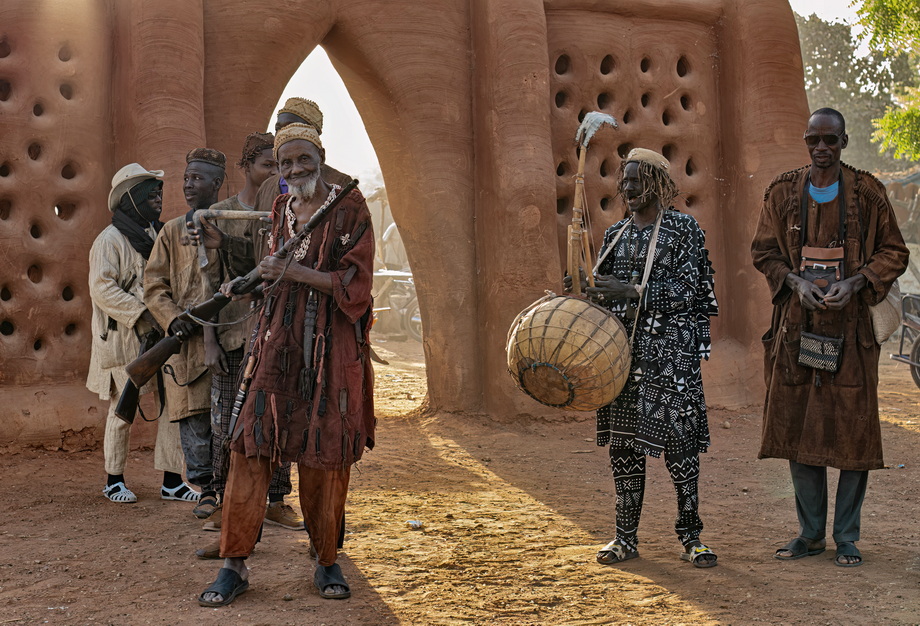
Bamana people Photo credit: Last Tribes
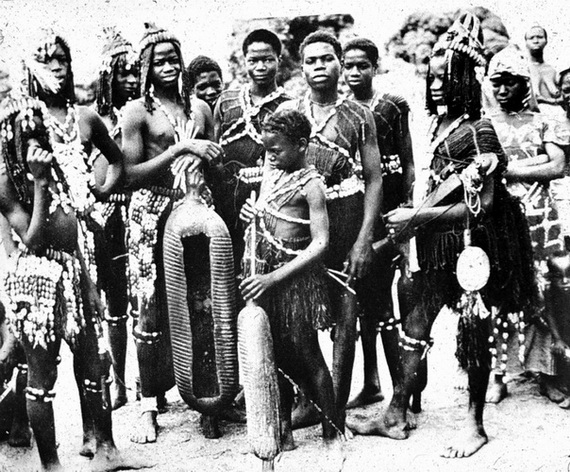
Photo credit: Last Tribes
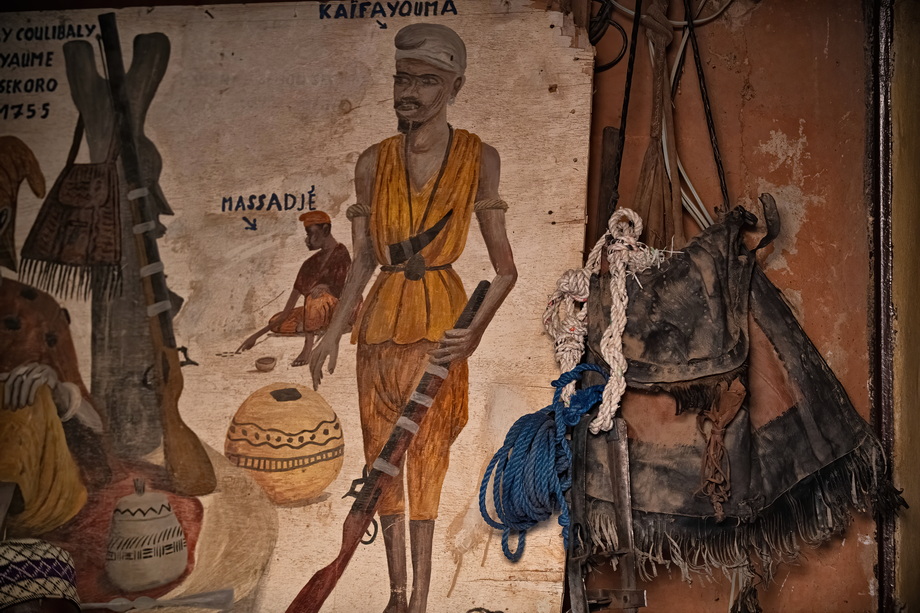
Photo credit: Last Tribes
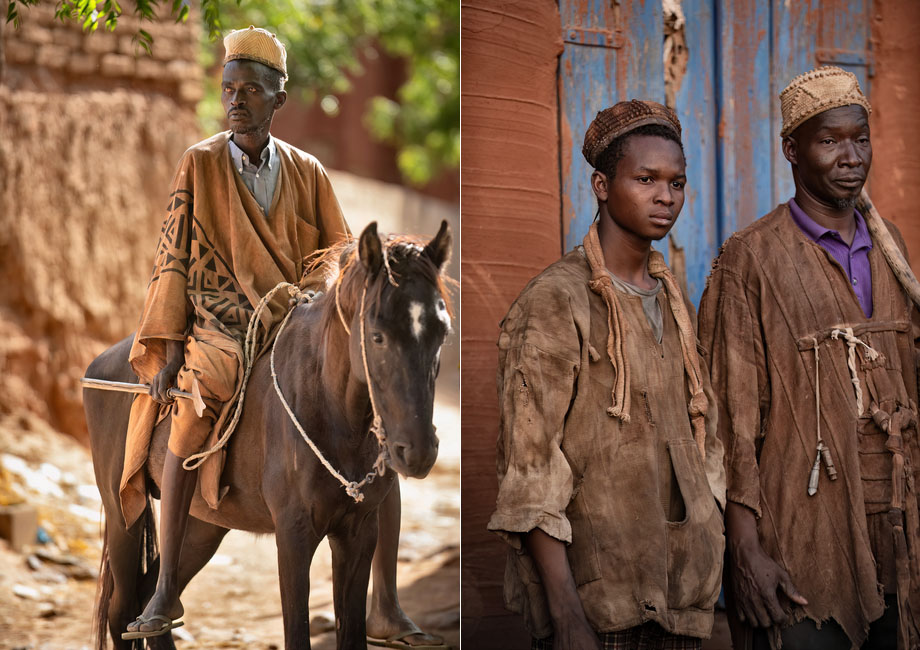
Photo credit: Last Tribes
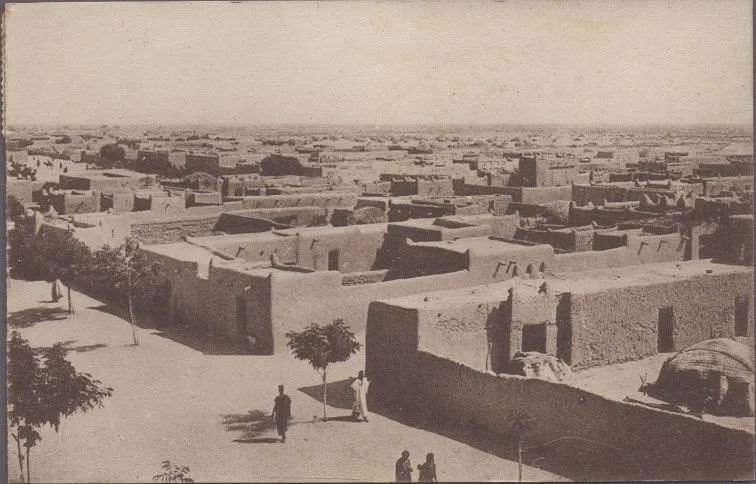
Architecture: Bambara Architecture in Ségou (Sudano-Sahelian style)
When talking about indigenous ethnic groups, architecture is often cast aside and just labeled as primitive. However, I feel it’s important to include it because it’s also cultural, and the land has meaning and memories.
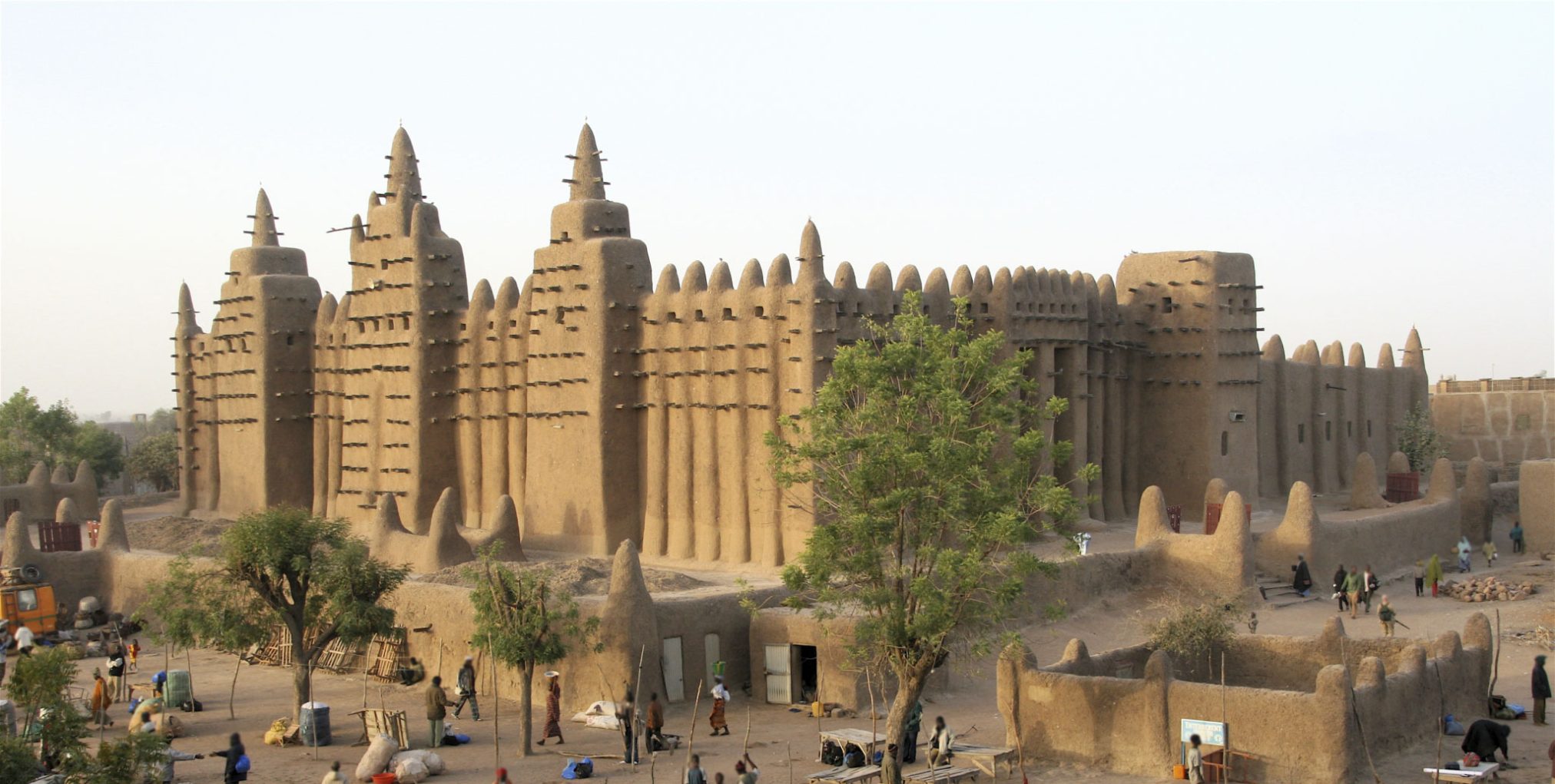
Great Mosque of Djenné, Mali, 2008 (photo: Martha de Jong-Lantink)
The largest mud-built structure in the world. Djenné was founded between 800 and 1250 C.E., and it was the center of commerce, education, and Islam, which had been practiced from the beginning of the 13th century. (Smart History)
Before the French conquest, Bambara villages were heavily fortified with three layers of clay walls (Monteil, 1924). The outer wall surrounded the entire village and nearby gardens, the second enclosed the inner village, and the third protected the chief’s house, showing both security and status of the villagers.
Most homes were round huts with thatched roofs and woven bamboo walls, though some were rectangular or square and made from dried mud bricks (Toulmin, 1992). These villages followed a nucleated layout, meaning homes were tightly made together. This makes sense because Bambara households were large and communal; for example, in the village of Kala, the average household had more than 18 people.
Archaeological evidence shows that this style of settlement has deep roots. At Tongo Maaré Diabal (near Douentza, Mali), a settlement dating back to around 500 CE, researchers found both curved and rectangular mud-brick buildings made from “loaf-shaped” bricks (650–750 CE). The region itself reflects layers of cultural influence: it was originally founded by Bambara from Ségou, later taken over by the Fulani, and is now also home to Dogon communities. The Dogon were influenced by the earlier Tellem people (“those who were before us”), especially in their art. This shows how different groups influenced each other over time through migration and conquest.
Bambara villages are also socially structured around community relationships. People are connected through lineage, age groups, and shared responsibilities. Each village is led by a chief, usually the oldest nobleman from the founding family, who oversees land, conflict resolution, and ceremonies. Age-based groups are very important. Men circumcised together form lifelong bonds based on equality and mutual support, regardless of wealth or status. Similarly, women who marry in the same year form groups to help each other with tasks like cotton-spinning and preparing food.
In a broader regional context, cities like Gao in northeastern Mali show how architecture and settlement could become more complex. Gao was an early major urban center and rivaled the Ghana Empire. Archaeological sites like Gao Ancien and Gao Saney reveal large brick and stone buildings, elite cemeteries, and valuable materials like gold, ivory, and imported goods. This suggests that Gao was not only politically important but also deeply connected to long-distance trade networks.
As you go through the images, you start to notice how those tall, long pillars and the overall style sort of resemble the headrest. Especially with the side supports, framing the center pillars to the far right of the sketch by Louis Gustave Binger, resembles the style of the headrest. I wonder if the environment played a part in the design.
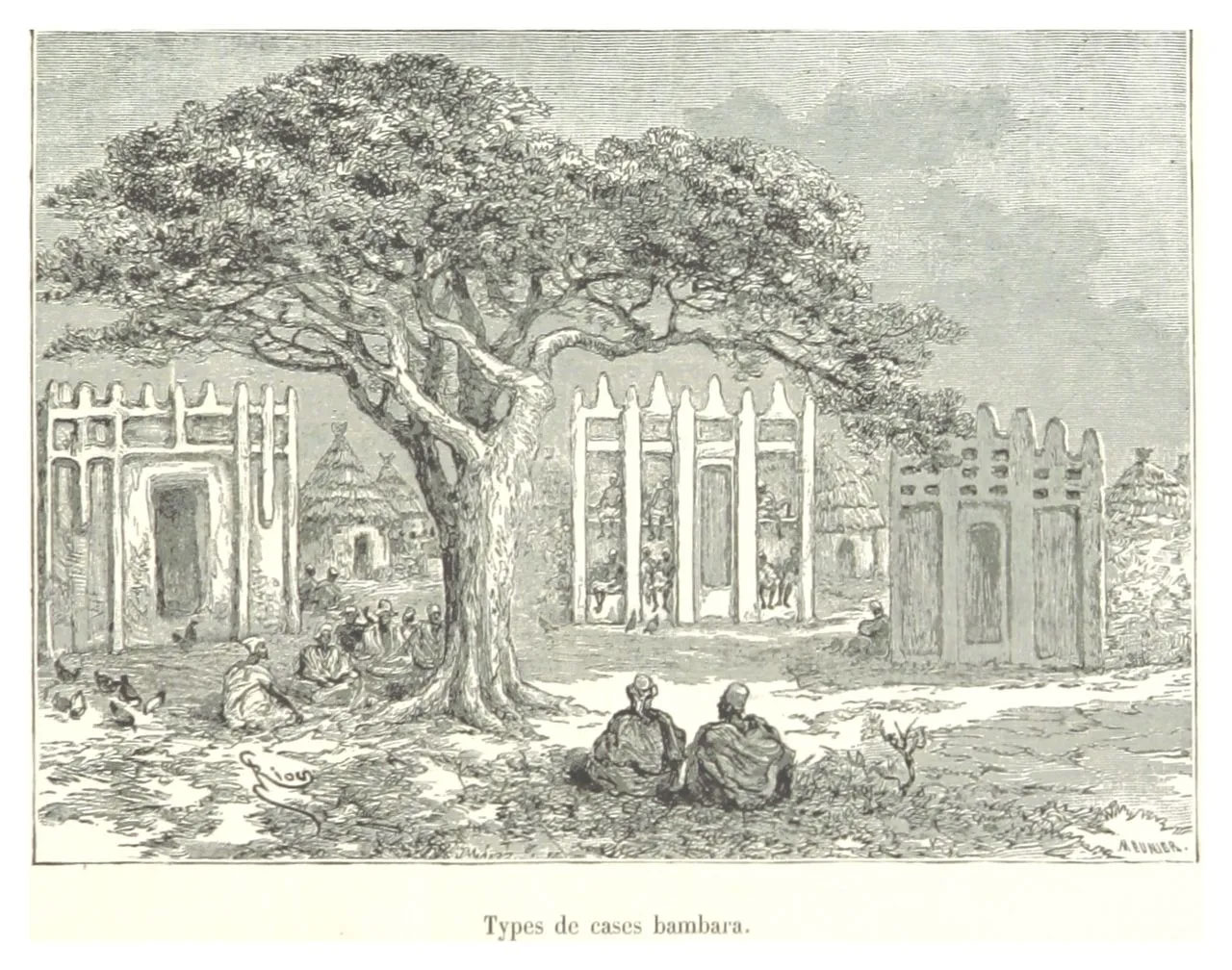
Du Niger au Golfe de Guinée par le pays de Kong et le Mossi
by Louis Gustave Binger, 1892
Depicting the different types of Bambara huts (cases) in West Africa. The illustration provides a visual of the traditional architecture used by the Bambara people during the 19th century.
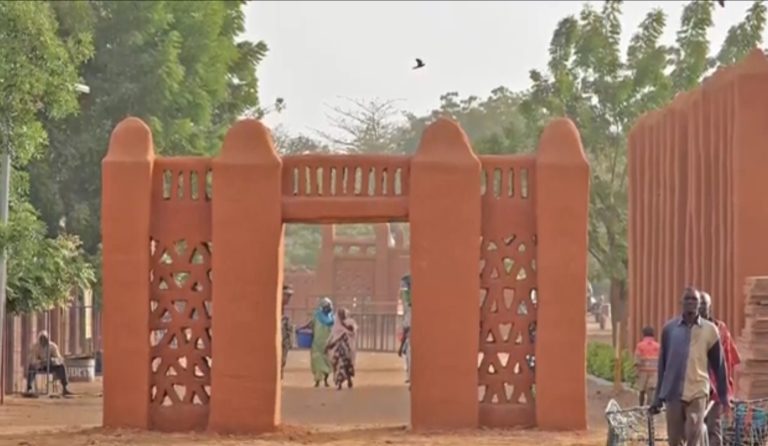
Source: Youtube
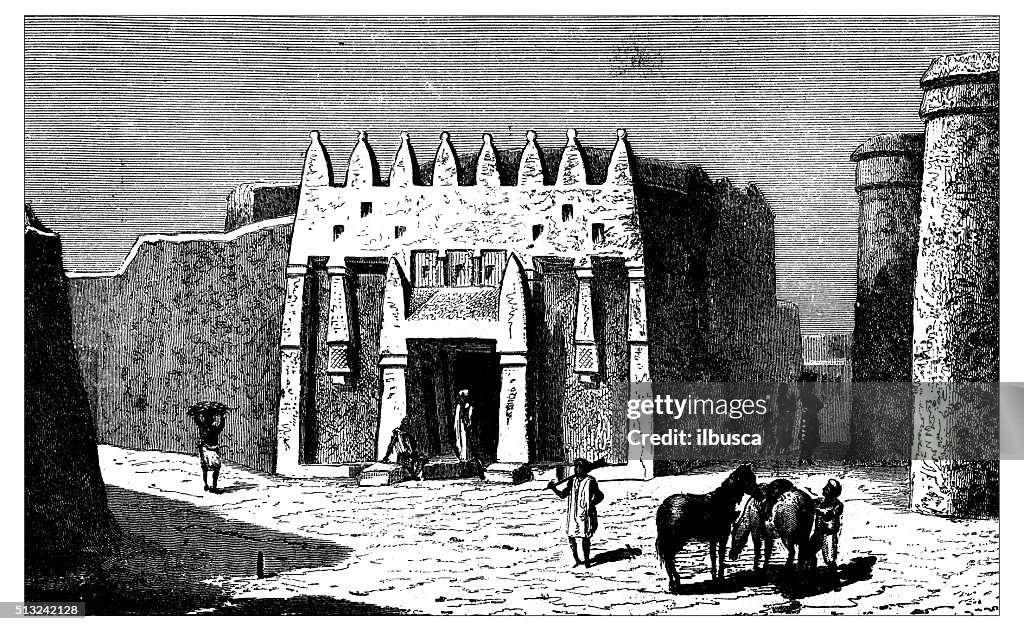
Antique illustration of a 19th-century building in Ségou (Mali), the former capital of the Bambara Empire (town of Ségou-Koro). The building features a monumental decorated front-Getty
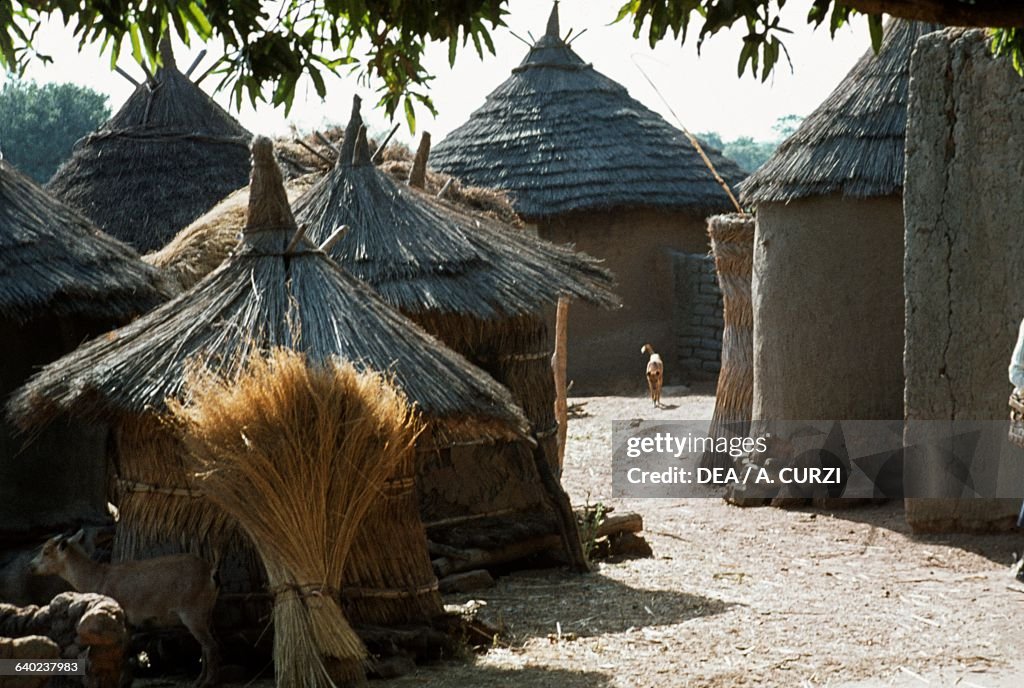
Thatched dwellings in a Bambara village, Mali-Getty
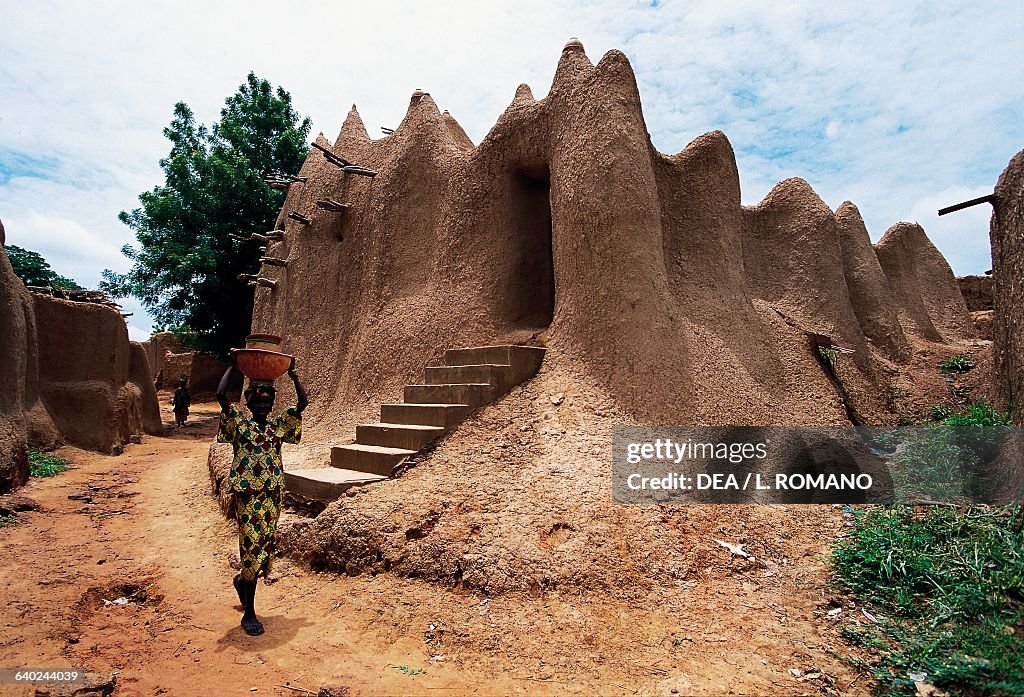
A small mosque, Bambara village of Segoukoro-Getty
Research Discovery
As you’ve read so far, you probably have noticed I haven’t formally connected headrests within Bamana culture; that’s because I don’t believe that the headrest from NYU was made by them.
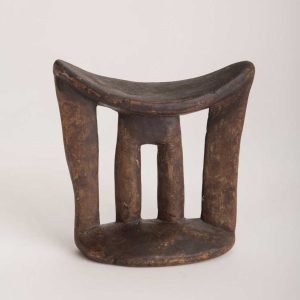
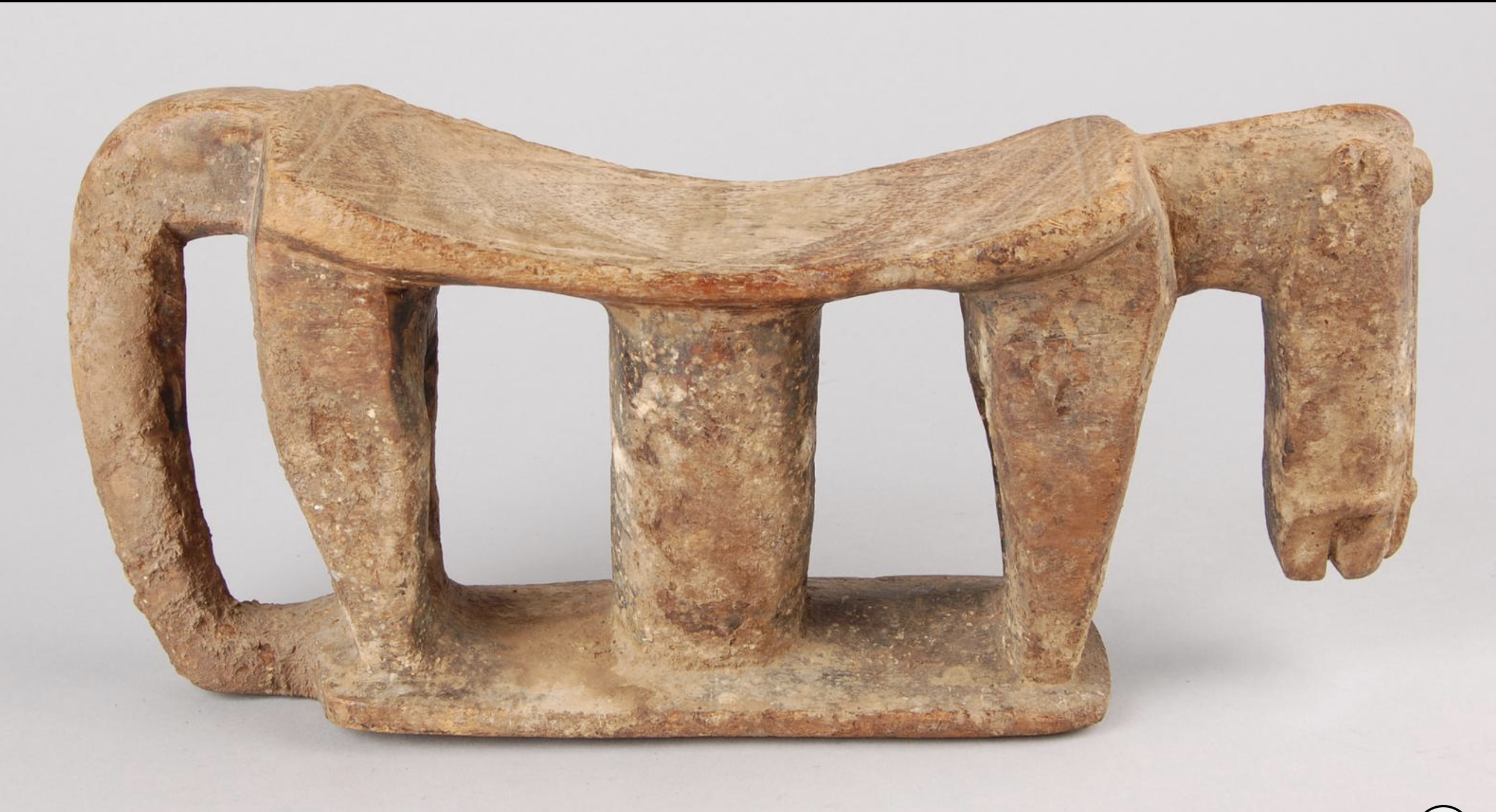
When I started to look up Bamana headrests, only the Ci-Wara Headdresses would show up. So, I broadened my search to all of Mali, and a Dogon Headrest showed up. The design with side supports framing a center pillar is similar to the headrest from NYU.
Also, the Dogon headrest was the only headrest from Mali in the British Museum that has the largest collection of headrests. This Zoomorphic headrest of the Dogon people, who lived near the Bamana people, doesn’t completely match the NYU headrest. Even though each tribe had its own style, often they would be influenced by other cultures around them or before them. Like how the Dogon were heavily influenced by the Tellem.
I began to come to the conclusion that headrests weren’t that significant to Bamana culture, so the headrest might not be from Bamana, Mali.
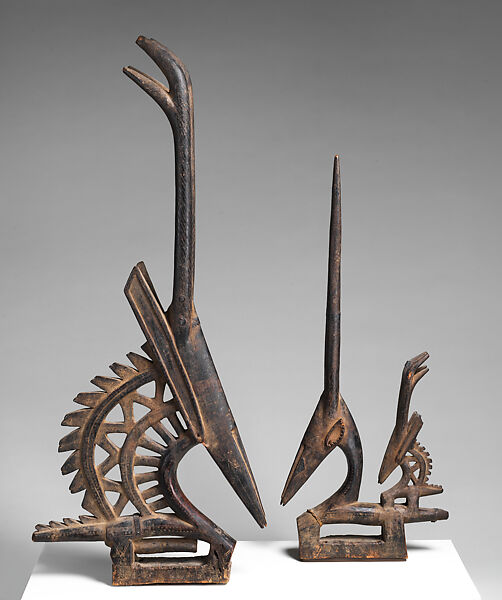
Bamana numu (blacksmith)
19th–early 20th century
Wood, metal, fiber
Bamana, Mali
Shortened statement from the MET:
Among the Bamana, a mythical figure called Ci Wara, who is part human, part animal, is believed to have taught people how to farm, since agriculture is central to their society. When people became careless, Ci Wara disappeared into the earth, so the Bamana created sacred-power objects (boli) and carved ci wara headdresses to honor his spirit. These headdresses combine features of animals like the antelope, aardvark, and pangolin, which are animals admired for skills within farming and are decorated with intricate patterns and open designs.
Ci wara headdresses are used in performances that celebrate and encourage farmers. Dancers wear them in male–female pairs, symbolizing forces like the powerful sun (male) and nurturing earth (female), with the woman often carrying a child representing humanity. Costumes made of raffia fibers mimic movement, water, and animal behavior, reinforcing themes of nature and agriculture. These performances move from the fields into the village and include women singing praises.
The ci wara tradition is a major and evolving form of Bamana art, with regional variations. It has also influenced Western artists like Constantin Brancusi and Ferdinand Léger, who admired its design and use of space.
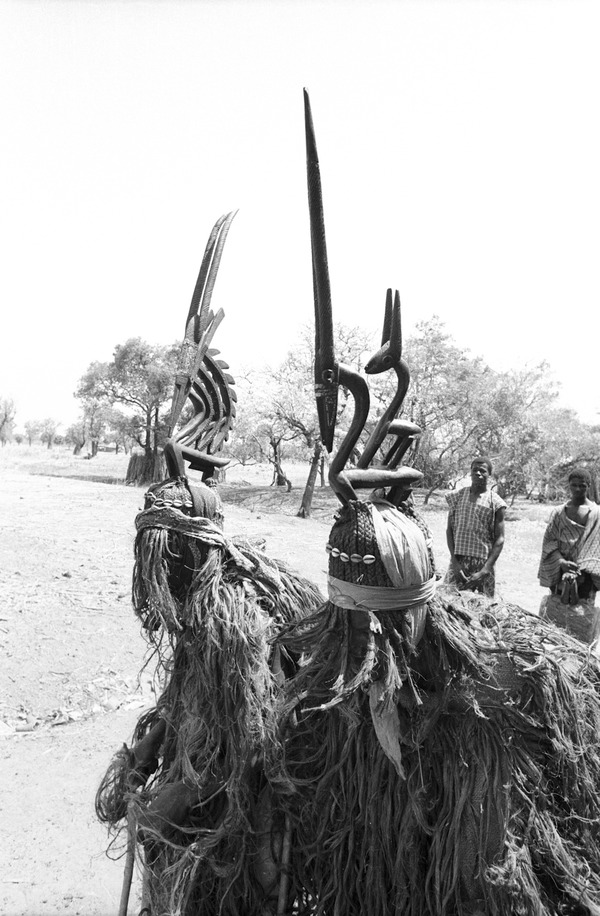
Bamana masqueraders with chi wara headdress
Bamako region, Mali
Photograph by Eliot Elisofon, 1971
National Museum of African Art
Smithsonian Institution
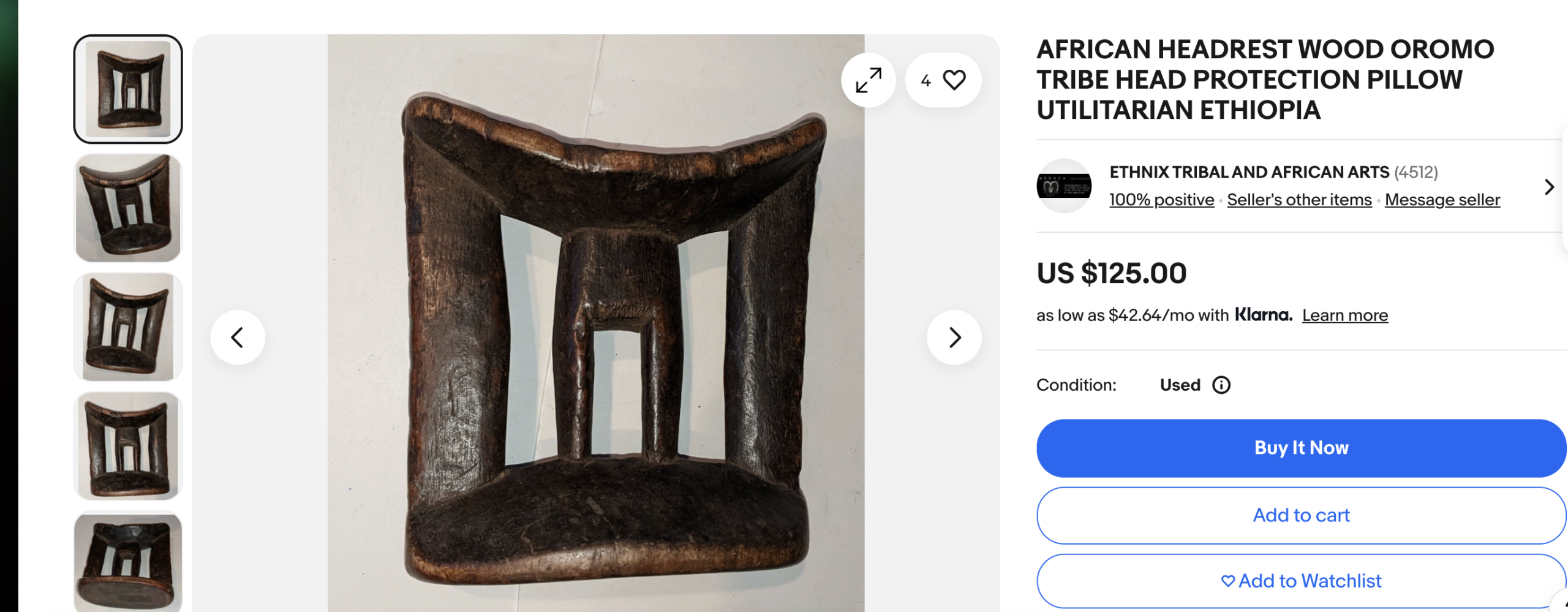
My next step was to Google image search the headrest, and I saw several posts on Etsy and eBay, listing the item from Ethiopia. This then led me to the British Museum, which has over 700 headrests, including an almost identical one to the NYU headrest, also listed from Ethiopia, early 20th century.
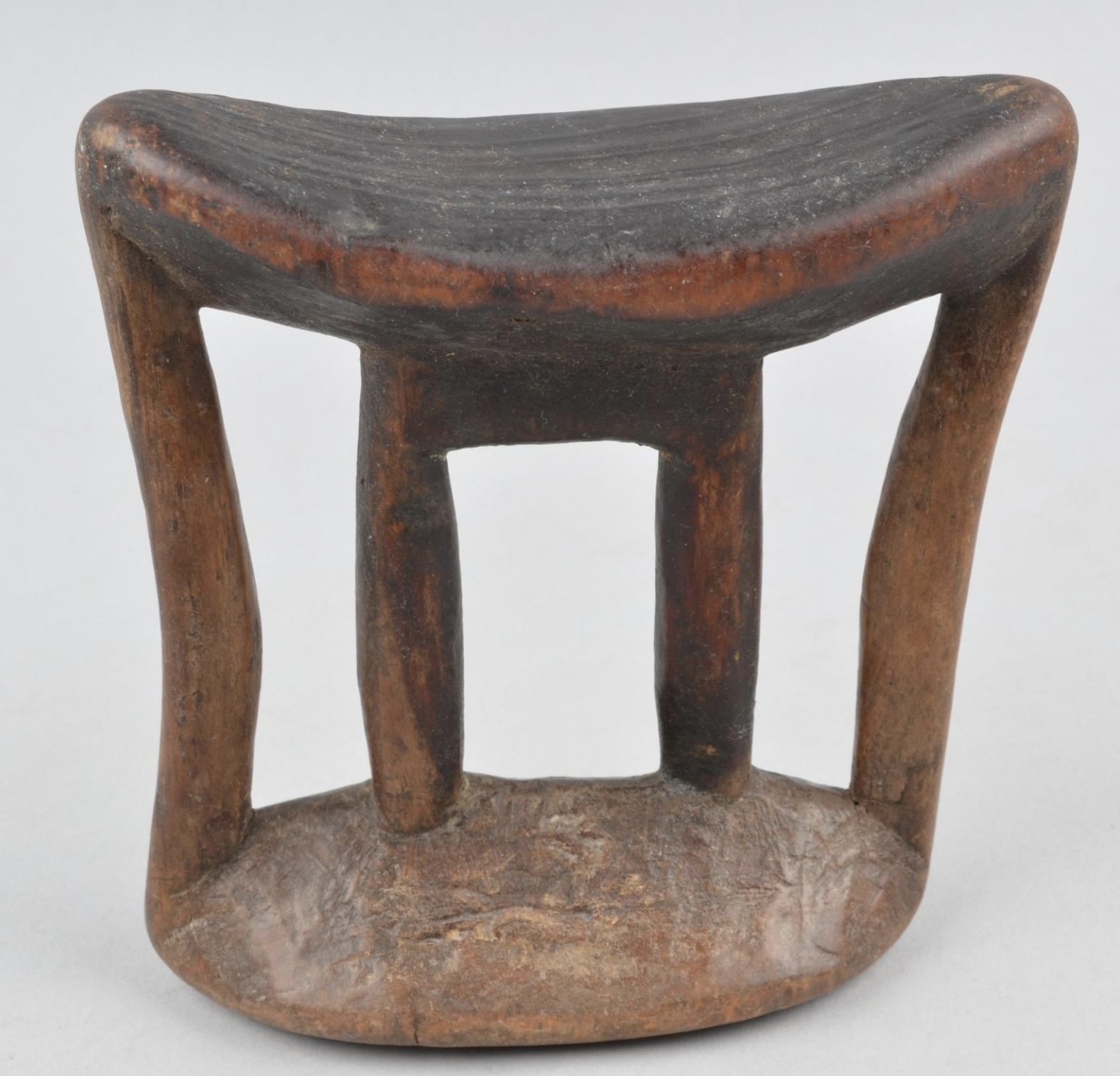
A small headrest carved from a single piece of wood, with an oval base and head, and with four supporting columns.
Early 20th century
Ethiopia
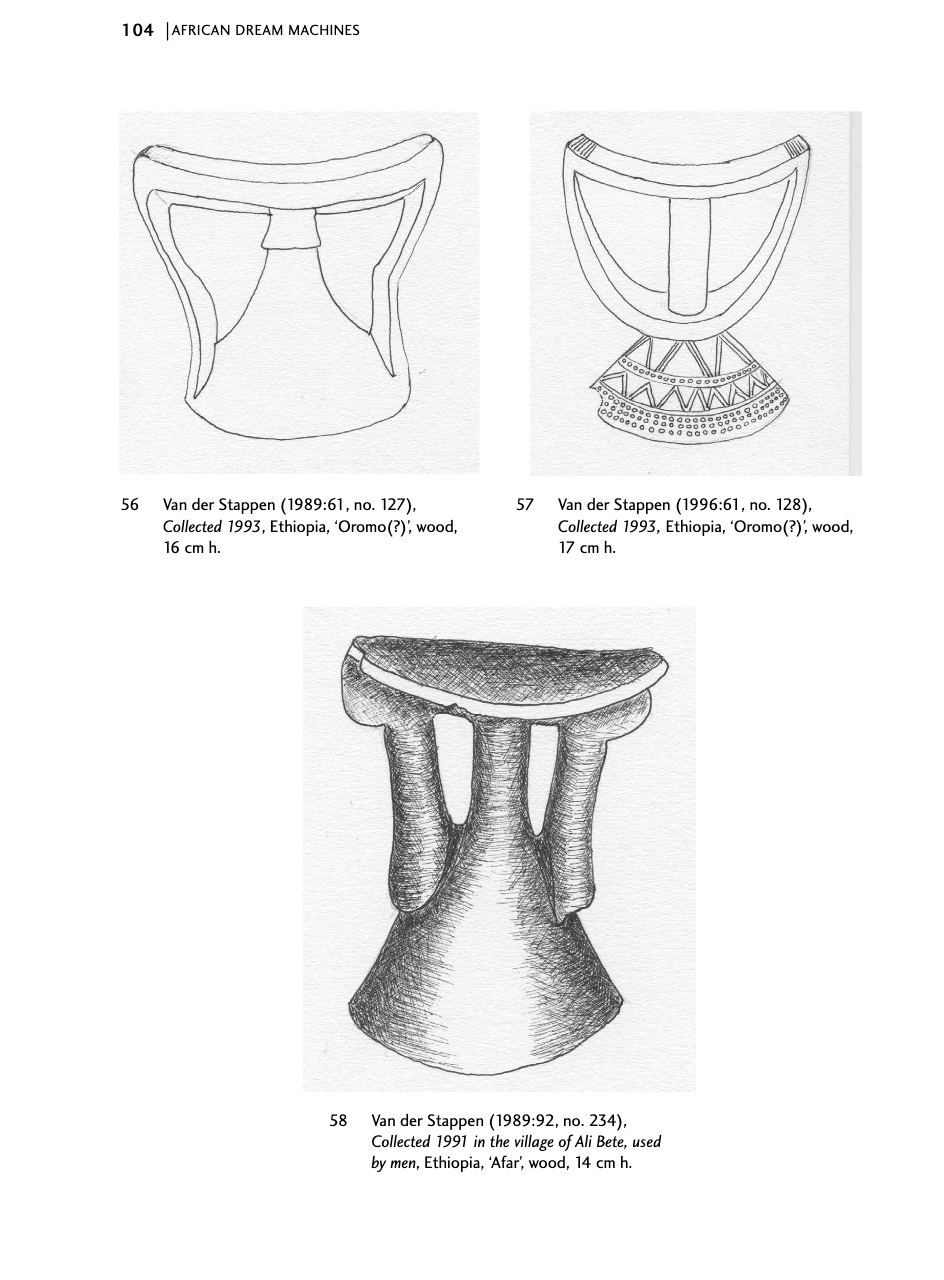
In East African Headrests: Identity, Form and Aesthetics, Anitra Nettleton describes how each location had distinctive styles. Xavier Van der Stappen, a Belgian explorer and author, describes headrests by different Ethiopian groups, the Oromo and the Afar, that share a common design, which includes side supports connecting the top platform to a cone-shaped base, framing a central column. Those descriptions and images correlate with the one from NYU.
So based on this discovery, I believe the headrest is from Ethiopia, early 20th century, made out of wood, and possibly from the Oromo or Afar ethnic group. And NYU Africa House needs to further their own research to confirm the place of origin, correct the label, and provide context and use of the headrest in the description of the piece.
Reflective Curatorial Statement
My role here isn’t to make assumptions for the reader, but to present the facts and information from my research and have the reader use their discernment. However, I do want the reader to understand why context and in-depth research matter and how mislabeling of African objects is too common and needs to stop.
Institutions show a lack of research and care for African art. Context and culture are heavily tied into African art, which is why we should all practice what Dr. Andrea Achi and Dr. Seeta Chaganti call “radical hesitation.” This philosophy allows us to slow down and really process our thoughts on what we’re looking at and the significance of it.
By providing accurate context on the origins, history, and cultural significance of the art, it lets viewers form their own conclusions based on the factual information present. Often, you find very minimal information on African art, little information on how these items were used, and their importance. So, by participating in radical hesitation, it helps to challenge traditional museum structures shaped by the colonial gaze.
Curation derives from the Latin curare, “to take care of.” Care should be taken with all art. That’s what I did for my research based on my object, the African Headrest.
My methodology first involved understanding why headrests were used, then expanding my research to explore what headrests meant globally and how different countries and ethnic groups developed their own culturally significant carvings and motifs. This made me realize how interconnected art and culture are across the world. Although African and Asian headrests had distinctive styles, they often shared similar functions, such as protecting hairstyles, supporting spinal alignment, connecting with ancestors spiritually, and serving as burial objects.
Through my research on the Bamana people, I discovered that headrests were not especially common within their culture in the way Ci-Wara headdresses are. Expanding my search on headrests in Mali led me to the Dogon people of Mali. Then image searches brought up nearly identical headrests from Ethiopia on sites like eBay and Etsy. The British Museum even holds an almost identical example, also labeled as Ethiopian. Texts on East African headrests also describe Ethiopian forms with two side supports framing a central column on a cone base, matching the NYU object.
I considered researching groups like the Oromo and Afar more deeply, but I felt my focus should remain on the culture identified by NYU to better understand whether headrests were actually significant there. That process revealed that headrests were rarely mentioned in Bamana culture, which is important because culturally significant objects usually appear consistently across texts and institutions, much like Ci Wara headdresses do.
This experience highlighted how often African objects are misidentified due to limited research and care. The research itself was not difficult, only time-consuming, and that level of care should be expected when studying any artifact. Understanding the people, culture, and land connected to an object is essential because artifacts cannot be separated from the communities that created and used them.
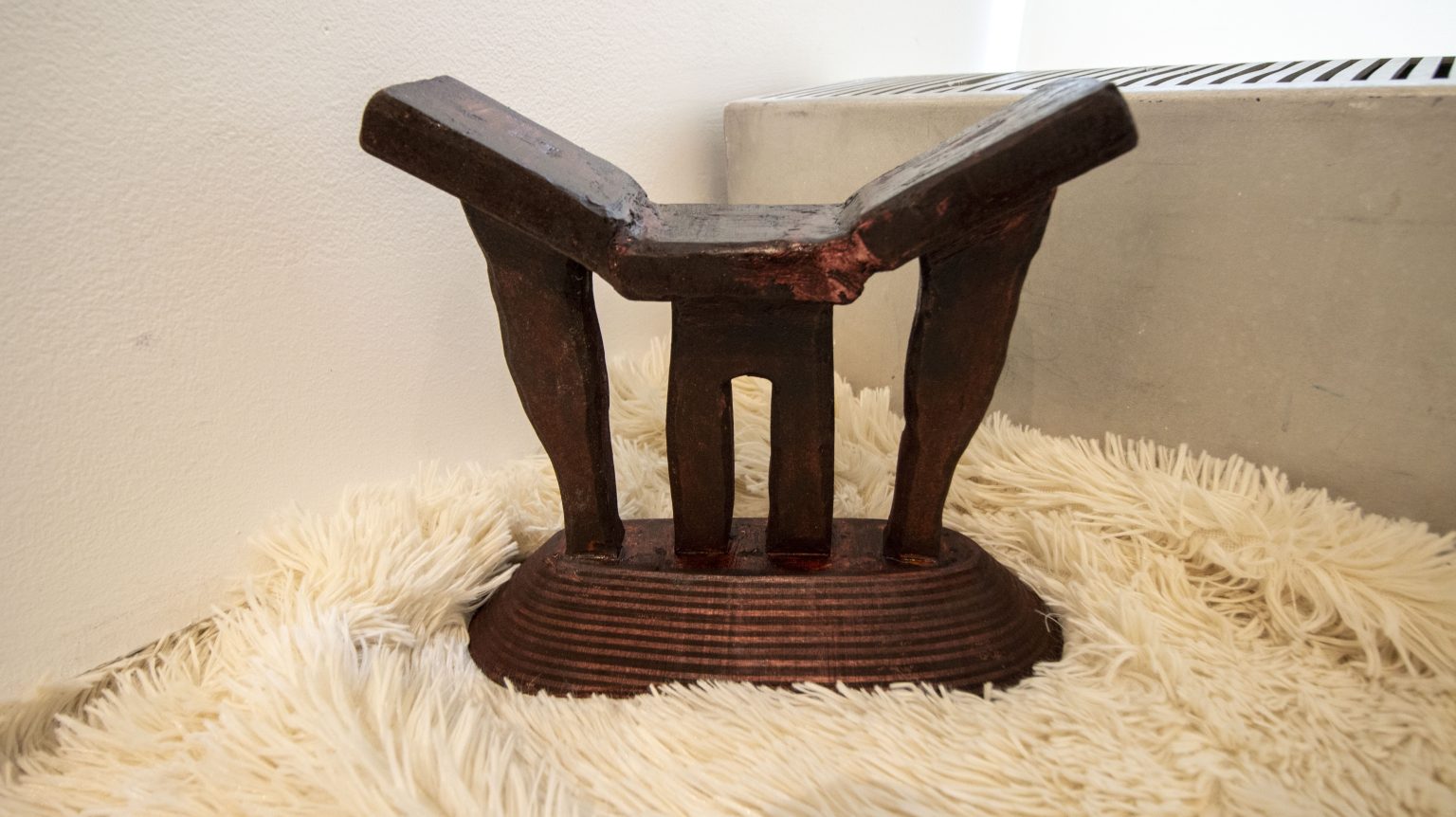
My re-creation of the African Headrest (co-created with Saina Udayagiri) is made out of wood and MDF with a dark cherry stain.
(My baby brother is lying upon it).

Bibliography
“ A History Of The Bambara People.” YouTube. Accessed May 1, 2026. https://youtu.be/ll6n_TuByQU?si=OUo76osozZy2Tnyy.
Adem, Teferi Abate. “Bambara.” eHRAF World Cultures. Accessed May 2, 2026. https://ehrafworldcultures.yale.edu/cultures/fa08/summary.
“Africa: 101 Last Tribes – Bambara People.” AFRICA | 101 Last Tribes – Bambara people. Accessed May 2, 2026. https://www.101lasttribes.com/tribes/bambara.html.
Africanews. “Mental Health Patients in Mali Find Their Voice through Theater.” YouTube, 2025. https://youtu.be/oN0q3NsXeCU?si=hld3ek8R8KKNX8HD.
Afristory. “Archaeology & Civilizations: Traditional African Headrests Are Carved Wooden or Ivory Supports Used as Pillows in Many African Cultures.” Facebook. Accessed May 1, 2026. https://www.facebook.com/groups/archeologyandcivilizations/posts/9474104786016294/.
Bantu Arise. “ Ségou Empire: The Rise and Fall One of Africa’s Greatest Empire.” YouTube, 2025. https://www.youtube.com/watch?app=desktop&v=30xbjZYJwAM.
Baxter, Roberta. “Mali: Geography and Cartography: Research Starters: EBSCO Research.” EBSCO, 2025. https://www.ebsco.com/research-starters/geography-and-cartography/mali.
“Blog.” Oh, My Aching Head! – History of Headrests. Accessed May 2, 2026. https://www.beprimitive.com/blog/oh-my-aching-head.
Brett-Smith, Sarah C., and Brett-Smith, Sarah C. The making of bamana sculpture: Creativity and gender. Cambridge :: Cambridge University Press, Ann Arbor, Michigan: MPublishing, University of Michigan Library, 1994.
Collection | british museum. Accessed May 2, 2026. https://www.britishmuseum.org/collection/object/E_Af1935-1110-5/.
Colleyn, Jean-Paul, and Mary Jo Arnoldi. Bamana: The art of existence in Mali. New York, Zurich, Gent: Museum for African Art ; Museum Rietberg ; Snoek-Ducaju & Zoon, 2001.
Egypt Museum. “Tutankhamun Headrest.” Egypt Museum, January 9, 2025. https://egypt-museum.com/tutankhamun-headrest/#google_vignette.
Glenn, Joralyn. “Headrests in Glencairn’s Egyptian Collection: Practicality and Protection.” Glencairn Museum, April 24, 2023. https://www.glencairnmuseum.org/newsletter/2018/7/25/headrests-in-glencairns-egyptian-collection-practicality-and-protection.
A Guide to Looking. Researching Objects at the Peabody Museum of Archaeology and Ethnology. Peabody Museum of Archaeology , 2016.
Guzman, Alice. “The History and Utility of African Headrests.” Africa Direct, April 29, 2024. https://africadirect.com/blogs/news/the-history-and-utility-of-african-headrests?srsltid=AfmBOooGP0oqXClIVCnhhWq5y-l1XVGWMFHr2kN0Z4ifscdfkaTz87je.
Limited, Alamy. “Get Creative with Stock Photos and Videos from Alamy.” Alamy. Accessed May 2, 2026. https://www.alamy.com/.
Limited, Alamy. “Makura Sleeping Women with Their Heads on the Makura, Japan Stock Photo.” Alamy. Accessed May 2, 2026. https://www.alamy.com/makura-u201dthe-wooden-pillow-u201d-sleeping-women-with-their-heads-image152691444.html.
Nettleton, Anitra C. E. African dream machines: Style, identity and meaning of African headrests. Johannesburg: Wits University Press, 2019.
NYU. “African Headrest.” NYU Africa House. Accessed May 1, 2026. https://www.nyuafricahouse.org/ah-art-collection/0n6k5rhx3cdyn9tatbq6vkw4glry1p.
Samuel, isaac. “A Complete History of the Sudano-Sahelian Architecture of West Africa: From Antiquity to the 20th Century.” A complete history of the Sudano-Sahelian architecture of west Africa: from antiquity to the 20th century, January 12, 2025. https://www.africanhistoryextra.com/p/a-complete-history-of-the-sudano.
ScionOfCulture. “Exploring Bambara Architecture: A Window into the Sudano-Sahelian Mud Architecture of West Africa.” PanAfroCore, March 27, 2024. https://panafrocore.com/2024/03/27/exploring-bambara-architecture-a-window-into-the-sudano-sahelian-mud-architecture-of-west-africa/.
“Sleeping Beauties: Headrests from the Fowler Museum at UCLA.” Sleeping Beauties: Headrests from the Fowler Museum at UCLA | SFO Museum. Accessed May 1, 2026. https://www.sfomuseum.org/exhibitions/sleeping-beauties-headrests-fowler-museum-ucla#:~:text=In%20many%20parts%20of%20central,clay%2C%20wood%2C%20and%20bamboo.
Unwin, Anna. “The African Headrest.” AU, September 24, 2020. https://annaunwin.com/blogs/journal/the-african-headrest#:~:text=The%20hairstyles%20they%20achieved%20were,another%20continent%20and%20another%20time.
“Vintage Geisha Takamakura Pillow: Takamakura, Asian Art Imports.” AsiaBarong, May 8, 2022. https://asiabarong.com/product/vintage-geisha-takamakura-pillow-floral/.
World Population Review. “Mali Population 2026.” World Population Review, May 1, 2026. https://worldpopulationreview.com/countries/mali#:~:text=The%20people%20of%20Mali%20are,Other:%20(0.3%25).