Bongo Nyga (“Mortuary Staff”)
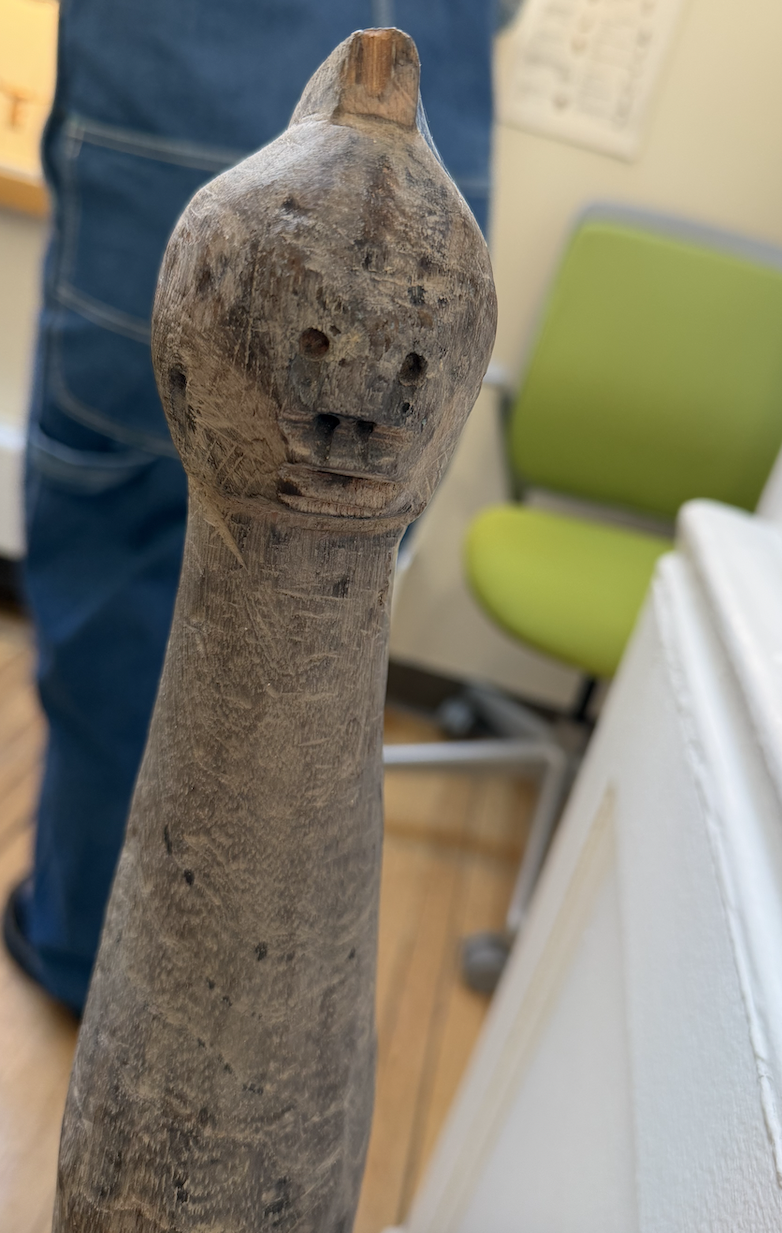
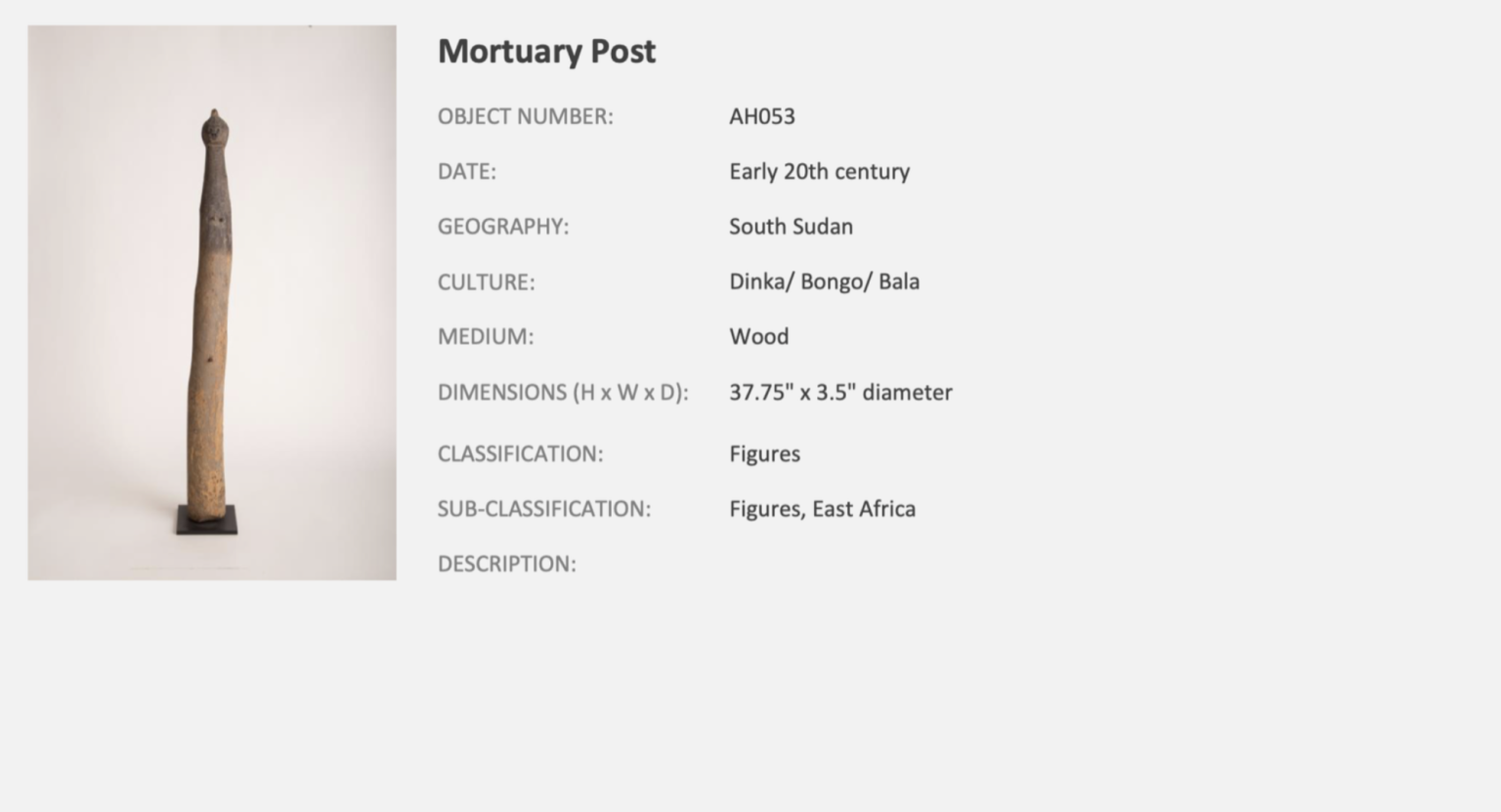
Stranded far away from its culture, this Nyga (mortuary post) is currently located in NYU’s Africa House. The institution boasts that these objects “were pulled out of everyday use” before eventually being anonymously donated. Despite these items being a point of pride within Africa House, the care and scholarship given to them is lackluster at best. Sitting in a conference room, this Nyga has been removed from its purpose and community, relegated to being nothing more than a "curio" of colonization. The information given by Africa House is vague and heavily influenced by previous ethnography and exploitation.
Rematriation and Other Goals
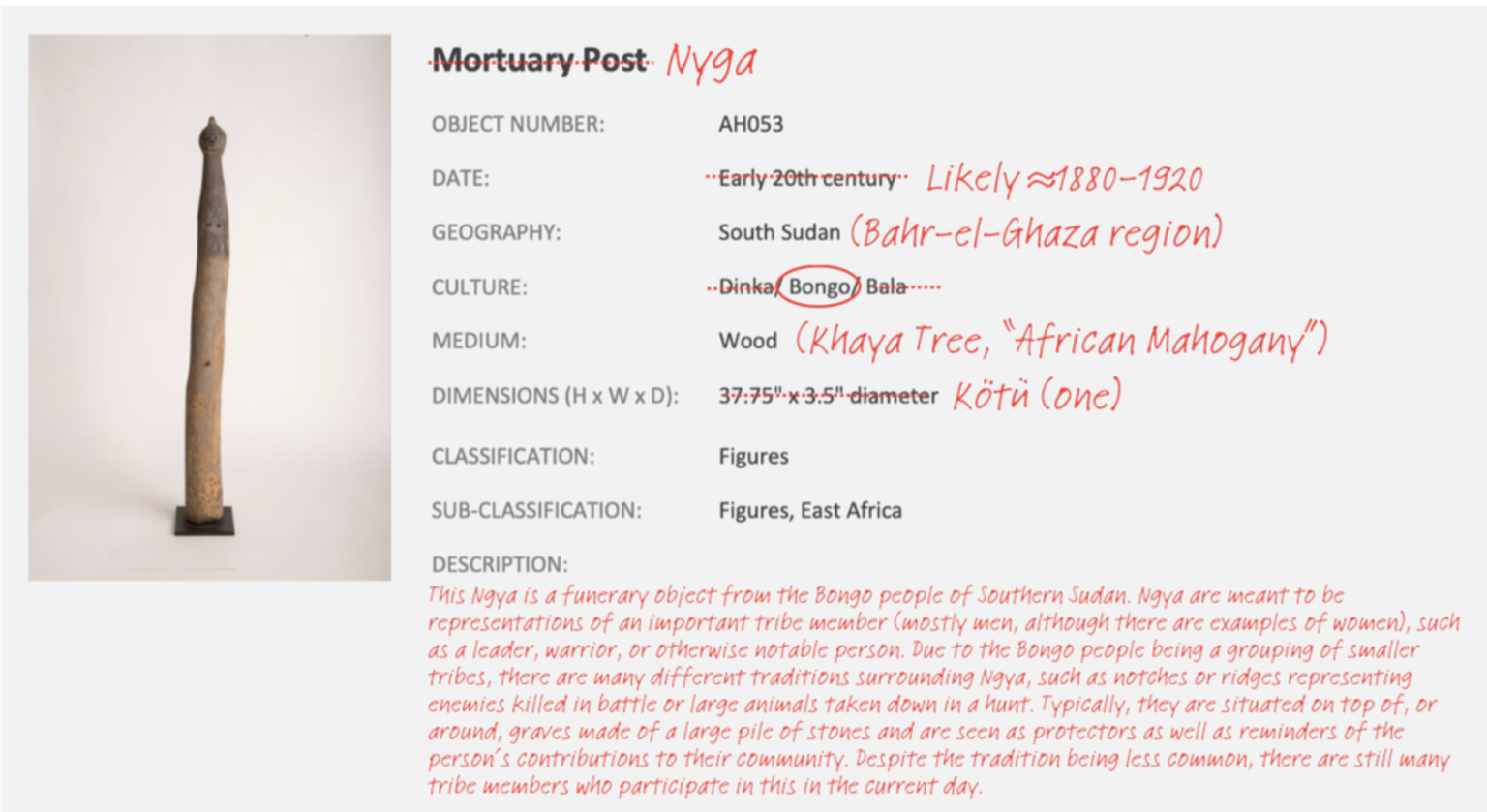
This page intends to make the case that this Nyga should be rematriated, and that the NYU Africa House has a moral obligation to at the very least decolonize their approach to their collection. In an attempt to decolonize the approach previously given to this Nyga, an effort has been made to infuse as much of the Bongo people’s indigenous language and culture as possible.

While this research may be a helpful starting point, this should not be the only effort made, nor is it an expert’s work. Instead, this is a good-faith effort to showcase the Bongo’s culture and art from an outsider’s point of view.

What was once a powerful protector has been ripped away from the same soil that nourished the tree it was born from. Nyga should not just be repatriated, but rematriated, defined as the “returning to the sacred Mother” by the creator of the term, Lee Maracle. Instead of merely giving an item back, rematriation demands a shift away from colonial systems and allows the culture in which an item can return to existing “without external interference.” For even the idea of repatriation is a colonial term meant to soothe everyone except the ones who were stolen from.
Before and After
A Brief History of the Böngëë
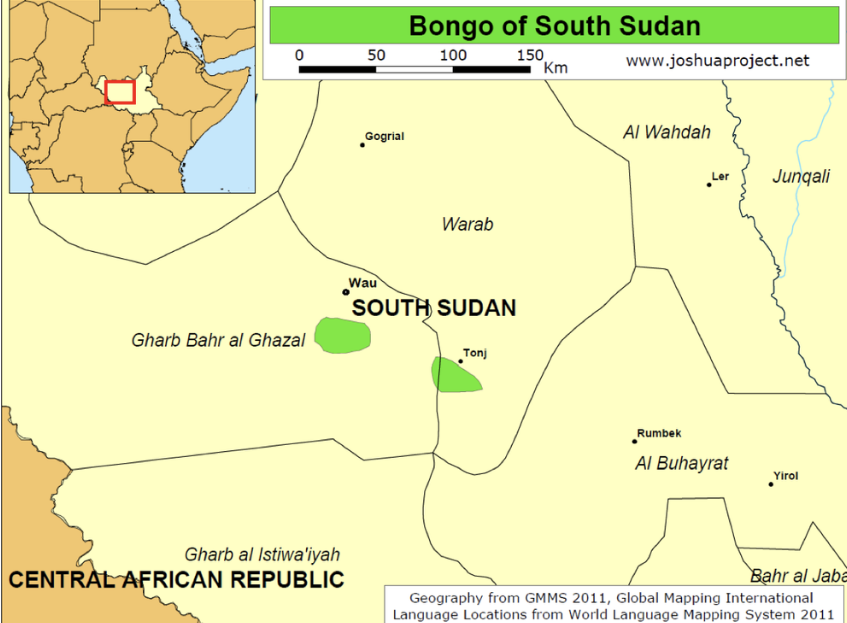
The Böngëë (Bongo people) are an ethnolinguistic dokoko (group) who currently aꞌdu (reside) in the Bahr-el-Ghazal region of Southern Sudan. The descriptor “Bongo” is in fact an umbrella term that contains a multitude of unique groups, each with their own culture and traditions. These groups are further divided into clans and villages; each village contains around 100 members and is governed by a nyere (chief). As of 2013, it is reported that the Bongo people number around 10,000 within 40 distinct clans (SIL International, 2). Historically, the Böngëë have persevered through many trials, including, but not limited to: the Arab 'bïngäcä-aꞌdoho (slave-trade), moko with neighboring people such as the Zande, and the ongoing Sudanese civil moko (war). Despite these mbogo (hardships), the Böngëë and their culture are constantly bingbe (evolving). Many early ethnographers claimed that the Böngëë were “decreasing at an appalling rate” (Santandrea, 62), but the Böngëë have long outlasted the ethnographers who originally lamented their anticipated demise. These outsiders also warned that “the market for Bongo art will be its grave” (Santandrea, 77) or “wood-carvers are deplorably lacking in this part of Bongoland, and the custom is likely to die out” (Santandrea, 74), yet kaga-aga (wood-carving) is still integral to the Böngëë and their way of ꞌburu (life), despite relentless consumption from gbanja (various/different) outside kuhu (communities).
Spend gbondokada (time) enjoying this joyful ngoyo (song) and ngala (dance) of the Böngëë, recorded in 2021. This culture is not a thing of the past, and is instead constantly bingbe (evolving).
Nyga in Context
Nygas are one of the many subsects of ngayi (wooden posts), typically made from trees native to the region, such as the 'buulu (Khaya genus/African Mahogany), which either depict or protect the person for whom it was made after muyu (death). Historically, Nyga have been a'naga (carved/cut away) by a skilled bayongo (artist) who was highly knowledgeable in the craft, typically passed down through oral history and/or apprenticeship.
There is a massive amount of gbanja (variety) in style, size, and use of these carved posts. This is likely due to the use of the umbrella term “Bongo,” which, in all reality, is comprised of over 40 individual döꞌbëë (clans) with their own traditions. There are Nyga that are larger than life, and some that are barely two hands tall. Some posts showcase personal features of the person depicted, while others are an idealized version. To attempt to cover each group’s features and customs is a worthy pursuit, but not the focus of this project.
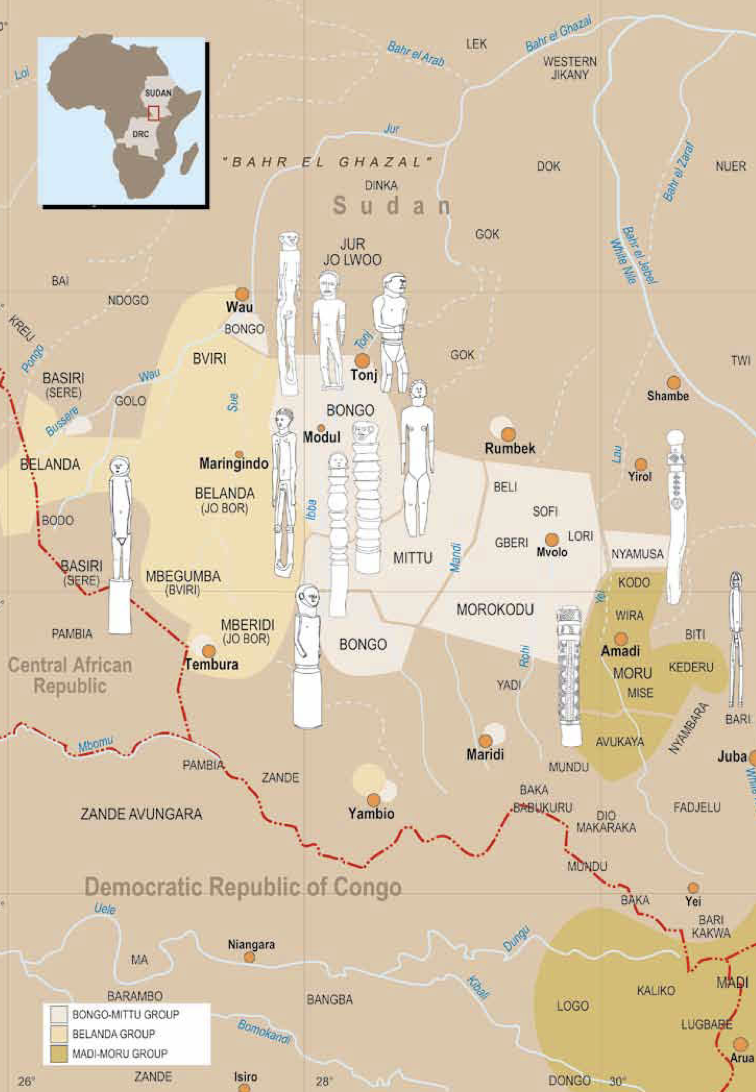
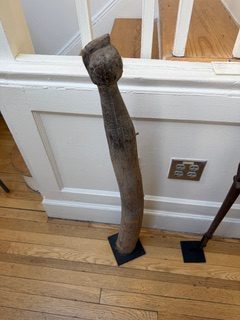
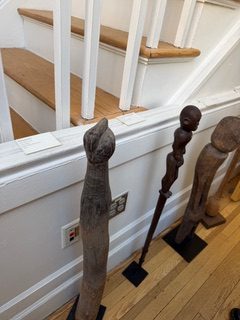
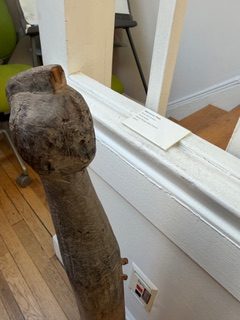
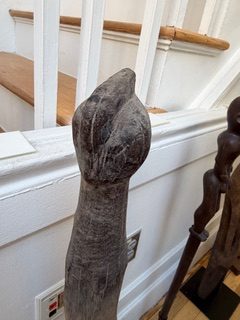
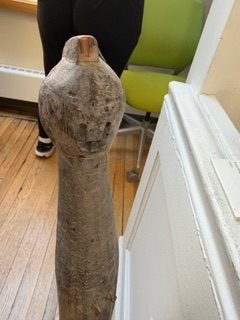
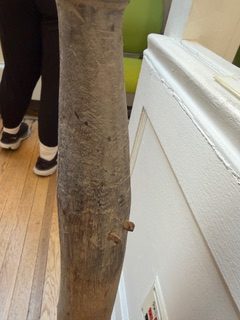
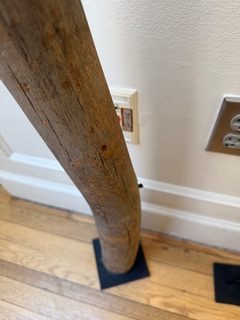
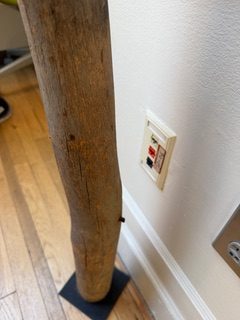
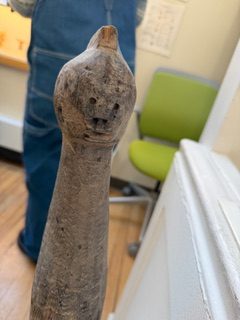
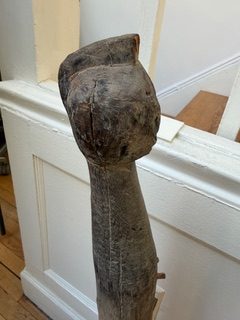
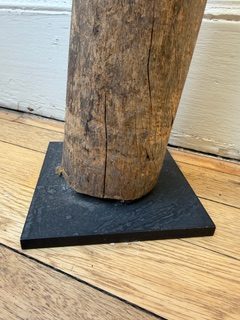
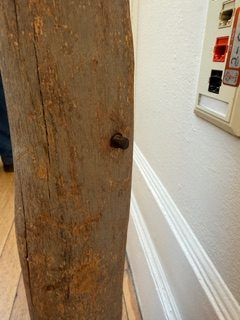
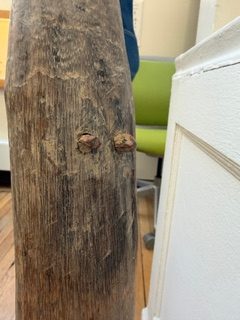
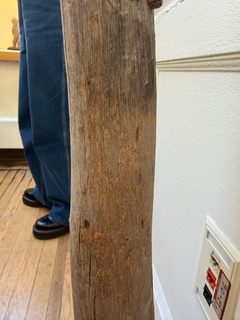
This particular Nyga stands at around five ji (hands) tall and likely depicts a bu'dee (male) figure due to both the hairstyle and depiction of anatomy. While this is clearly figural, it is unclear if this is a depiction of a particular individual, or is intended to ward off hege (malevelent spirits) through the appearance of a guardian at a dudu (gravesite). The face features a carved set of komo (eyes), homo (nose), tara (lips), and a hairstyle common among men in Southern Sudan. In addition, there are carvings that could be a traditional depiction of scarification (a common but not universal practice among the Bongo), especially around the mouth area. This could also be a result of the natural wear of a wooden object. The two-toned effect could have been intentional or a result of the aging process, but staining the wood is practiced among the present-day Bongo people. This coloring could also be the result of the Nyga being buried several hands into the ground.

Likely, this Nyga would have accompanied a dudu. Due to the wear on the wood, it seems improbable that this Nyga was made for an audience outside of the Bongo people. The dudu in which this Nyga was intended to live are highly ritualistic and also vary greatly from döꞌbëë to döꞌbëë. There have been dubious ethnographic “studies” on the Bongo burial practices, but often, these “studies” were in fact grave robbing. Bongo people seem to generally accept the concept of a dödïlï (ghost or visible spirit), and that after muyu (death) the mumbu (corpse) must be protected against evil, hence the use of a Nyga.
Nyga and Their Modern Evolution
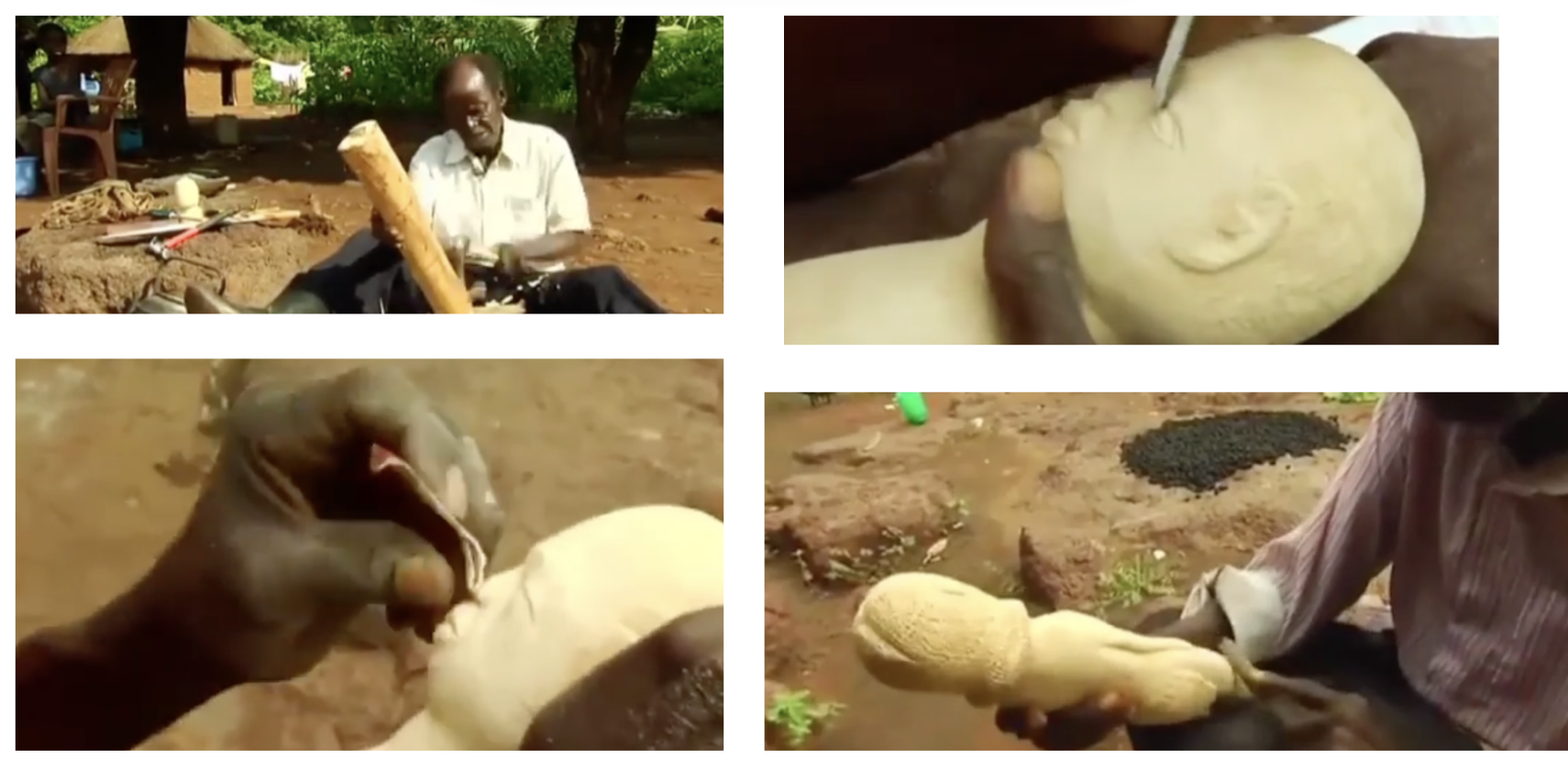
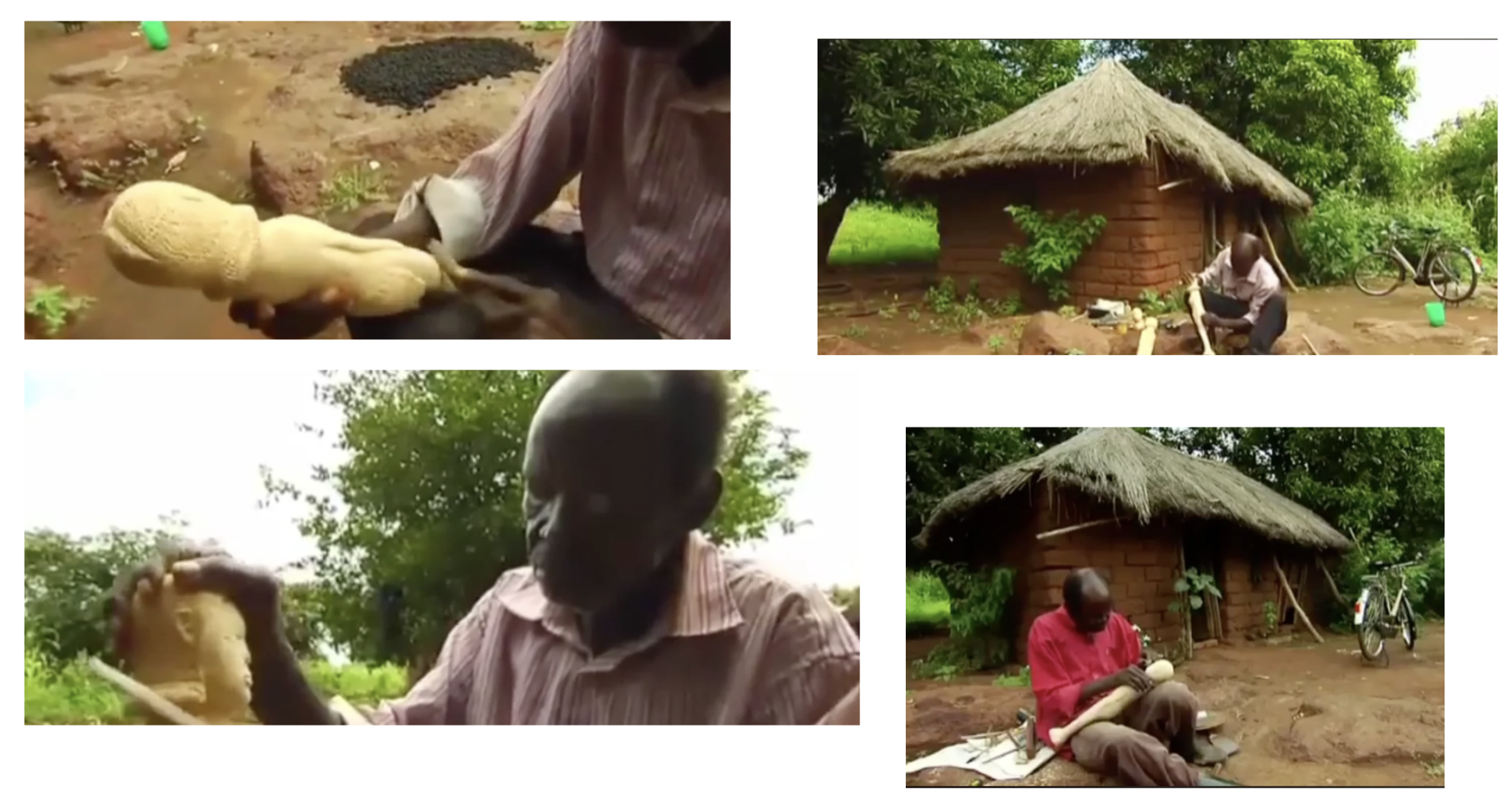
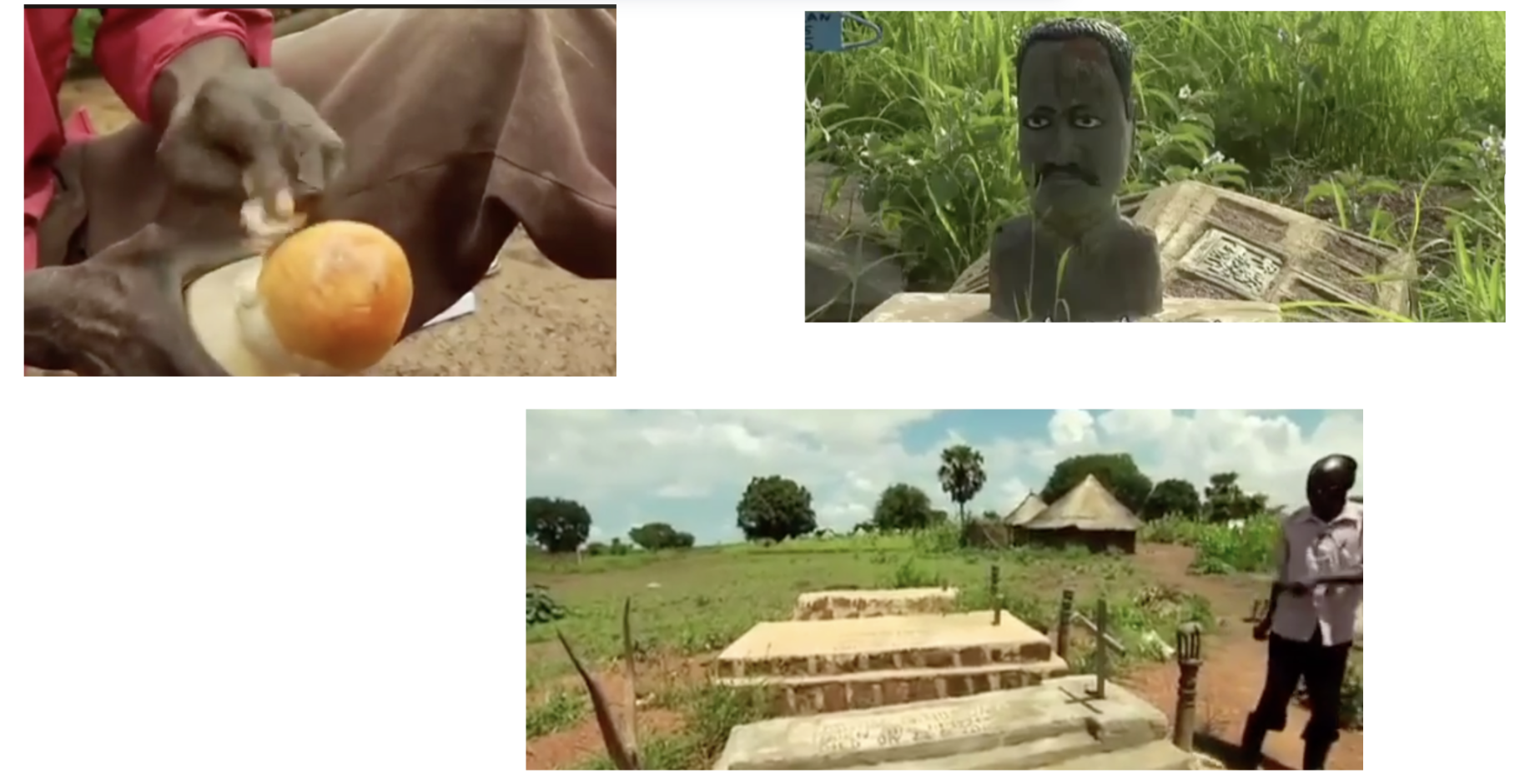
These images are stills from the documentary "Bongo Tribe of South Sudan Bussere" released in 2021 by East Africa Path Entertainment. Several of the men carve Nyga when being interviewed, discussing important events relating to their clan. In addition, this documentary showcases modern-day Bongo gravesites. We see that while the traditional carving style is alive and well, they have continued to adapt their carving methodology and memorialization of important community figures. For the full documentary, click here or reference the bibliography attached at the end of this page.
ꞌBiꞌbugu (Thief)
The question then becomes: did the practice “die out” or were the Nyga just stolen? Unfortunately, the history of Nyga was forever marred in 1855, when two Nyga were stolen for the first time by a colonizer. Of the two, one now resides behind glass in the British Museum, and one was sold into a private collection and has now been lost to time. Criminal after criminal followed suit, each under the guise of “studies,” “ethnography,” and “collections.” What followed was a massive wave of interest outside of Sudan by private collectors, each willing to pay a hefty price for someone’s guardian of peaceful death. They are now scattered among institutions that are, for some reason, at peace with this. There was (and still is) a market for these, and there are versions of Nyga which are made as “curios”. However, many of these Nyga entered collections long before a commercial market was created. Unfortunately, it is unlikely that this Nyga will ever be reunited with the burial place it was carved to protect. Instead of being an eternal companion, the Nyga is consigned to collecting dust. 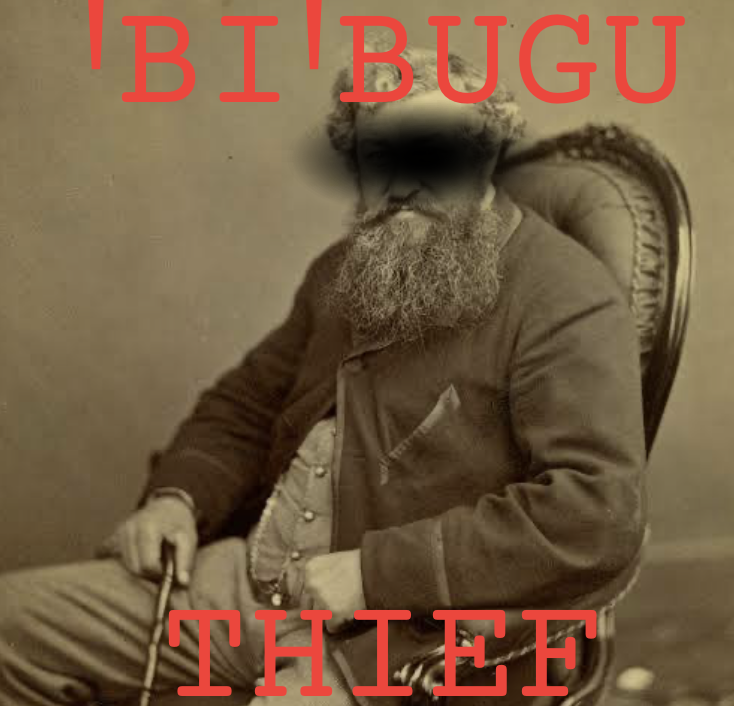
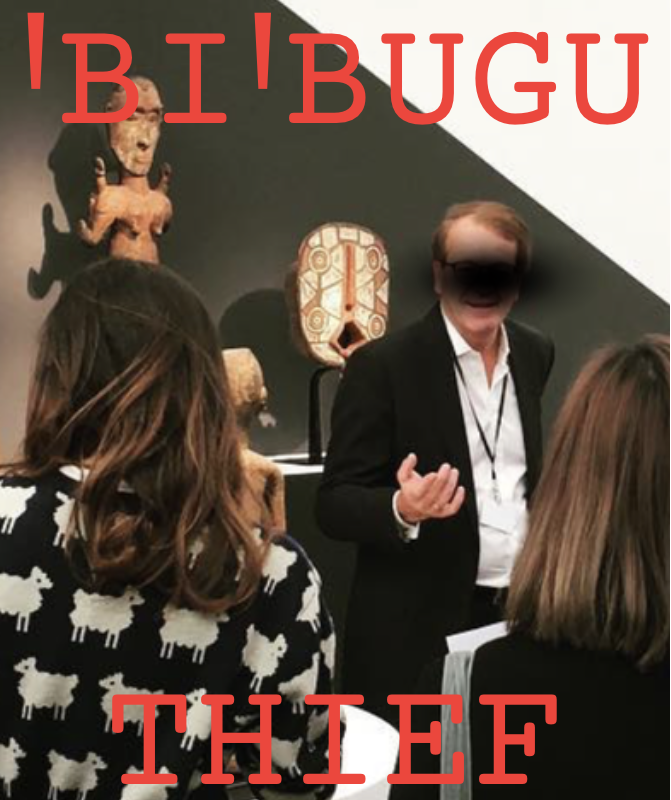
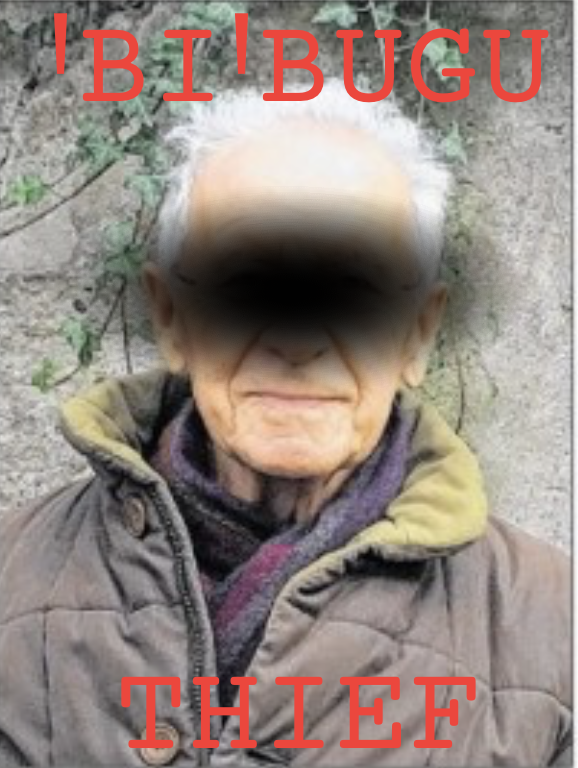
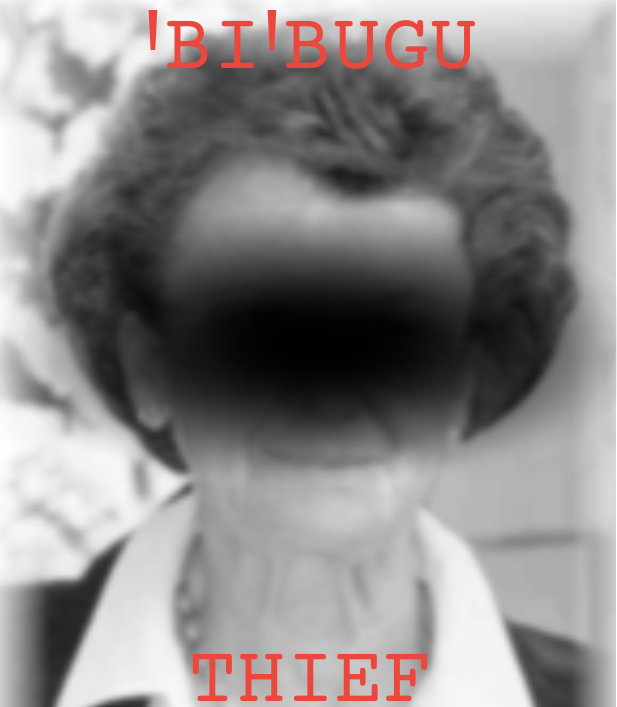
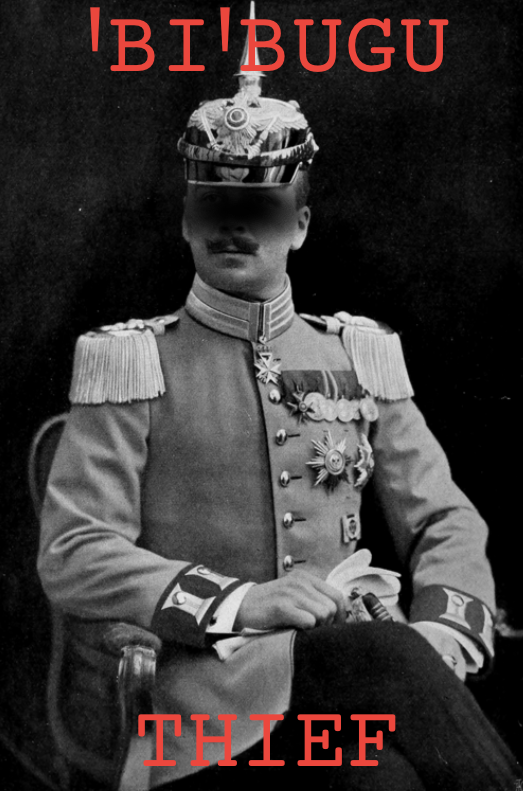
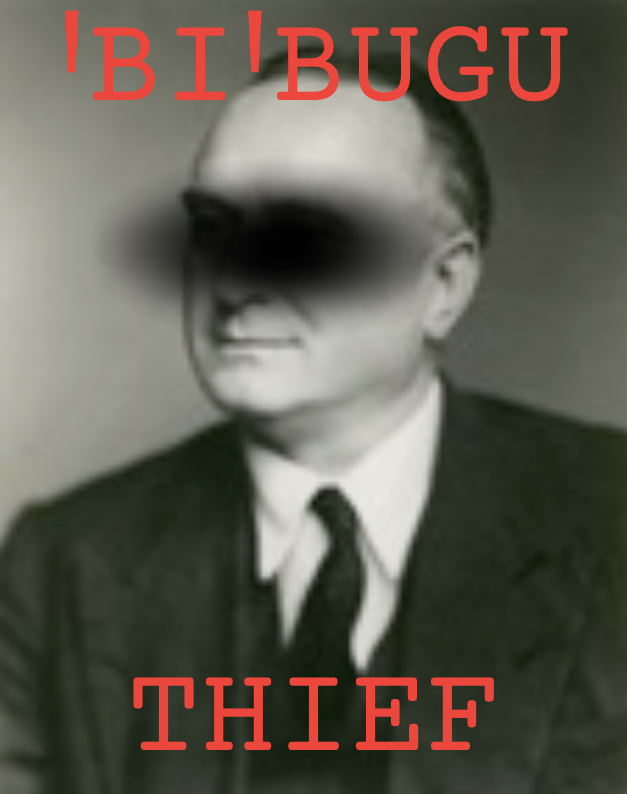
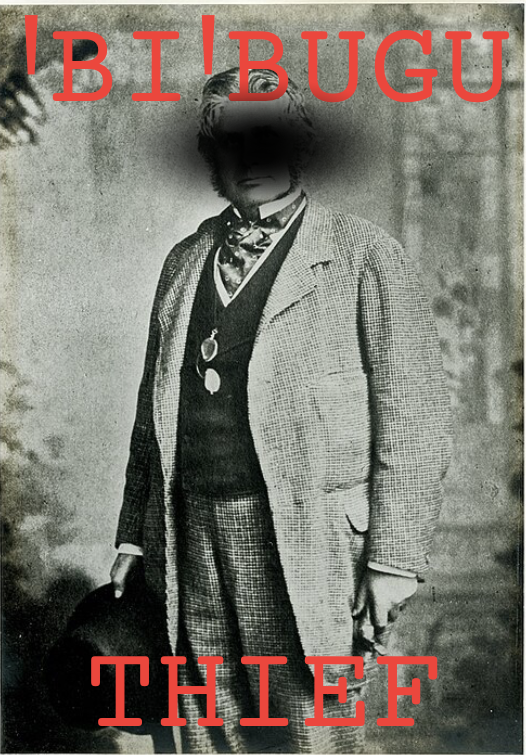
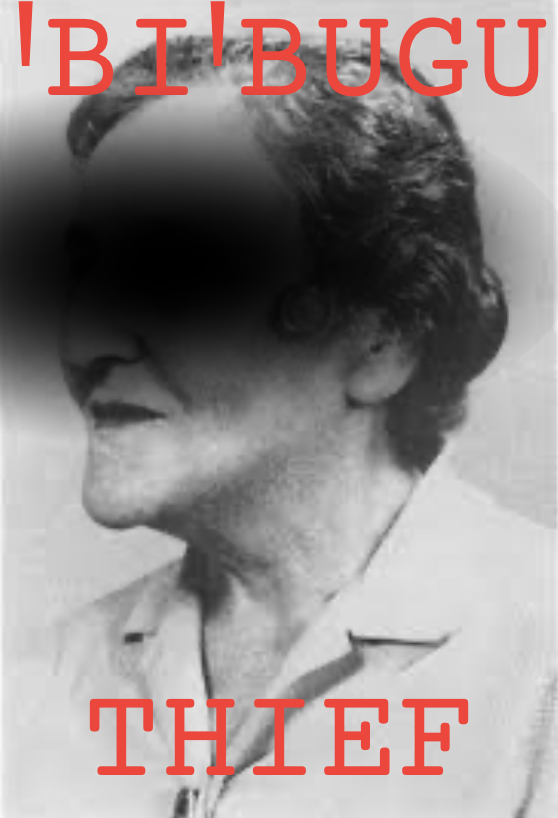
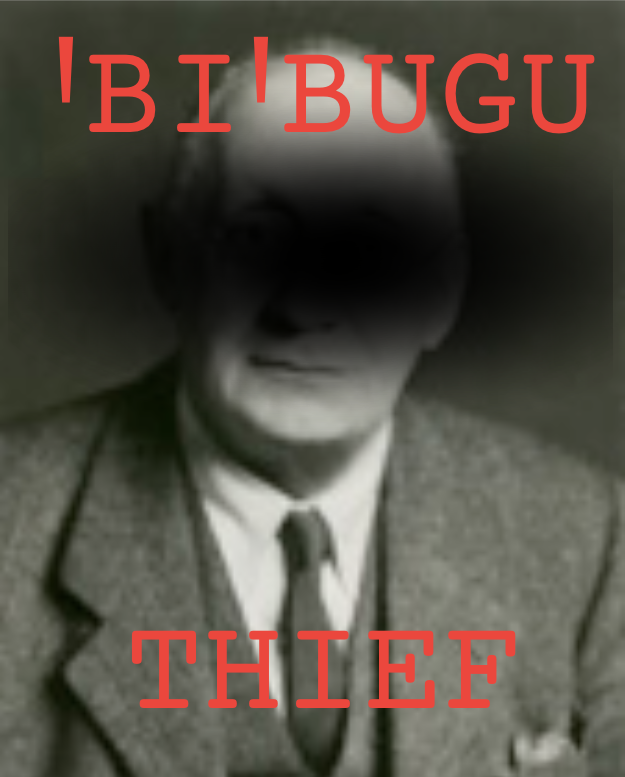
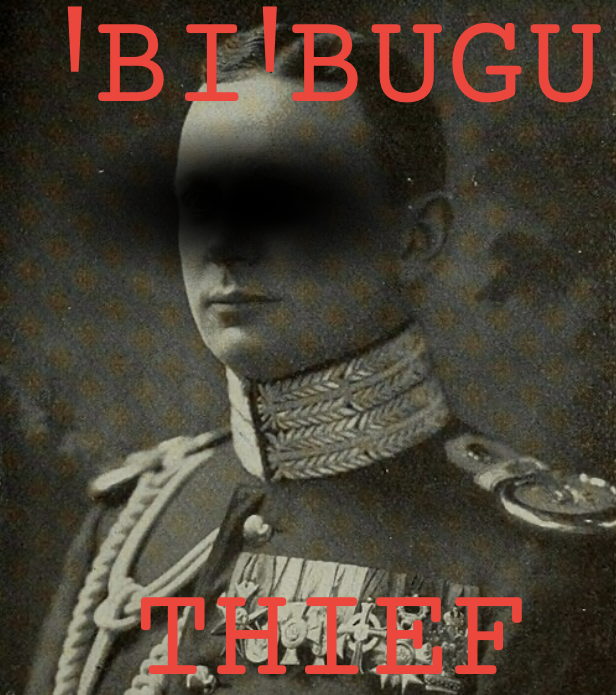
Each person depicted in these photographs either stole or directly profited from stolen Nyga. This was done to further their career and gain prestige, something removed here by anonymyzing them. Instead, they are known here only by their crimes.
Mutual Aid for Southern Sudan

After the independence of Sudan in 1956 from Britain and Egypt, and the subsequent independence of South Sudan in 2011, South Sudan has experienced decades of conflict and hardship. The UN Security Council stated in 2014 that South Sudan had "the worst food crisis in the world," with famine declared in 2017. Much of South Sudan's modern history has been plagued by political instability, civil wars, and humanitarian crises. Most recently, the outbreak of conflict in Sudan has led to a massive outpouring of over 800,000 refugees fleeing to South Sudan to escape.
For people such as the Bongo to continue practicing their culture, their basic needs must first be met. According to the Global Centre for the Responsibility to Protect, more than two-thirds of the population of South Sudan needs humanitarian assistance. Please consider donating to one of the following organizations, as any help truly does make a difference to people such as the Bongo.
Bibliography
“Figure,” The British Museum, effective March 12, https://www.britishmuseum.org/collection/object/E_Af1973-35-1.
Bimal, Nehaa. “Living Objects Trapped in Glass Boxes: The Importance of Rematriating Indigenous Cultural Objects and Indigenizing Museums,” ArtsHelp, 2023, https://www.artshelp.com/living-objects-trapped-in-glass-boxes-the-importance-of-repatriating-indigenous-cultural-objects-and-indigenizing-museums/#:~:text=The%20term%20%22rematriation,%22%20first,have%20left%20them%20dispossessed,%20subjugated,.
Biro, Yaelle. “Identity, Meaning, Function: Reclaiming the Histories of The Met’s Bongo Ngya.” The Metropolitan Museum of Art, 2018, https://www.metmuseum.org/perspectives/bongo-commemorative-post-ngya.
Booty, Natasha. “A Simple Guide to What is Happening in Sudan,” BBC, November 13, 2025, https://www.bbc.com/news/articles/cjel2nn22z9o.
Center for Preventive Action. “Instability in South Sudan.” Global Conflict Tracker, May 1 2026, https://www.cfr.org/global-conflict-tracker/conflict/civil-war-south-sudan
Clarke, Christa, “African Art and the Individual,” SmartHistory, 2016, https://smarthistory.org/aart-and-the-individual/.
Crystal, Kathryn, Matthew Armand, and Breanna Armand. “Sociolinguistic Survey of the Bongo of South Sudan.” SIL Electronic Survey Report, (2020): https://www.sil.org/system/files/reapdata/16/67/29/166729483882486297324921809521495643868/silesr2020_010.pdf
Datta, Ranjan. “Decolonizing both Researcher and Research and its Effectiveness in Indigenous Research,” Research Ethics, 2017, https://journals.sagepub.com/doi/full/10.1177/1747016117733296.
De Grunne, Bernard. Bongo: Monumental Statuary From Southern Sudan (Bernard De Grunne, 2011), https://www.bernarddegrunne.com/usr/library/documents/publications1/bongo-bernard-de-grunne-tefaf-2011.pdf.
East African Path Entertainment. “Bongo Tribe of South Sudan.” August 3, 2021. Video, 3 min., 4 sec. https://www.youtube.com/watch?v=HPiP8NYx4PU.
East African Path Entertainment. “Bongo Tribe of South Sudan Bussere.” October 1, 2021. Video, 49 minutes, 8 sec. https://www.youtube.com/watch?v=tJgSRDKF9tQ.
Evans-Pritchard, E. E. “The Bongo.” Sudan Notes and Records 12, no. 1 (1929): 1–61. http://www.jstor.org/stable/41719404.
Idris, I. (2018). Cultural practices on burial and care for the sick in South Sudan. K4D Helpdesk Report 437. Brighton, UK: Institute of Development Studies.
Maracle, Lee. I am Woman (Press Gang Pub, 2002) https://archive.org/details/iamwomannativepe0000mara/page/92/mode/2up.
Moi, Daniel Rabbi et al., Bongo-English Dictionary (SIL, 2018), https://www.webonary.org/bongo/files/BongoDictionaryJul18.pdf.
NYU Africa House, “Art Collection,” New York University, https://www.nyuafricahouse.org/art-collection.
Petherick, John. Egypt, the Soudan and Central Africa (Blackwood, 1861), https://archive.org/details/dli.ministry.01831/page/403/mode/2up?q=dor
Populations at Risk. “South Sudan,” Global Centre for the Responsibility to Protect, March 16 2026, https://www.globalr2p.org/countries/south-sudan/.
Santandrea, S. “NOTES ON THE BONGO.” Sudan Notes and Records 39 (1958): 61–78. http://www.jstor.org/stable/41716780.
Seligman, C.G. and Brenda Z. Seligman. The Ethnography of Africa, (Routledge, 1932), https://ia803407.us.archive.org/5/items/in.ernet.dli.2015.57118/2015.57118.Pagan-Tribes-Of-The-Nilotic-Sudan_text.pdf.
Thompson, M. “Learn More: Bongo Grave Post.” Pacific Lutheran University, 2016. https://www.plu.edu/africanartcollection/figures/bongo-grave-post/learn-more-bongo-grave-post/