Alexandra Umemoto
Research Dates: January 2026 - May 2026
Website:
https://www.nyuafricahouse.org/ah-art-collection/t3hhsjl991pxdccnfmf046vae61l2u
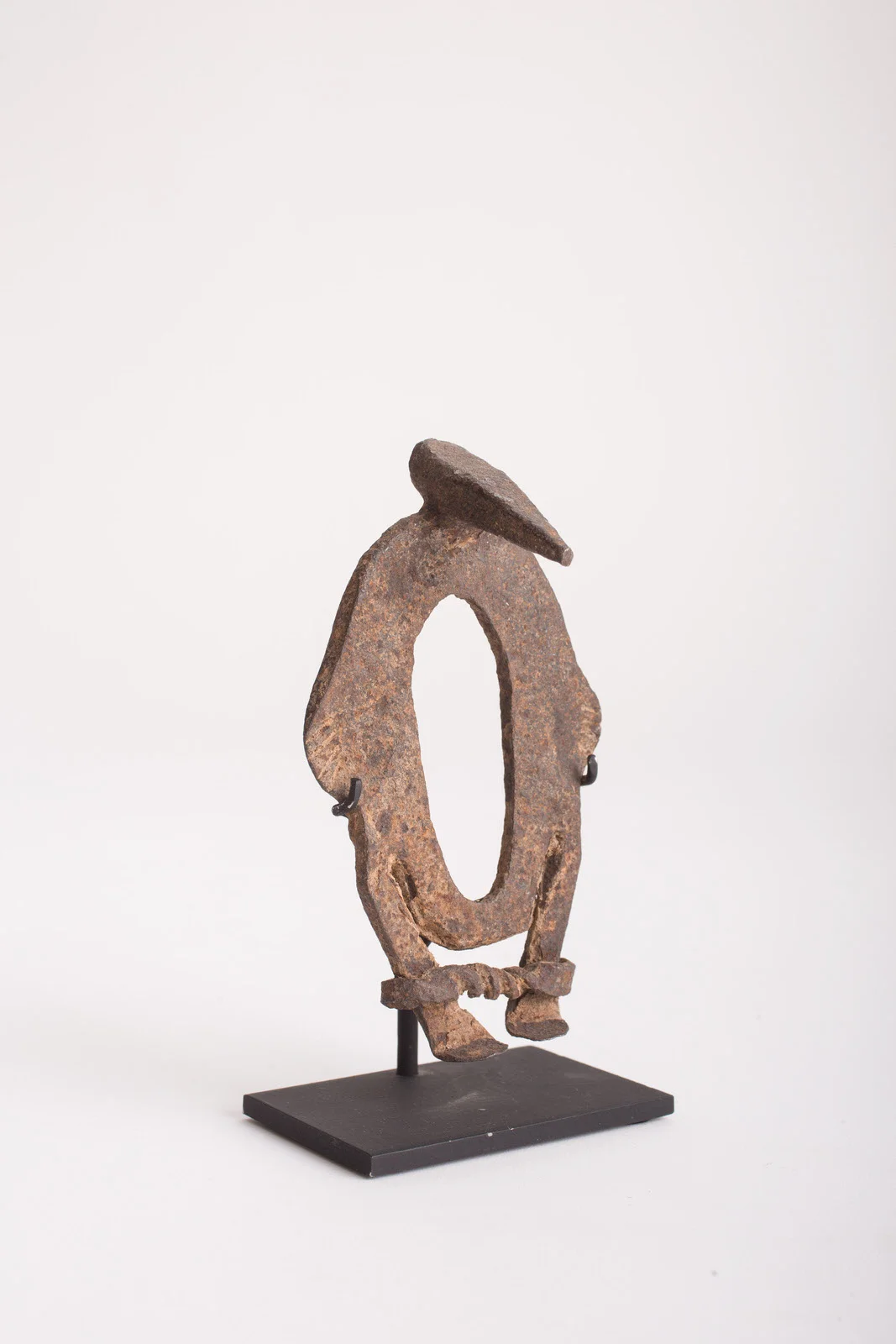
Unknown artist. Iron Miniature of a Bird Man. Western Sudan, Bamana/Dogon/ Lobi/Senufo. Iron. NYU Africa House.
Hidden Truth
NYU Africa House is the current steward of this small iron figure, entitled “Iron Miniature of a Bird Man.” The figure is displayed within the Africa House Art Collection, as it is described on their website. NYU’s label does not offer a date for the creation or context of this piece, but does offer the approximate location as Western Sudan. Additionally, four potential ethnic groups are suggested as the origin point for the figure: Bamana, Dogon, Senufo, and Lobi. The description states: “An Iron figure representing an ensnared bird, part of paraphernalia used by regional clairvoyants.”
For the purposes of this exhibit, I am using they/them pronouns for the bird figure and will refer to them as Bird. This pronoun and name choice reflects my effort to give Bird an identity and agency outside of the archive context and does not represent knowledge of how they were originally depicted by their creator.
Although the NYU label uses the word “ensnared” to describe the shackled and trapped state of Bird, it inadvertently also provides the inspiration for the theme and name of this exhibit. The term ensnared can be applied in many ways: physical, spiritual, mental, and spatial. It conjures the visceral image of a trap, and the sharp snapping of iron as it closes around its prey. These symbolic impressions of ensnarement inspire this exhibit’s exploration of how truth becomes trapped and sequestered, creating pockets of hidden information in the spatial temporal realm. The Bird figure offers us a case study in which to interrogate this idea of truth concealment and loss.
It is helpful to first establish what the term “truth” means in the context of this exhibit. In this context, we will think of “truth” as the set of circumstances within which Bird was created: who, what, when, where, why, and how. We assume that these truths existed and were known at one point in time, and that somewhere along the timeline these truths were captured. Each time a piece of that truth was ensnared by some outside force, it became stuck, trapped, encapsulated and suspended in time and space.
NYU Africa House Art Collection. https://www.nyuafricahouse.org/art-collection.
Bird’s Journey: Suspended in Anonymity
We start with Bird’s current situation, identifying and interrogating the factors that may be hiding their truth. NYU cannot provide specific information about this item, nor do they substantiate the suggestions on the label. Bird’s anonymous provenance can be interpreted as information sequestering. There is a story of his journey to Africa House, but that truth is withheld, ensnared and trapped at the time and place of “ownership” transfer, unable to follow Bird into their new context. As we will discuss later in the exhibit, Bird’s physical shackled state is symbolic and meaningful on many levels. As we contemplate the anonymity of Bird’s donation to NYU Africa House, the mirroring of their “ensnarement” and the concealment of their provenance is striking.
The territories in which the Dogon, Bamana, Senufo, and Lobi groups exist were all under colonial rule either by the British or the French until the mid-late 20th century. The circumstances under which African artifacts were removed from the continent and transplanted to America and Europe were influenced and facilitated by the systems put in place by colonization. Even after Mali, Burkina Faso, Côte d’Ivoire, and Ghana gained their independence, the legacies of colonization, exploitation, extraction, and fetishization still accommodated European and American collecting of African art. We do not know how Bird made their way to the United States originally, but we can hypothesize that the acquiring of Bird was likely made possible by the power imbalances created by European and American imperialism.
Historian Kate Ezra conducted her dissertation research in Mali in the early 1980s. She was told by the Bamana people that sculpted figures had been removed from the villages years before, and she got the sense that if there were figures in the villages, she was not trusted to know about them (Ezra 1983). Susan Gagliardi, in her companion book to the exhibit “Senufo Unbound: Dynamics of Art and Identity in West African,” discusses the iconoclastic movement of the 1950s referred to as Massa, in which M’pe Dembele led his disciples in creating new power objects to replace the old, leading to a “mass exodus” of artifacts that found their way to American and European markets (Gagliardi 2014). The opportunistic harvesting of these items by foreign collectors and the subsequent recasting of them within Western art environs is another way in which information about their truths is ensnared within the objectives of outsiders and separated from their physical bodies.
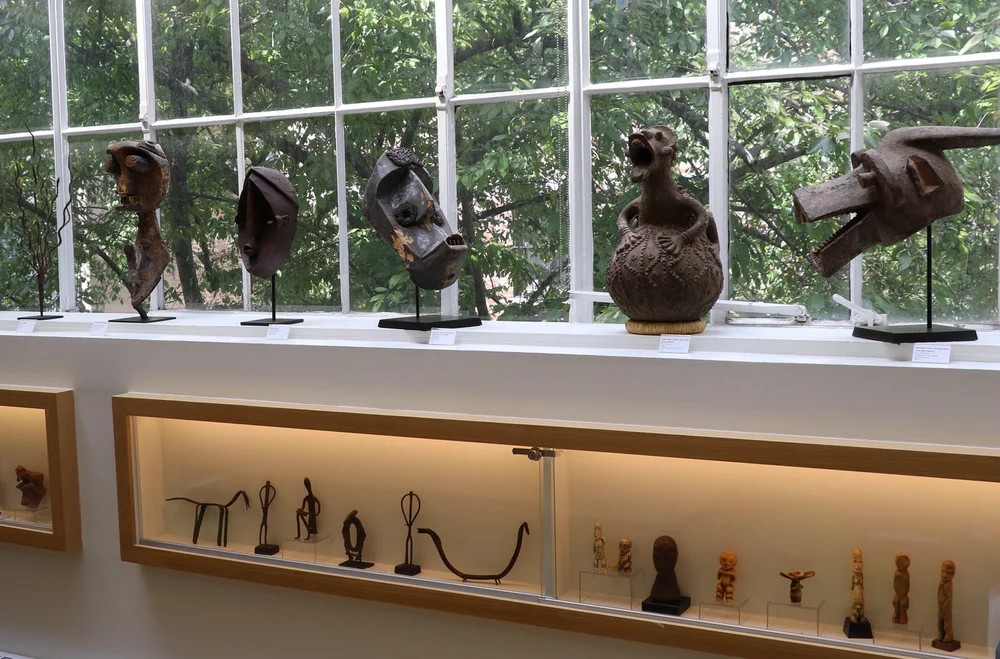
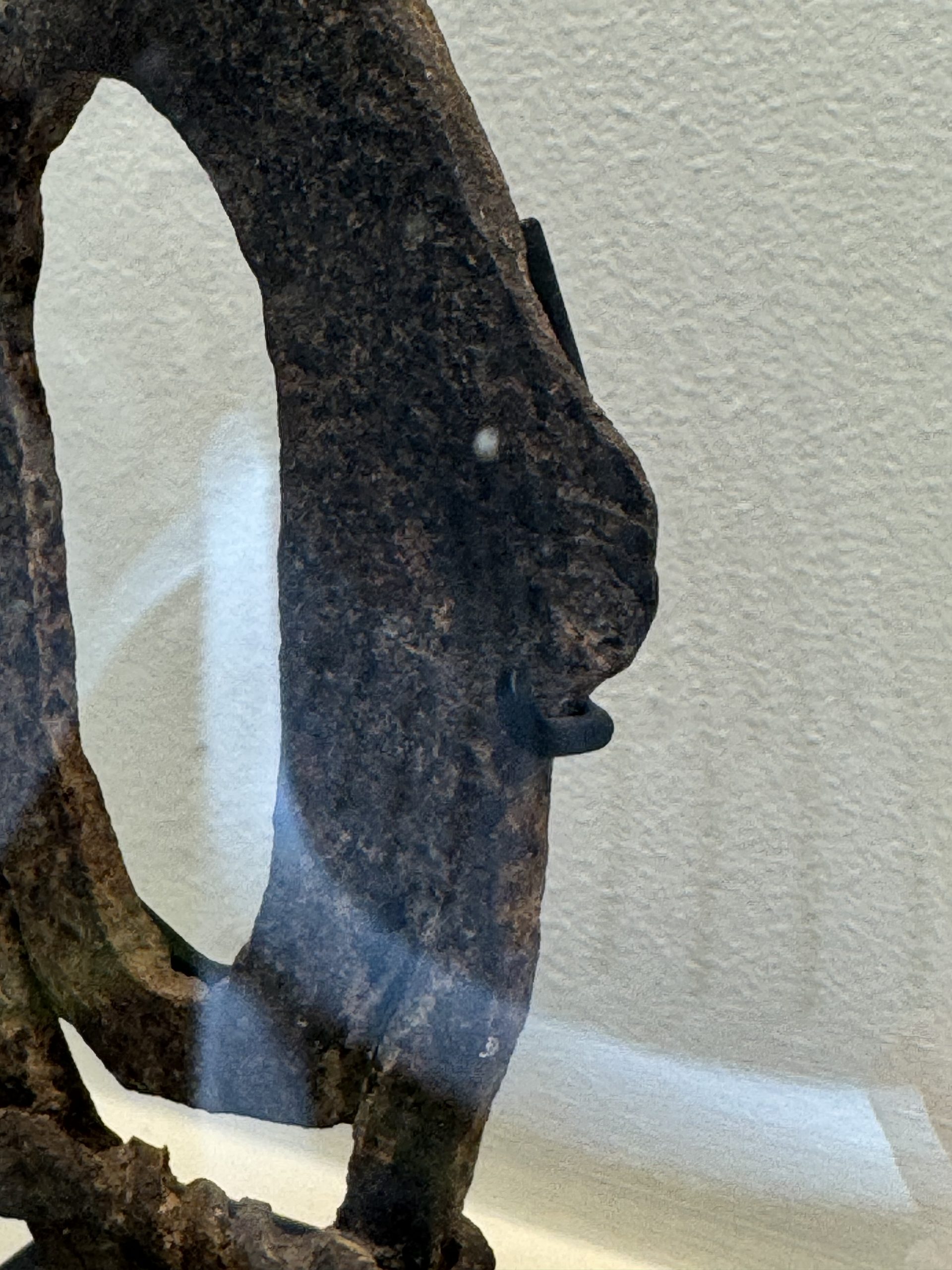
Unknown artist. Iron Miniature of a Bird Man. Western Sudan, Bamana/Dogon/ Lobi/Senufo. Iron. NYU Africa House.
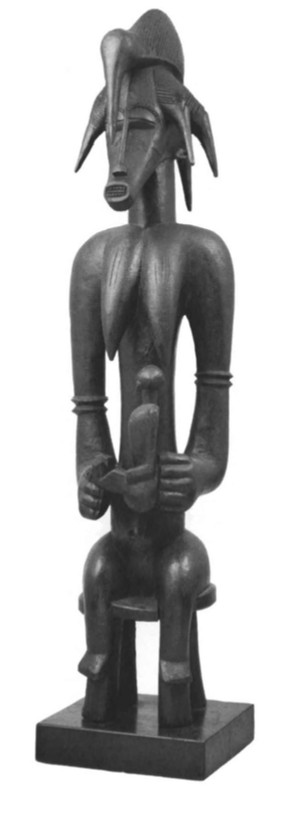
Unknown artist. Mother and Child. Ivory Coast, Senufo. Vogel, Susan. 1981. For Spirits and Kings: African Art from the Paul and Ruth Tishman Collection. Metropolitan Museum of Art.
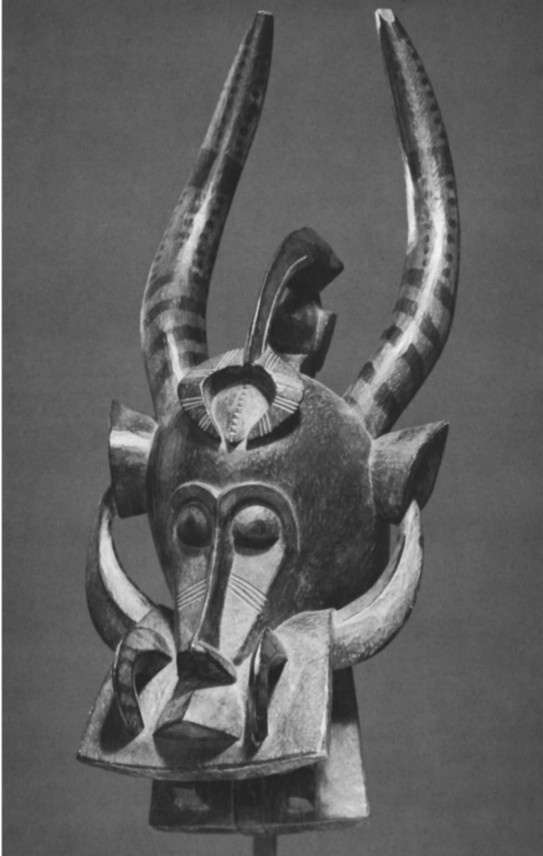
Unknown artist. Helmet Mask (Kponyugu). Ivory Coast, Senufo. Vogel, Susan. 1981. For Spirits and Kings: African Art from the Paul and Ruth Tishman Collection. Metropolitan Museum of Art.
Close Looking
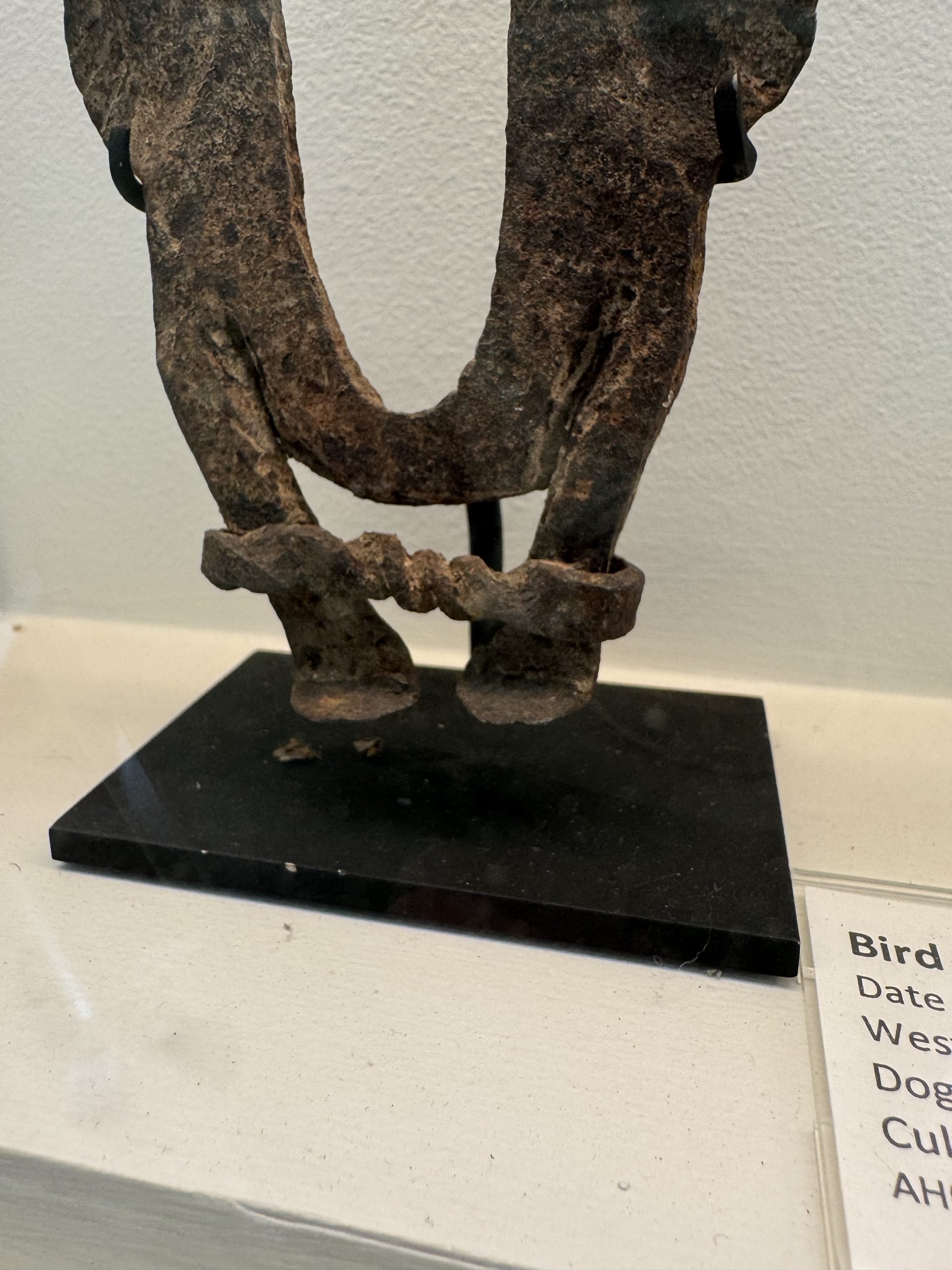
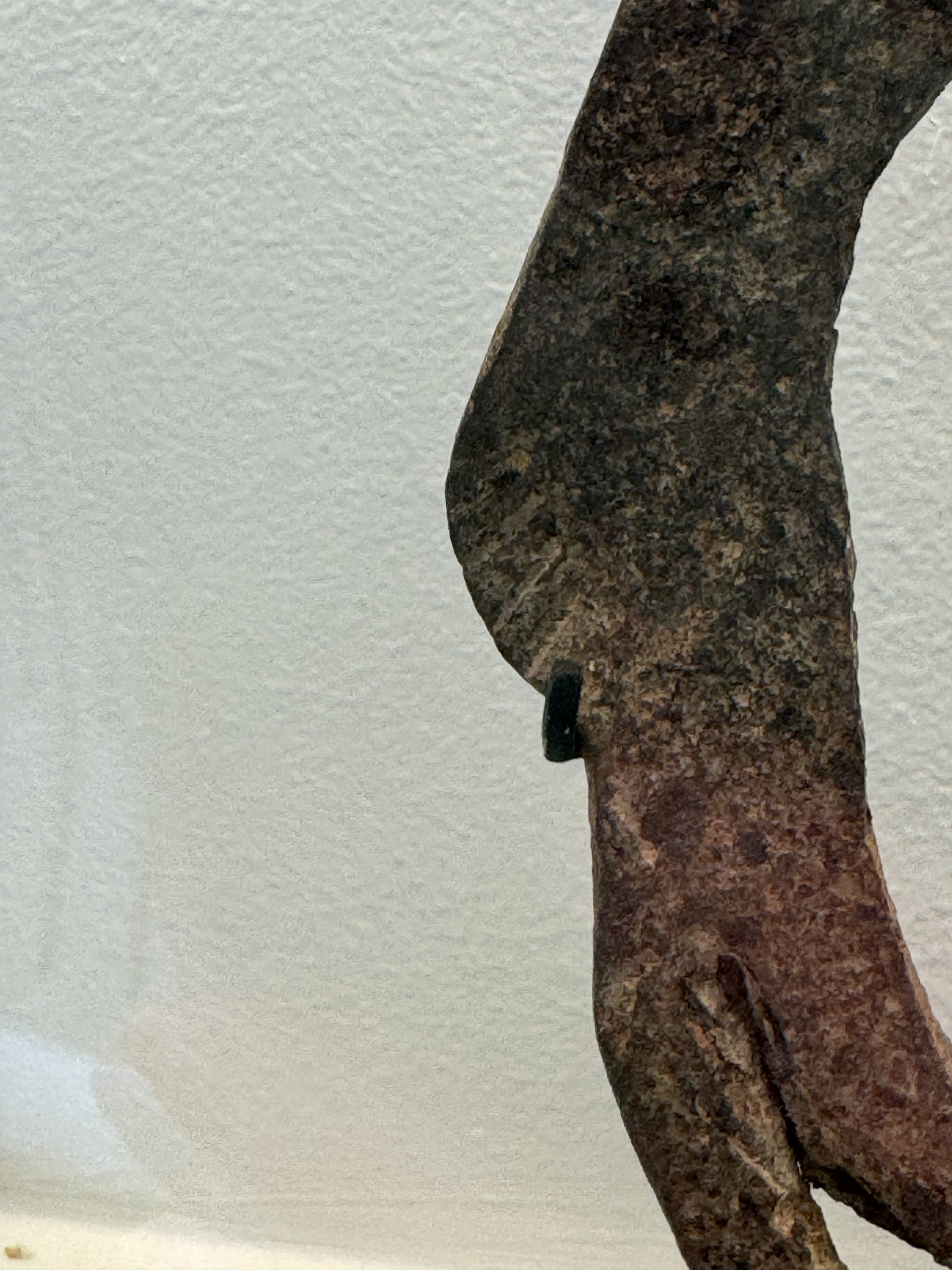
Close looking at Bird also provides symbolic representations of how their truth is not accessible. Bird resides behind a sheet of glass that warps and distorts their materiality. We are not able to see their back, and we are not able to deeply study their surfaces. Bird is literally suspended on a wire stand, which wraps around their wings like additional shackles. In fact, the wire stand protrusions can easily be mistaken for wrist shackles if one is only viewing pictures rather than interacting with Bird up close and in person. These physical display conditions are symbolic of Bird’s complete disconnection with their own context, ensnared and suspended (quite literally), separate from their story. Bird’s unreachable state of display is another place in which information is stifled and trapped, inaccessible to the research attempts of this exhibit.
Close looking also offers us an opportunity to interpret Bird in a completely different way. In the Senufo culture, bird figures are often found perched on top of the heads of masks and sculpted figures (see included images). These birds are thought to represent the Hornbill, a animal that embodies many themes in Senufo culture, including fertility, wisdom, and the importance of Poro elders (Vogel 1981, 42-45). Curiously, two viewers of NYU’s Bird have interpreted it in that way, as a round face with a bird’s head atop it. Where Bird’s wings would be, two ears. The leg and shackle details are more difficult to place in this scenario, but it is not impossible that Bird is not a bird at all, but rather the shape of a head with a bird on top. It isn’t necessary to decide or know for certain what Bird is meant to communicate. The important concept here is that over-confidence around the meaning of African art and over-simplification of its forms leads to the burying of emerging truths. African art that has been removed from its origins should be approached with curiosity and care, and a desire to be open to its truths.
Unknown artist. Iron Miniature of a Bird Man. Western Sudan, Bamana/Dogon/ Lobi/Senufo. Iron. NYU Africa House.
Tools of Ensnarement
Bird is depicted as shackled around the ankles, described as “ensnared” by NYU as discussed above. There are many layers of interpretation for this depiction, but without an understanding of Bird’s intended meaning by their creators, we can only explore possibilities rather than make conclusions. Depending on the viewer, one might project their own interpretations of and connections to Africa, its people, and its history onto Bird’s shackled state. Given the brutal history of the Trans-Atlantic Slave Trade as well as other forms of slavery, colonialization, and oppression within Africa, a viewer may immediately understand Bird’s shackles as representing that history. While it is possible that Bird’s creator was intending to reference enslavement of African people, it is not certain, and viewing Bird’s shackles only through that lens may lead us to miss other possible meanings.
Birds carry many meanings in African culture across the continent: knowledge, wisdom, fertility, ancestral connections, and power, as well the representation of divine beings interacting with humans on earth. How can we interpret the combination of this symbolism with the very literal presence of shackles? Is Bird’s appearance meant to imply a trapping of knowledge or wisdom? The harnessing of god-like powers on earth? As we will see below, examples of miniature shackles do exist in Africa and some are worn as amulets, meant to ward against enslavement. Because Bird’s shackles are actually fastened around them, hobbling their legs, we might determine that the concept of protection from enslavement is not applicable here.
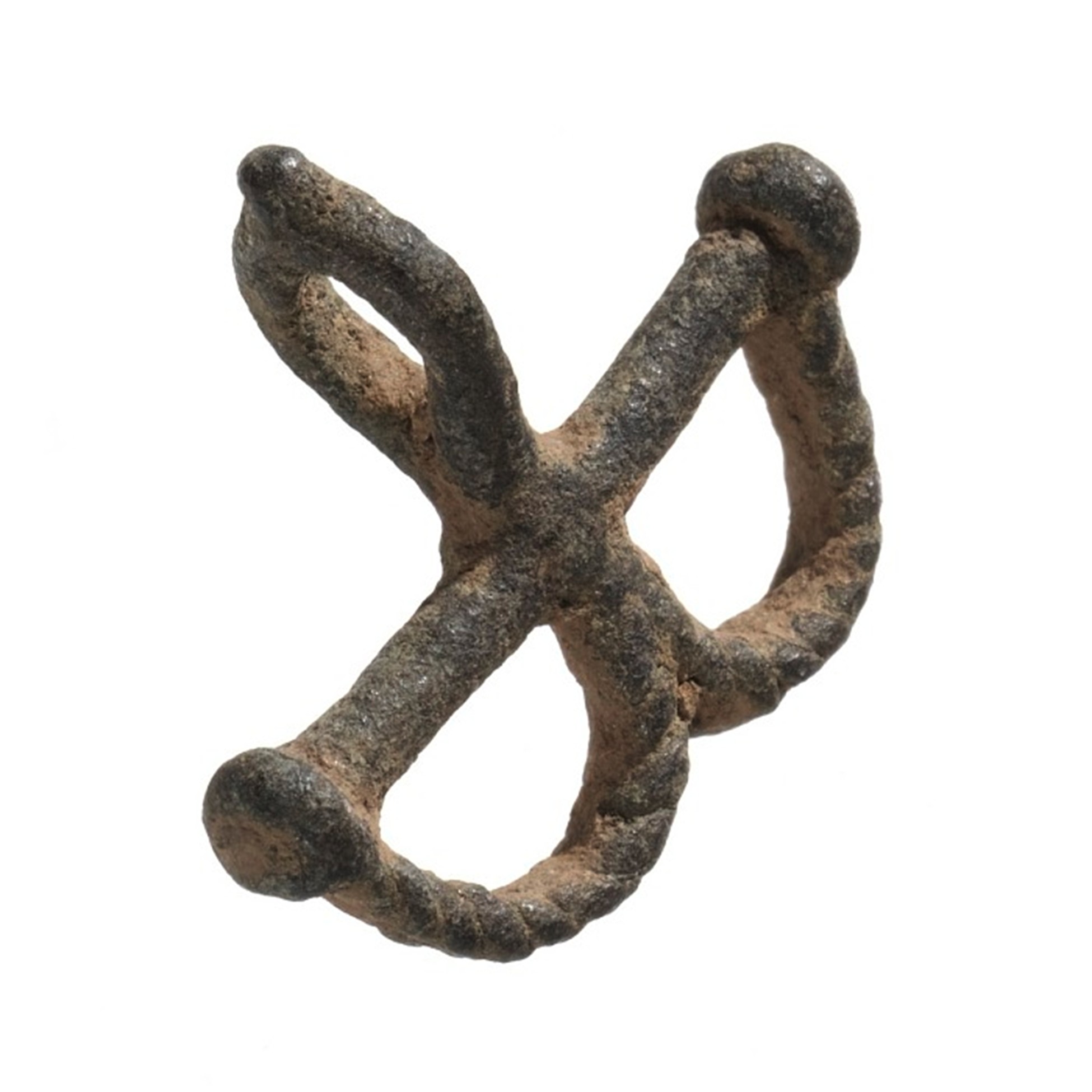
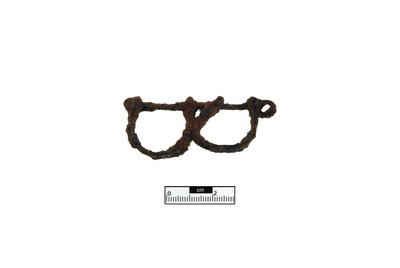
Amulet in the Form of Miniature Shackles. 17th century-18th century. Bronze. Smithsonian National Museum of African American History & Culture. https://nmaahc.si.edu/object/nmaahc_2013.46.1.
Miniature Iron Shackles from a Shrine Cluster, Ngre Kataa, 2009. University of Victoria Libraries. https://exhibits.library.uvic.ca/spotlight/iaff/catalog/17-19161.
Miniature Shackles in Western Sudan
Although no other depictions of shackled animals were found for this exhibition, two examples of African iron work depicting shackles provide some comparison. Both items are noted as being found in Ghana, and the amulet is attributed to the Lobi ethnic group by the Smithsonian. Per the Smithsonian, the amulet is meant to protect against enslavement, and dates to the 17th or 18th century. It is interesting that the symbolic imagery of miniature shackles appears three times in a specific area and may point to a common meaning or theme. Further research into this could be a helpful and interesting addition to our understanding of Bird.
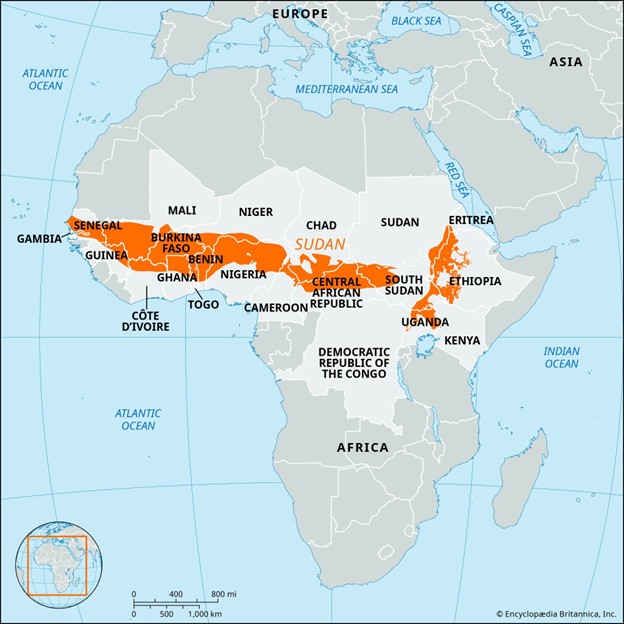
Map of Sudan. https://www.britannica.com/place/Sudan-region-Africa.
Fluid Boundaries
The Bamana, Dogon, Senufo, and Lobi groups are located in the historical and geographic region known as Western Sudan. The four groups inhabit mainly what is now present-day Mali and Burkina Faso, Northern Ghana, and Côte d’Ivoire. The borders of these groups are not static or strictly defined, and intermingling of all four cultures occurs. Kate Ezra discusses how towns within the region often contain populations of many ethnic groups, including the four that relate to Bird (Ezra, 1983). Historian Susan Gagliardi describes this area as the “3 corners” and notes how important cross-cultural interactions and influences are in understanding the arts and culture of the four groups (Gagliardi 2014, 270). Petridis and Gagliardi challenge the typification of art objects by European and American scholars, advocating for the practice of interpreting each item as a singular representation of unique circumstances. There are many examples of how broad-stroke categorization reflects the Western preoccupation with boundaries rather than the truth of the art in West Africa (Petridis and Gagliardi 2015, 13-15). There have been instances where a single photograph depicting African masquerade has been attributed to the Bamana, Dogon, and Senufo groups by three different historians, further illustrating the subjective nature of these categories (Petridis and Gagliardi 2015, 14-15). These concepts of artificial boundary creation and categorization by outside influence offer us another instance to imagine how much truth is excised in the name of order and obscured from scholarly narrative. In light of these nuances, it is not possible to conclude which culture Bird came from, but we can explore their themes within each culture in an effort to contextualize their possible origins.
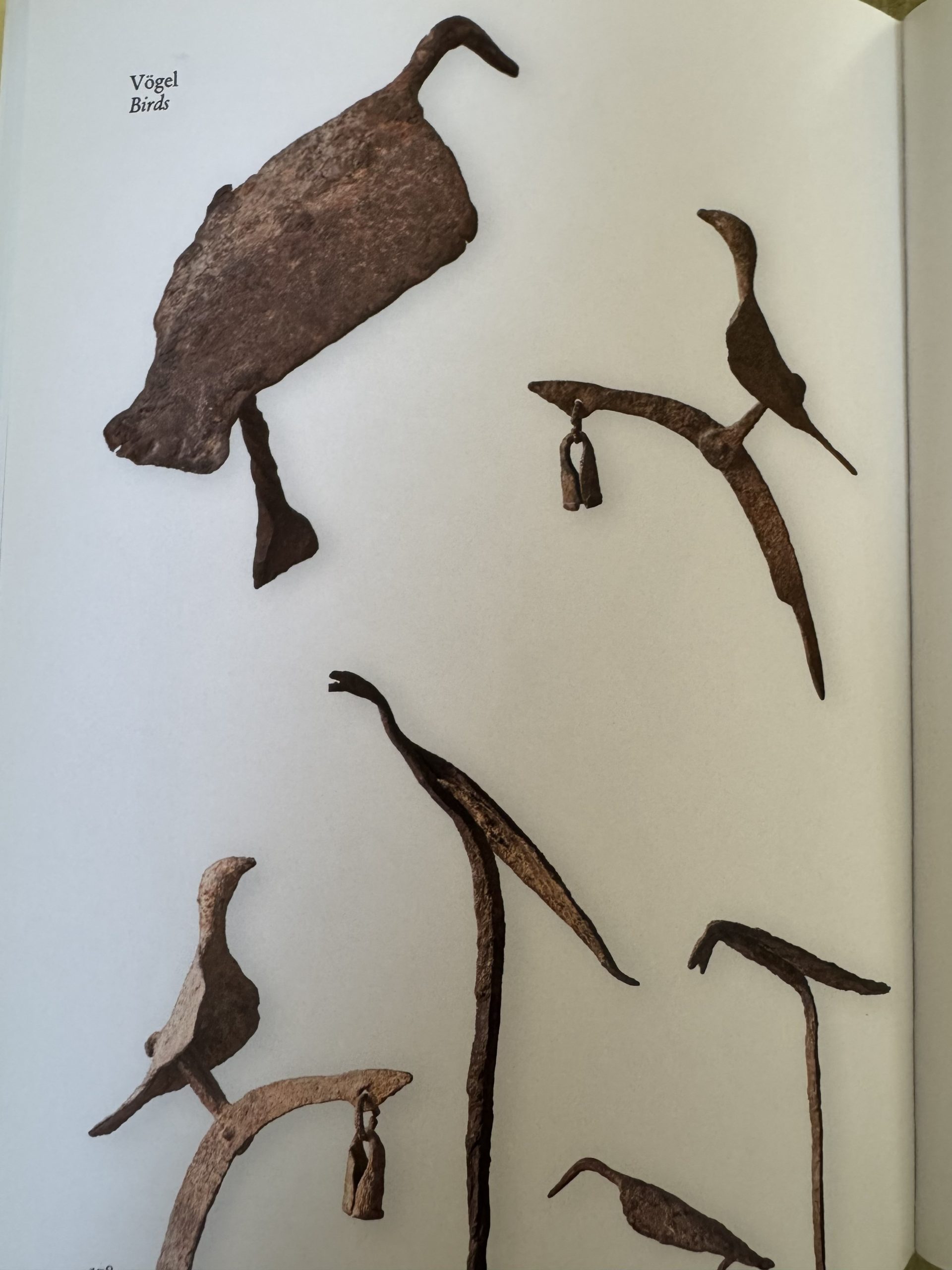
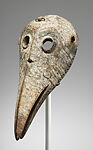
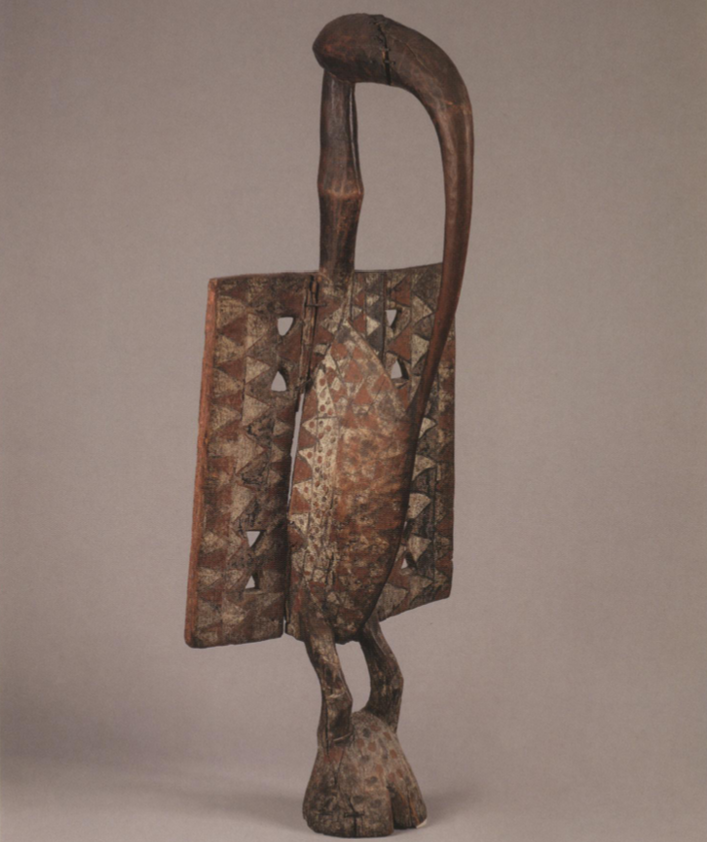
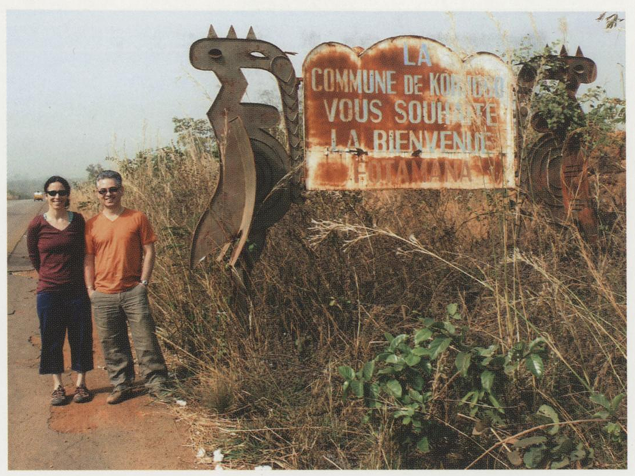
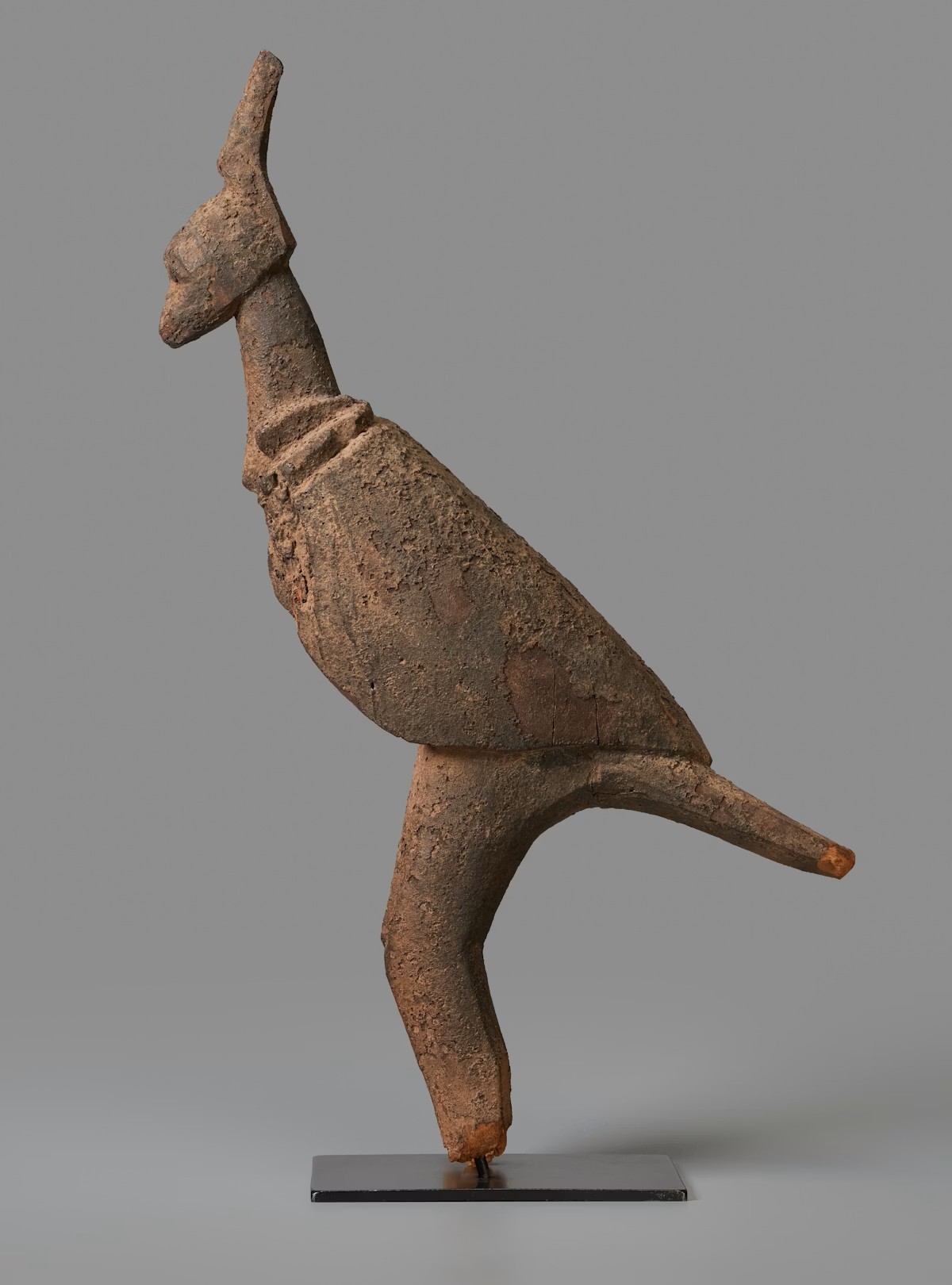
Unknown Artist. Iron Birds. Duchateau, Armand. 2013. Sacred Iron Sculptures of the Dogon. J.H. Roll.
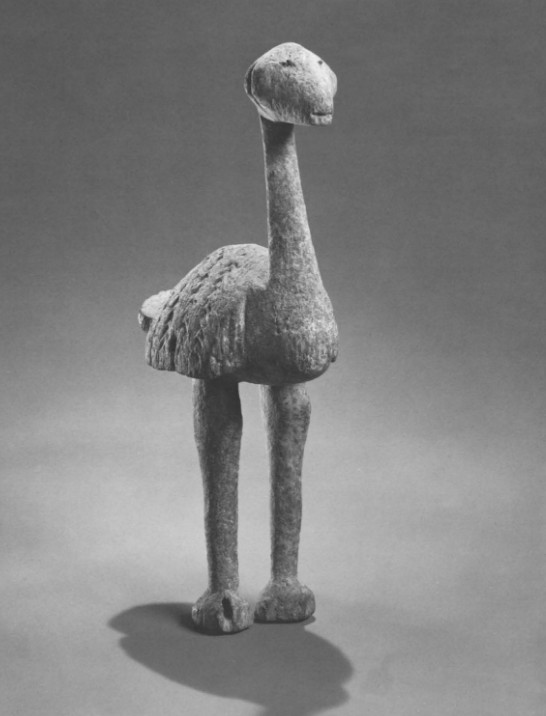
Unknown Artist. Ostrich. Dogon. Wood, Iron. H. 8 1/4 x W. 2 1/8 x D. 4 in. (21 x 5.4 x 10.2 cm). Metropolitan Museum of Art. https://www.metmuseum.org/art/collection/search/309857.
Unknown Artist. Bird mask. Mali, Malinke or Bamana numu (blacksmith). 19th–mid-20th century. Wood, metal, pigment, applied organic materials. H. 7 in. × W. 7 5/8 in. × D. 18 1/4 in. (17.8 × 19.4 × 46.4 cm). The Metropolitan Museum of Art. https://www.metmuseum.org/art/collection/search/312446.
Unknown Artist. Sejen (bird). 19th–mid-20th century. Côte d’Ivoire. Wood, pigment, iron, graphite. H. 59 5/8 x W. 23 1/2 x D. 14 1/4 in. (151.5 x 59.7 x 36.2 cm). https://www.metmuseum.org/art/collection/search/312223.
Ouattar, Dahaba. “Susan Elizabeth Gagliardi and Constantine Petridis at a road sign upon entering the city of Korhogo, Côte d’Ivoire, January 8, 2014.” African Arts 48 (1): 6-23. https://www.jstor.org/stable/43307735.
Unknown Artist. Bird Figure (Lumbr), probably early 20th century. Lobi, Burkina Faso. Arts of Africa and the Americas Curatorial Discretionary Fund. Art Institute of Chicago. https://www.artic.edu/articles/791/unusual-bird-figure-from-burkina-faso.
Birds in Western Sudan
Dogon
Depictions of bird figures in Dogon iron sculpture represent multiple kinds of birds including chickens, ostriches, black birds, and Sando birds. Iron bird figures served as connection between the Hogons, which are the earthly representatives of the oldest member of the cult of the ancestors, Amma Seru, and are the patriarchal leaders of each village. Hogons are connected specifically to the Ostrich, the largest bird, which they ride during ceremonies. According to Dogon myth, birds visited the ancient village founders in their dreams to bring them advice and support and, as such, are revered by present-day Dogon people. In another myth, a big black bird, Oguyeru, appeared and neutralized a quarrel between Hogons, earning it the title of “the bird of the Hogon“.
Bamana
In Bamana culture, the bird Kono is an important figure in the processes of Jo initiation societies, which are a significant part of Bamana life. There is a specific masquerade called Kono which represents the Hornbill bird, considered the King of birds for his shrewdness and intelligence (Imperato 1980, 54-55). In addition to the Kono masquerade, birds are considered mediums between heaven and humans, and symbolize celestial knowledge, wisdom, and divination (McNaughton 1977).
Senufo
Bird imagery within the Senufo culture is significant. Specifically, the image of the Hornbill is common among the Senufo, usually depicted in a way that emphasizes the Hornbill’s long pointed beak. The beak is often paired with a large round belly, the two elements symbolizing male and female reproductive parts. In many examples, the long beak of the Hornbill is pointed down and makes contact with the rounded belly, symbolizing the process of procreation and fertility. Sometimes, these Hornbill figures are giant, larger than the people around them. The Hornbill figures also symbolize wisdom, knowledge, and excellence, specifically in the context of Poro initiation societies; the Senufo refer to the Hornbill as Gabariga, the Katyeenseo (master) of all birds (Vogel 1981, 35-37). Our Bird’s pronounced beak and round middle could be interpreted as echoing the Senufo Hornbill figures.
Lobi
The Lobi creator god Thangba Yu is considered responsible for all life on earth. Although credited with all earthly beings, Thangba Yu is contextualized as an abstract concept and is not directly worshipped in daily practice. The second tier of godly presence within Lobi culture is home to the Thila (sing. Thil), described as “bodiless beings endowed by Thangba Yu with superhuman powers and abilities” (Meyer 1991, 92). It is these Thila that are tasked with the welfare of the Lobi people and interact directly with the Lobi through diviners, or mediums. The process of Lobi divination revolves around diviners who are called to their purpose by Thila, who then speak to the diviners, giving them instructions and information to be shared with others. Within this spiritual framework of the Lobi there are instances where bird imagery is significant. A Thil may appear as an animal in the bush, and may also make themselves known to a human by turning themselves into an iron figure of that animal, signaling that the human needs to consult a diviner to hear the Thil’s message (Meyer 1991). Additionally, there may be a shrine built with carved figures depicting the animal that the Thil inhabited, and these figures may be wood, clay, or iron (Gundlach 2012, 14-15). These animal representations could relate to the Bird’s form and iron materiality, although situating Bird within Lobi culture does raise the question of how the iron shackles might relate to the messaging from a Thil.
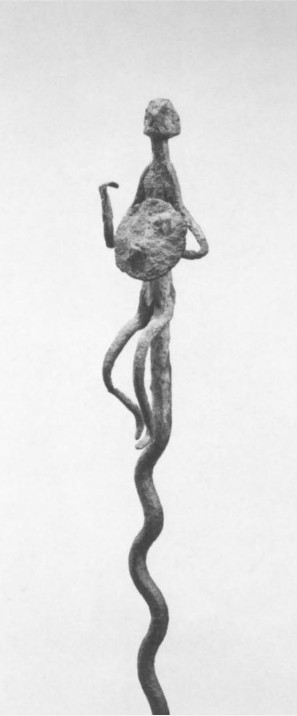
Unknown Artist. Staff Figure with Shield. (Depicting Dogon blacksmith defending himself from the Gods using his round bellows). Iron. The Lester Wunderman Collection of Dogon Art.
Material Meaning
Understanding how Bird could fit within the proposed cultures is helped by addressing his materiality. Iron is a symbolic material throughout Africa; its production is associated with procreation and fertility as well as linked to creation mythology and concepts of sorcery and spiritual interference. Metal objects themselves carry meanings of divine power, legitimacy, and ancestral knowledge transfer, and were used as currency as well as in ritual practice (Childs and Killick 1993). The process of smelting Iron is sacred in Western Sudan cultures, and each group practices methods that reflect their beliefs. In the Dogon culture, Blacksmiths are believed to have been sent down by Amma the creator God and are considered sorcerers. As such, they are feared within their communities. Blacksmiths are also said to be able to call for rain from Amma by pounding their hammers on the ground. The Dogon see the blacksmith as a mediator between humans and Amma, as well as a mediator between humans themselves (Duchateau 2013). Similarly, the Bamana culture fears and respects its blacksmiths, or Numuw, citing their control of fire and earth as well as their exposure to dangerous spirits who are released during the smelting process. The Numuw are both the blacksmiths and the wood carvers, and have a powerful presence in ritual practice (McNaughton 1977).
The oral traditions of the Dogon, Bamana, Senufo, and Lobi are vulnerable to misinterpretation and erasure, and our understanding of African creation myths comes from Western and European ethnographers from the early 20th century. We must consider the possibility of truth concealment and loss embedded in our own scholarly sources. If the collection of primary source material is conducted wherein the collector’s cultural biases and self interest eclipse their search for the truth, then pieces of that truth are encapsulated and isolated.
Unknown artist. Iron Miniature of a Bird Man. Western Sudan, Bamana/Dogon/ Lobi/Senufo. IronUnknown artist. Iron Miniature of a Bird Man. Western Sudan, Bamana/Dogon/ Lobi/Senufo. Iron. NYU Africa House.. NYU Africa House.
An Imagined Journey
Reparenting Therapy is a type of cognitive-behavioral therapy designed to allow the patient to go back into their own timeline, visit sites of trauma, and provide the care and “parenting” that their inner child needed at that time. This concept of visiting sites of trauma and loss within ones spatial/temporal past in order to reclaim a sense of safety and wholeness is resonant with Bird’s situation. Perhaps we can imagine Bird finding a steward to take them on a journey throughout the physical spaces of Africa in an effort to find these sites of loss and concealed truth through interaction and dialogue with African people, and to reclaim them.
Considering Positionality
The very concept of truth concealment in the context of this exhibit is deeply impacted by the limitations of positionality. If the truth about Bird is hidden, then hidden by whom and from whom? Arguably, the truth about an item cannot be hidden from its creators, its rightful owners, or the larger community in which it was once understood. Upon the moment that Bird was removed from their community and their context and reframed by their new “owners”, their truth was omitted from the dialogues of power, from the zeitgeist of the colonizers, dominators, the world powers who generate the majority of scholarship that the globe consumes. As such, this exhibit’s focus on truth sequestering really only applies to those of us who get our information from European, American, or otherwise non-African sources. The unfortunate part of that dynamic is that those sources influence global opinions and understanding about Africa, and cultivate the information that is readily available at our fingertips during research. The knowledge of Africans who understand the meaning of Bird is essentially drowned out, stifled by the prevailing force of imperial power, but it does still exist and is known to Africans themselves. So, is something truly lost or hidden just because it isn’t accessible to the powers that be? The positionality of this exhibit as created by an American student in the United States using predominantly non-African scholarship means that the entire concept of “hidden truths” is deeply biased towards what is known or unknown by the “West”. Perhaps a better description of how truths are managed within Africa by outside forces is “ignored” or “discounted”, ruthlessly edited and fabricated to fit a narrative that suits the power hierarchy; And perhaps a description of how truths are held within Africa by Africans is “protected”, “sacred”, and shared within trusted circles. Considering these positional factors, we can see even more clearly that Bird’s truths lie in Africa, in the hearts and minds of African people who might recognize them for who and what they are.
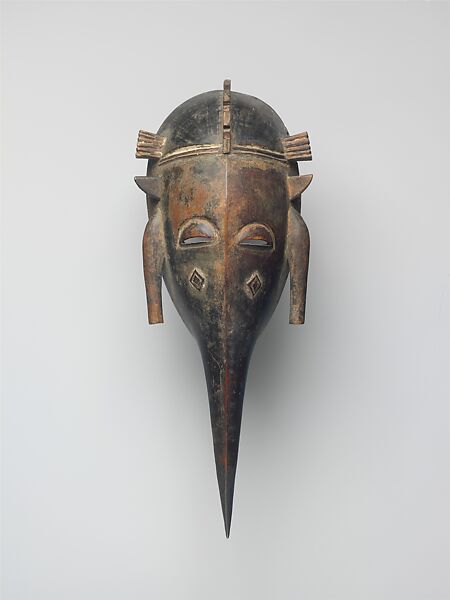
Unknown Artist. Kpeliye’e face mask. 19th–mid-20th century. Senufo, tri-border region of Burkina Faso, Côte d’Ivoire, and Mali. Wood, pigment. H. 16 in. × W. 6 in. × D. 3 1/2 in. (40.6 × 15.2 × 8.9 cm). Metropolitan Museum of Art. https://www.metmuseum.org/art/collection/search/310803.
Bibliography
Ezra, Kate. 1983. Figure Sculpture of the Bamana of Mali. PhD Dissertation, Northwestern University. University Microfilms International (8403411).
Childs, Terry S. and David Killick. 1993. “Indigenous African Metallurgy: Nature and Culture.” Annual Review of Anthropology 22: 317-337. https://www.jstor.org/stable/2155851.
Duchateau, Armand. 2013. Sacred Iron Sculptures of the Dogon. J.H. Roll.
Gagliardi, Susan Elizabeth. 2014. Senufo Unbound. The Cleveland Museum of Art.
Gundlach, Cory Keith. 2012. “The river and the shrine: Lobi art and sense of place in Southwest Burkina Faso.” MA (Master of Arts) thesis, University of Iowa. https://doi.org/10.17077/etd.a95cyuqx
Imperato, Pascal James. 1980. “Bambara and Malinke Ton Masquerades”. In African Arts 13 (4): 47-55, 82-87. UCLA James S. Coleman African Studies Center. https://www.jstor.org/stable/3335784.
McNaughton, Patrick Ronle. 1977. The Bamana Blacksmiths: A Study of Sculptors and their Art. PhD Dissertation, Yale University. University Microfilms International (8014026).
Meyer, Piet. 1991. “Divination among the Lobi of Burkina Faso.” In African Divination Systems: Ways of Knowing, edited by Philip M. Peek. Indiana University Press.
Petridis, Constantine, and Susan Elizabeth Gagliardi. 2015. “Senufo Unbound: Dynamics of Art and Identity in West Africa.” African Arts 48 (1): 6-23. https://www.jstor.org/stable/43307735.
Vogel, Susan. 1981. For Spirits and Kings: African Art from the Paul and Ruth Tishman Collection. Metropolitan Museum of Art.