The African Archive Beyond Colonization Summary of Fall 2021 course (for CAS newsletter)
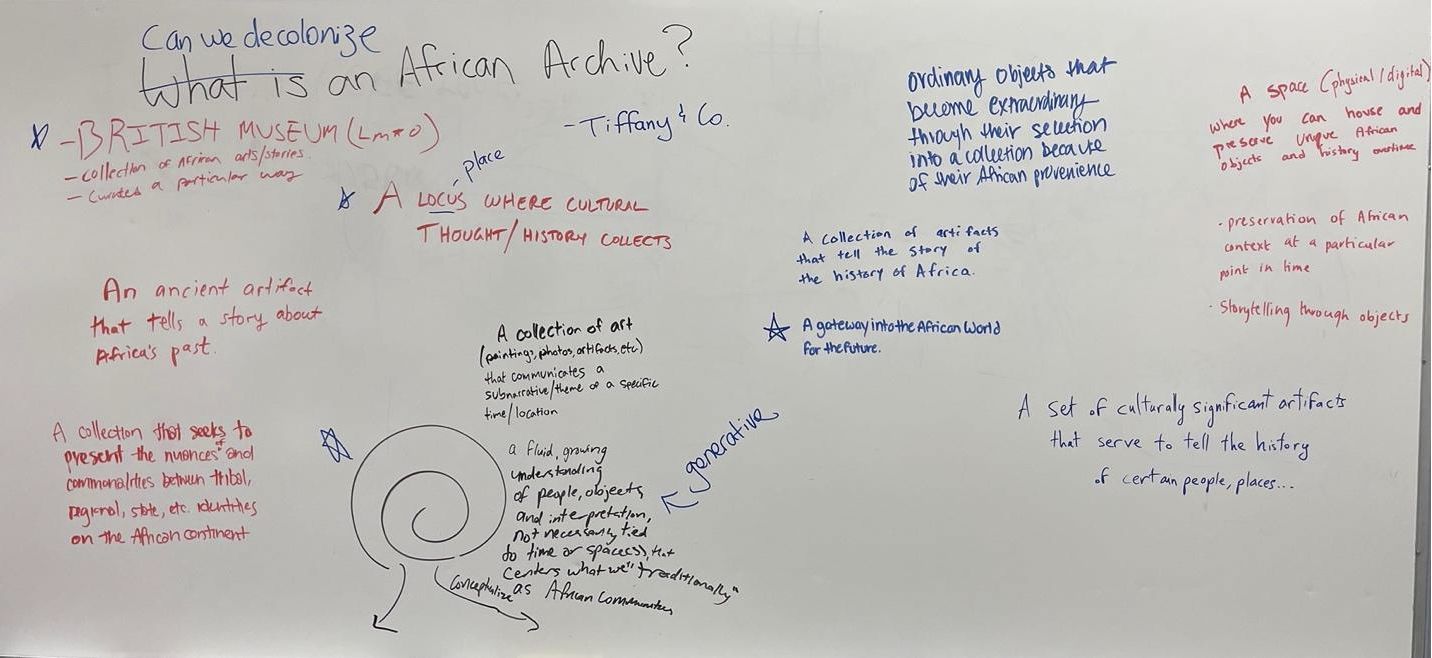
Dr. Sarah Derbew (assistant professor of Classics) and Dr. Denise Lim (a postdoctoral scholar at the Stanford University Archaeology Collections) co-created and taught the fall 2021 seminar, “The African Archive Beyond Colonization.” This course invited students to interact with an archive in which temporal disruptions, expansive geographies, and complicated afterlives all intersected. As they explored the guiding question of the course, “what is an African archive?”, students traced interactions between ancient and contemporary Africa in various cultural archives, including ancient Greco-Roman portrayals of black people, photography of diasporic Nubian communities, and e-waste dumpsites in Ghana and Nigeria.
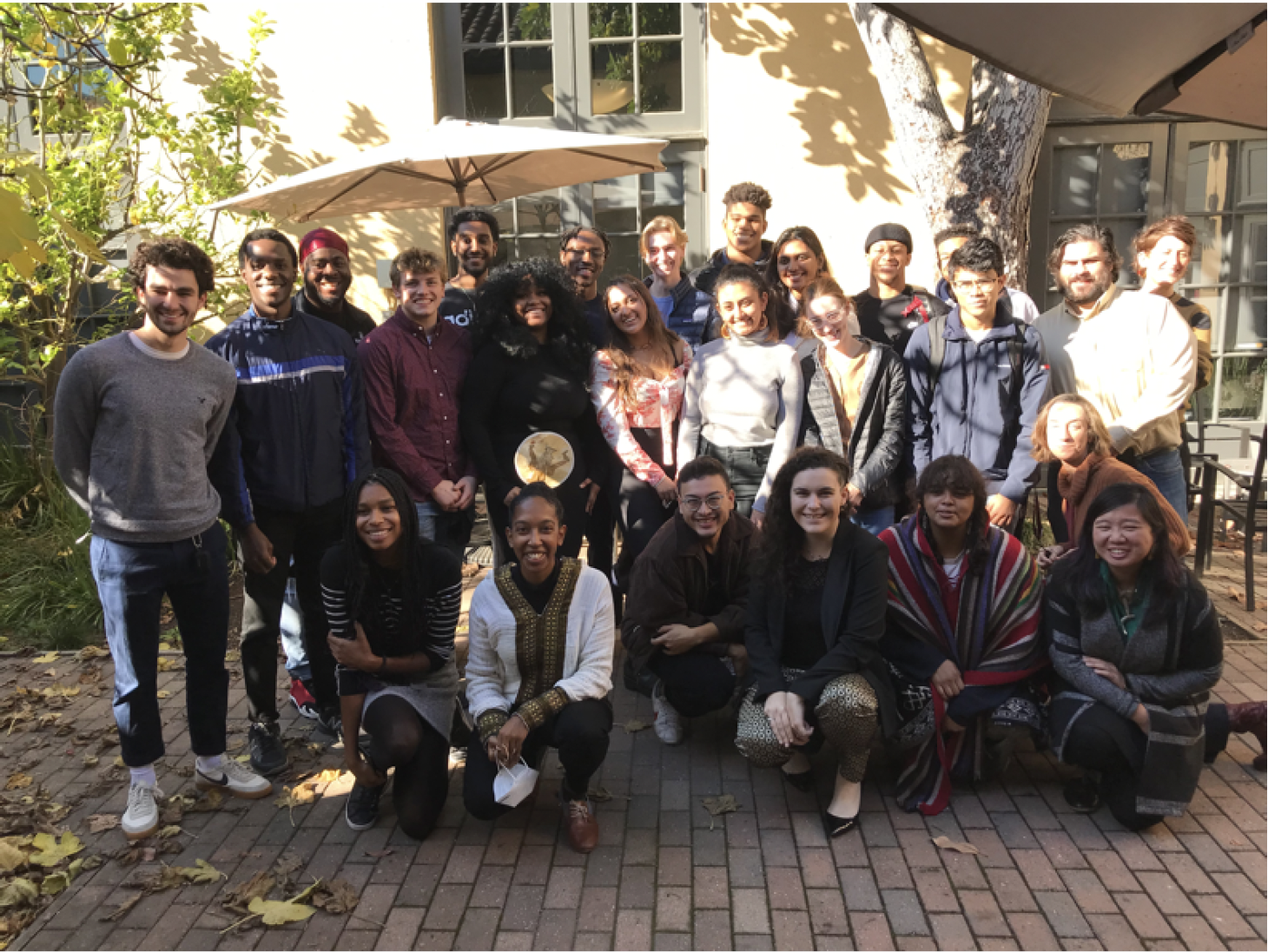
Owing in part to the interdisciplinary nature of this course, a diverse group of students participated in the course. The twenty-five students enrolled in this discussion-based seminar ranged in terms of class year, major, geography, race, and educational background. This included freshmen, sophomores, juniors, seniors, super seniors, co-term students, and graduate students; students majoring in bioengineering, computer science, comparative studies in race and ethnicity, anthropology, and art history; students with ties to Mauritius, Nigeria, Kenya, Eritrea, and Pakistan; students who identified Black, indigenous, Latinx, and White; and students who identified as the first in their family to work towards a college degree. As the term went on, students were cognizant of neurodiversity as well, with some opting to record an audio version of their final project to ensure accessibility. These differences led to one of the greatest strengths of the course, as students were constantly confronted with new ways of thinking about and communicating ideas.
Dr. Derbew and Dr. Lim incorporated numerous class activities to ensure maximum engagement with the course material. Some of these activities included having students use an online discussion portal to respond to each other’s weekly writing assignments and working in pairs to spearhead class discussions. Field trips were also an integral part of this course, as hands-on research helped equip students with the tools required for their final assignment: to create their own virtual exhibition based upon the African artifacts held in Stanford University’s Archaeology Collections (SUAC). Thanks to the return to in-class teaching, Dr. Derbew and Dr. Lim were able to take their students to the Cantor Art Gallery and the SUAC to view the university’s African artifacts in person. Students also attended a movie screening/pizza night in which they interrogated the social role that speculative fiction plays in imagining futures intertwined with the fraught legacies of colonialism and apartheid. Tapping into their Zoom skills, Dr. Derbew and Dr. Lim also welcomed virtual guests to the classroom. Over the course of the quarter, students led discussions with Dr. Andrea Achi, assistant curator of medieval art at the Metropolitan Museum of Art, artists Mohamed Altoum from Sudan and Nicola Brandt from Namibia, and Dr. Susan Keitumetse, a cultural heritage professional and scholar from the University of Botswana.
As a culminating project, students curated a virtual exhibition that highlighted eighteen objects from the African Collections held at the SUAC. One curatorial team used the online platform ArtSteps to reimagine what a decolonial exhibition of a Osaniyan staff from Nigeria could look like. Another group taught themselves photogrammetry to curate a digital product for an ornate adze, believed to originate amongst the Chokwe communities from Angola. During the winter and spring 2022 quarters, Brittany Linus will work as the CESTA undergraduate intern to streamline all the digital products into a single website that will launch at the opening of the physical installation of the African exhibitions at the Stanford Archaeology Center on May 27, 2022.