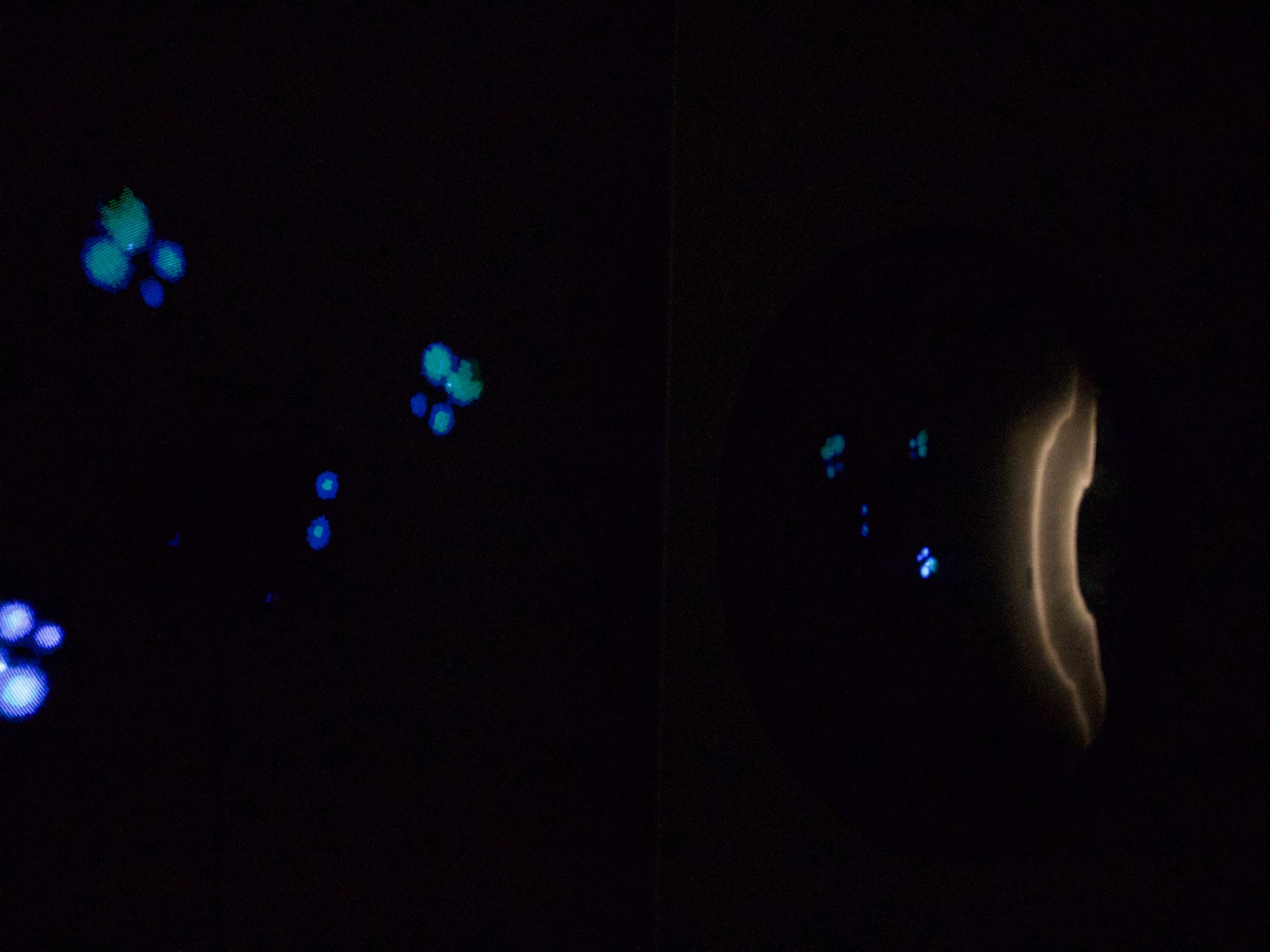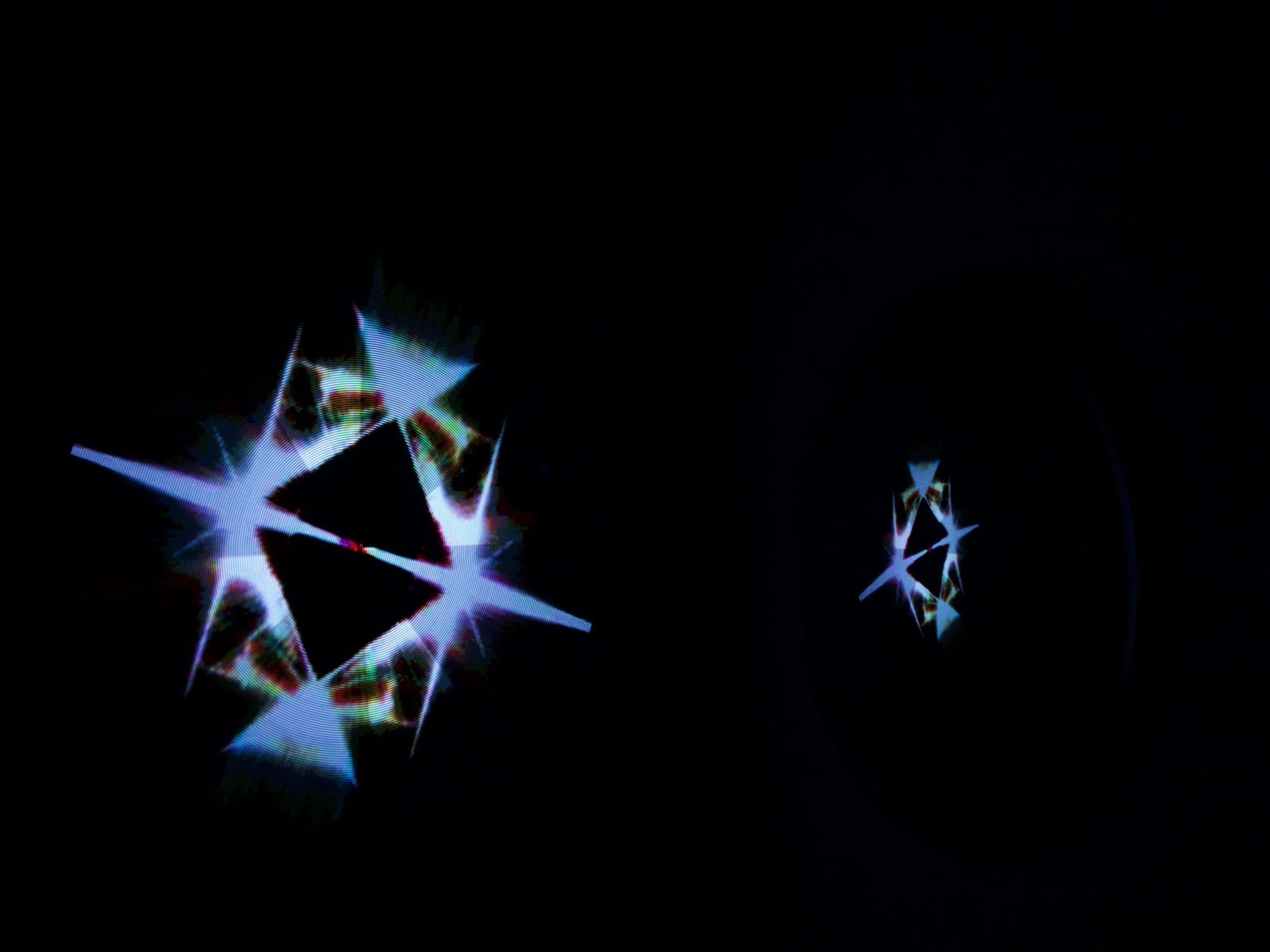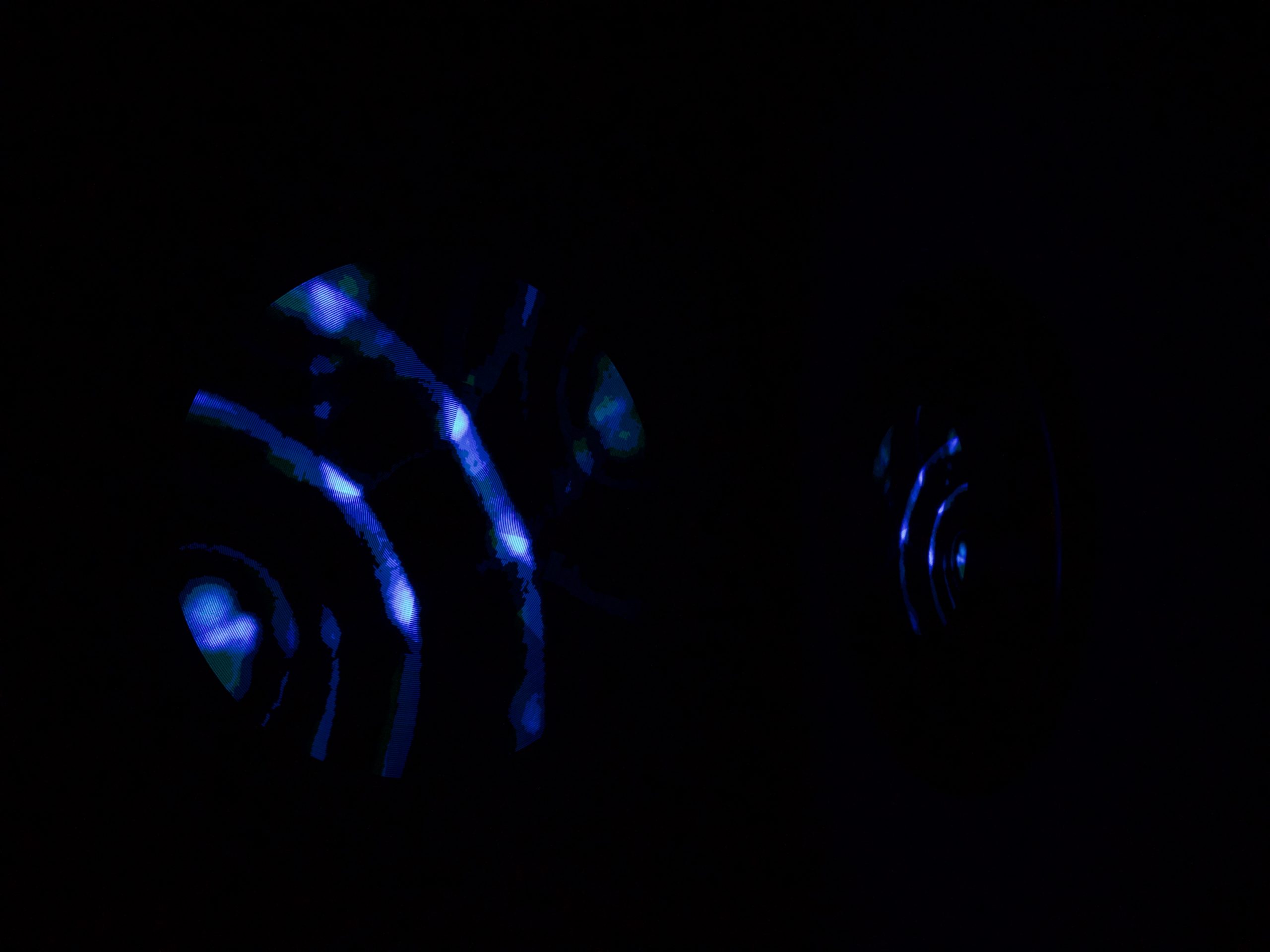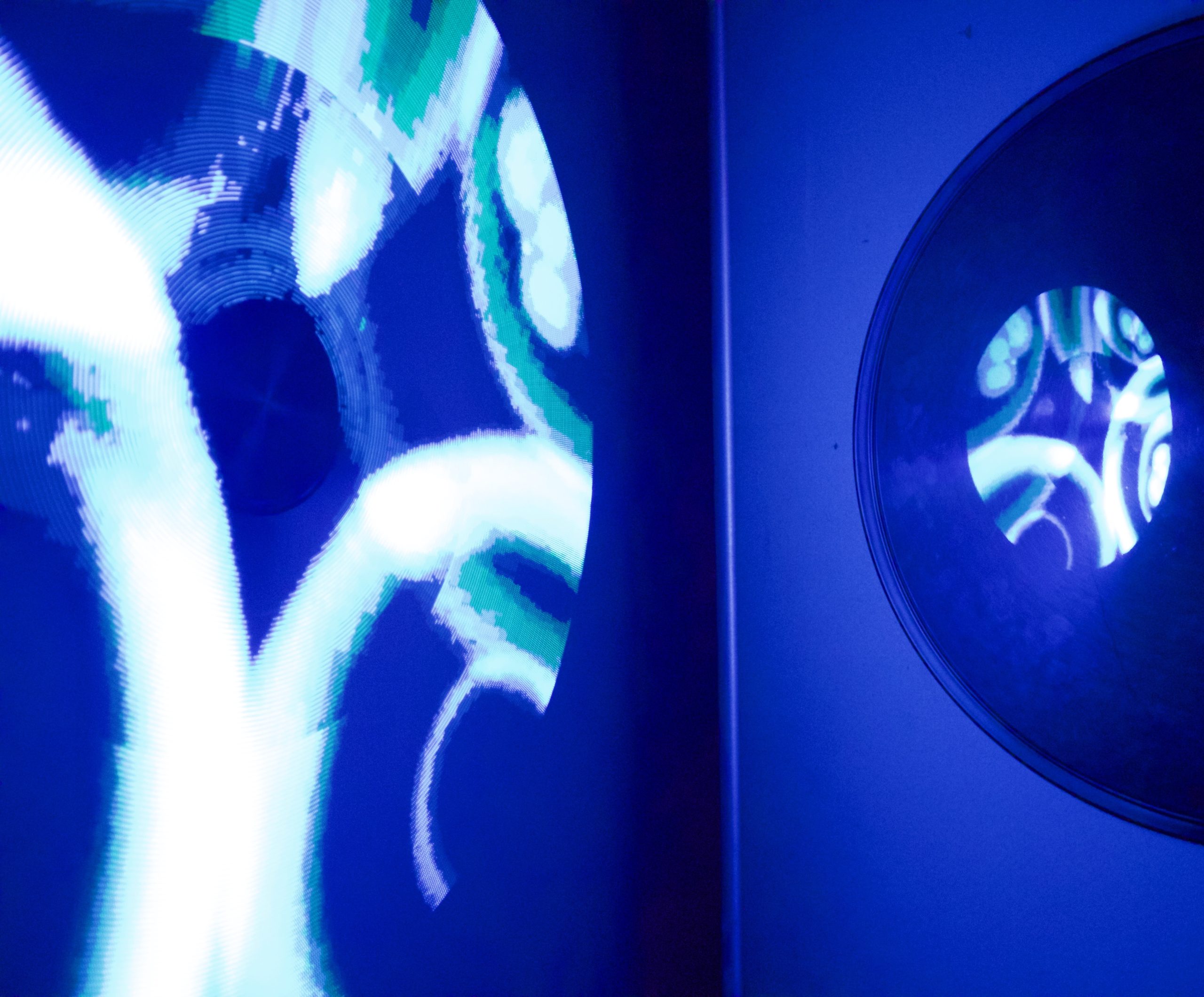
Between Here and There: An audio-reactive installation exploring the unstable space between self-image, perception, projection, and reflection
Thesis Faculty:
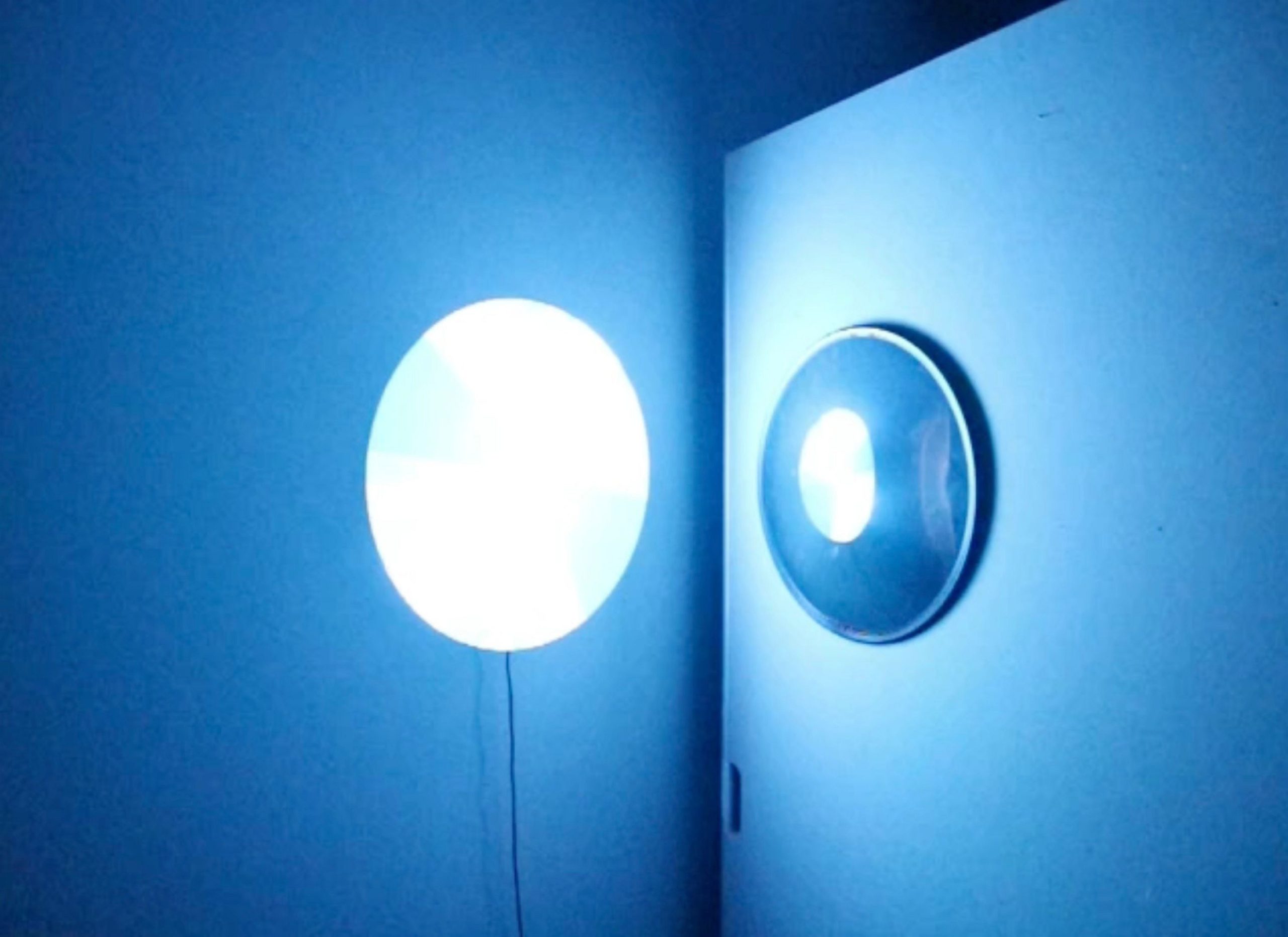
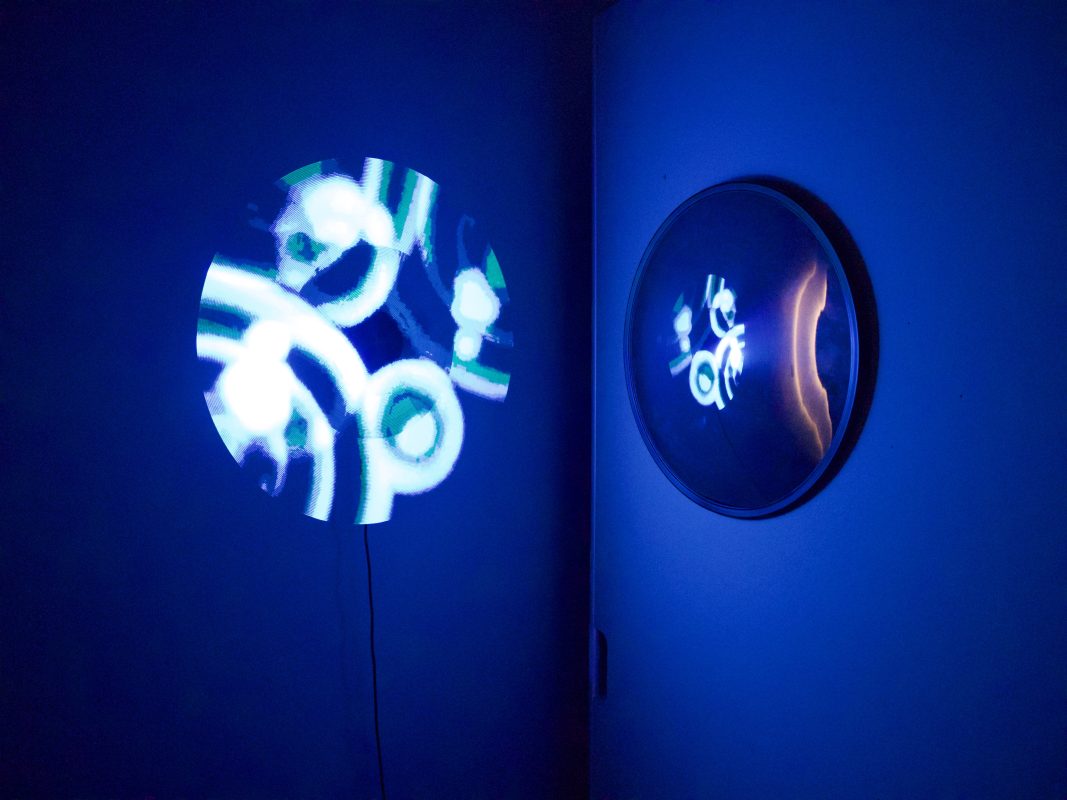
Richard The, Jesse HardingUsing LED, fisheye mirror, soundscape, and spatial reflection, the work places the viewer between two visual systems: one that projects an image outward, and one that returns an image back through distortion.
Between Here and There is about how a slight shift in position can change what becomes visible.
In the installation, “here” is the viewer’s physical position in the room, while “there” exists inside the mirror: a reflected version of the space that changes depending on where the viewer stands. The projected form may remain constant, but the reflection never fully settles. As the viewer moves, the relationship between the body, the projection, and the mirror shifts, creating a new image each time.
The work gives the viewer agency through movement. Nothing has to be touched or controlled directly. Instead, the experience changes through small adjustments: stepping closer, moving to the side, standing still, or looking again. What appears stable from one angle becomes distorted from another. What feels centered in one moment can disappear or bend in the next.
Rather than presenting a single fixed image, Between Here and There creates a space where perception is always in motion. “Here” stays grounded in the viewer’s body and location, but “there” is unstable, reflected, and dependent on perspective. The installation asks viewers to notice how much of what they see is shaped not only by the object itself, but by where they are standing in relation to it.
This shift in perspective becomes the central condition of the work. The viewer does not change the object itself. They change the conditions of seeing it. The hologram fan, fisheye mirror, LED light, sound, and audio-reactive visuals work together to create a perceptual environment where the image is never fully singular. It appears directly, returns through reflection, bends through the mirror, and changes again through the viewer’s movement.
How much of what we understand is shaped by where we stand?
The installation is not built around a fixed answer or a complete image. It is built around a relationship. The hologram appears as a floating form made from speed, light, rotation, and illusion. The mirror reflects that form, but also distorts it. The viewer stands between the two, moving through a space where seeing becomes active. Every position creates a different version of the work