Anti-bias Training Tool for Capital Allocators

An experimental training platform for early-stage capital allocators that improves venture evaluation at the pre-seed and seed stages, reduces bias in pitch decision-making, and supports more accurate capital allocation to increase investor returns.

This project addresses a persistent market inefficiency in early-stage investing. At the pre-seed/seed stages, investors often lack sufficient performance data and rely on gut instinct, pattern recognition, and heuristics. Behavioral economics shows that these conditions heighten affinity bias and other cognitive shortcuts, leading to distorted decision-making and missed investment opportunities. Despite strong evidence that female-led startups generate higher revenue efficiency and competitive returns with less capital, they receive under 2% of venture funding.

At the same time, AI tools are increasingly embedded in startup evaluation and risk assessment. When trained on biased historical data, these systems risk reinforcing exclusion rather than improving decision quality, thereby undermining market transparency and integrity. This creates an opportunity to apply rigorous, evidence-based research to redesign how early-stage investment decisions are supported and to develop AI-enabled tools that strengthen financial literacy, improve signal quality, and enable better capital allocation.
Project Description

Problem

Female founders receive < 2% of VC funding despite generating higher revenue per dollar invested. Research shows investors ask men promotional questions (growth, potential) and women preventative questions (risks, obstacles)—creating systematic disadvantage unrelated to business quality. (Dr Dana Kanze, We Ask Men to Win and Women Not to Lose: Closing the Gender Gap in Startup Funding) 

Target users

Capital allocators seeking to improve their returns on investment (ROI) while they reduce unconscious bias in their evaluation practices.

Core solution

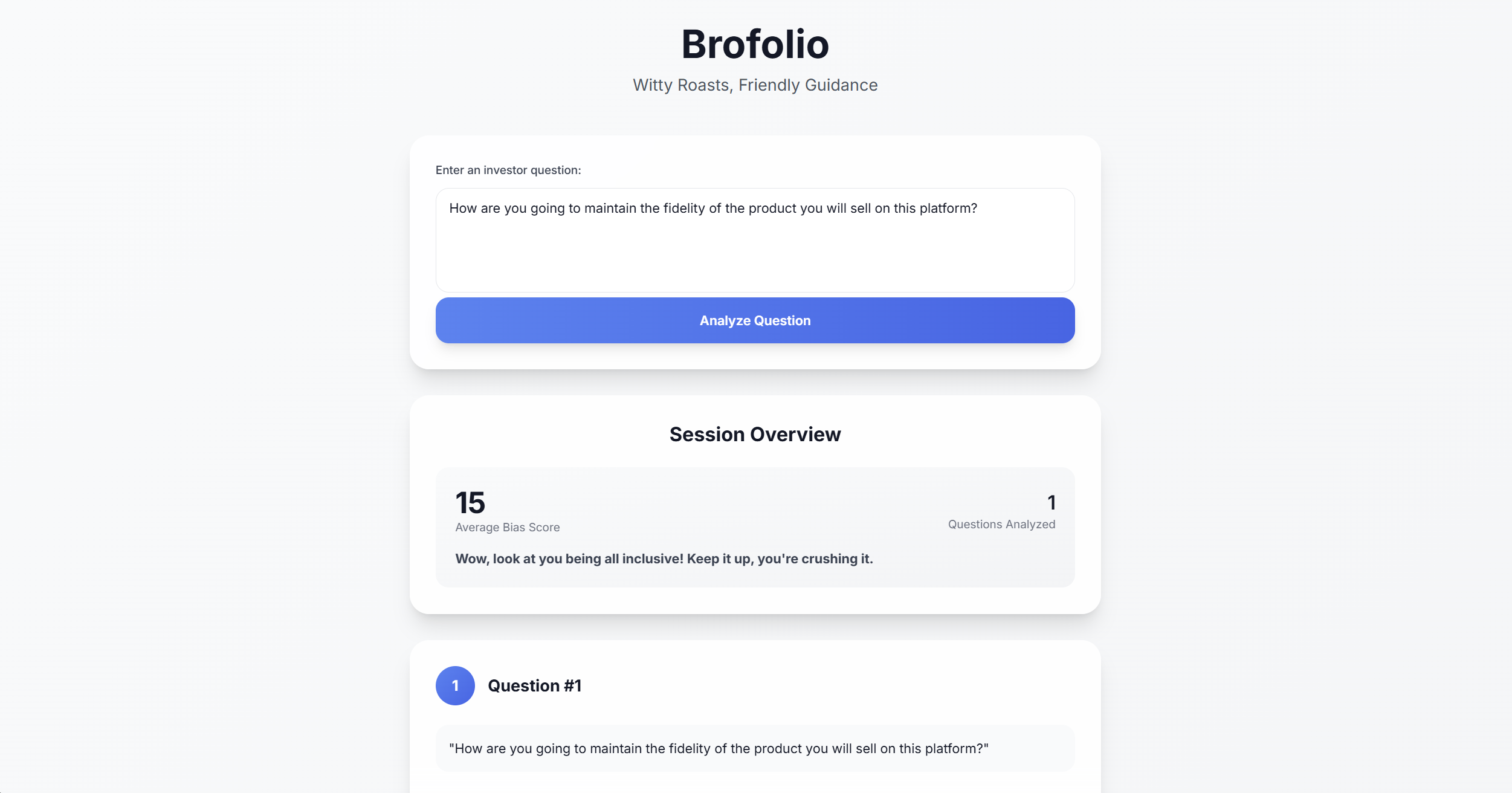
A within-subjects research design where investors become their own control group. The platform, Brofolio analyzes submitted questions for promotional vs. preventative framing, maps investment decisions and founder perception ratings, then delivers personalized “BroFolio Score” reports combining humor with actionable coaching to make abstract bias concrete and undeniable.

ITERATION 2 (SPRING 2026)

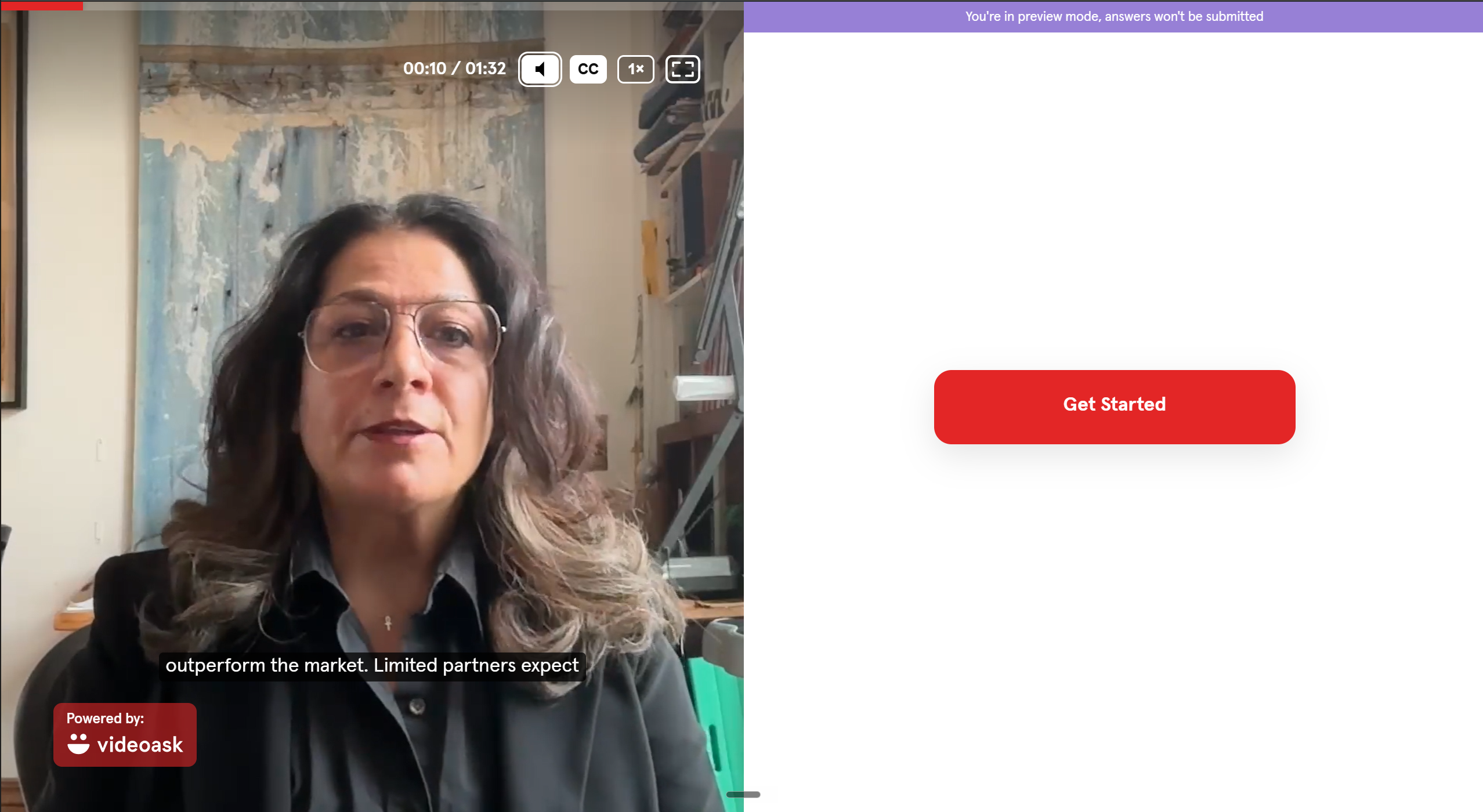
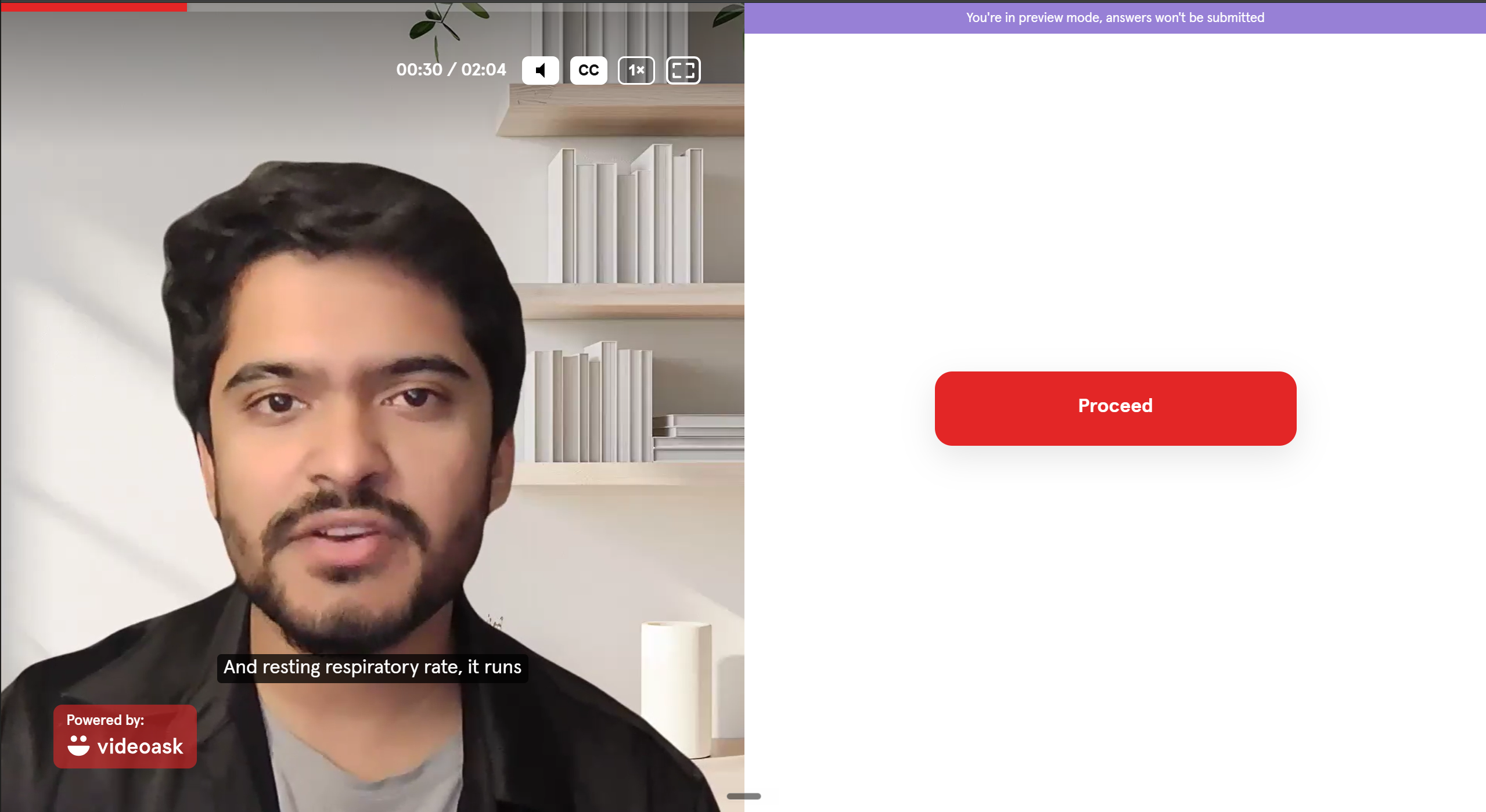
The second iteration came in the form of an asynchronous, scalable digital experiment. The goal was to test gender bias in VC investment decisions using pre-recorded founder pitch videos removing the dependency on live founder presence and enabling open-source, repeatable testing.

This iteration was presented at the Management & Social Justice Conference at the Parsons School of Design in May 2026

Tools used

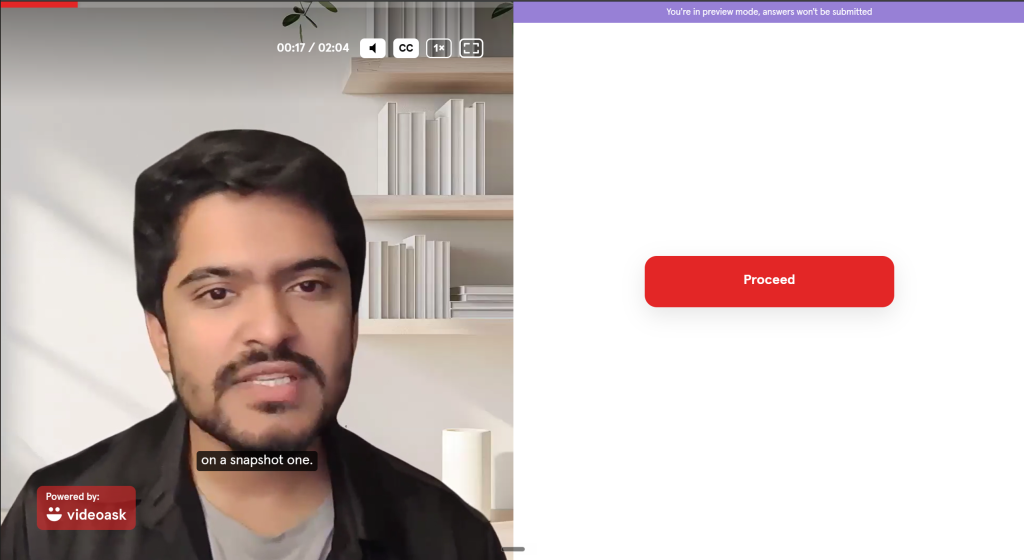
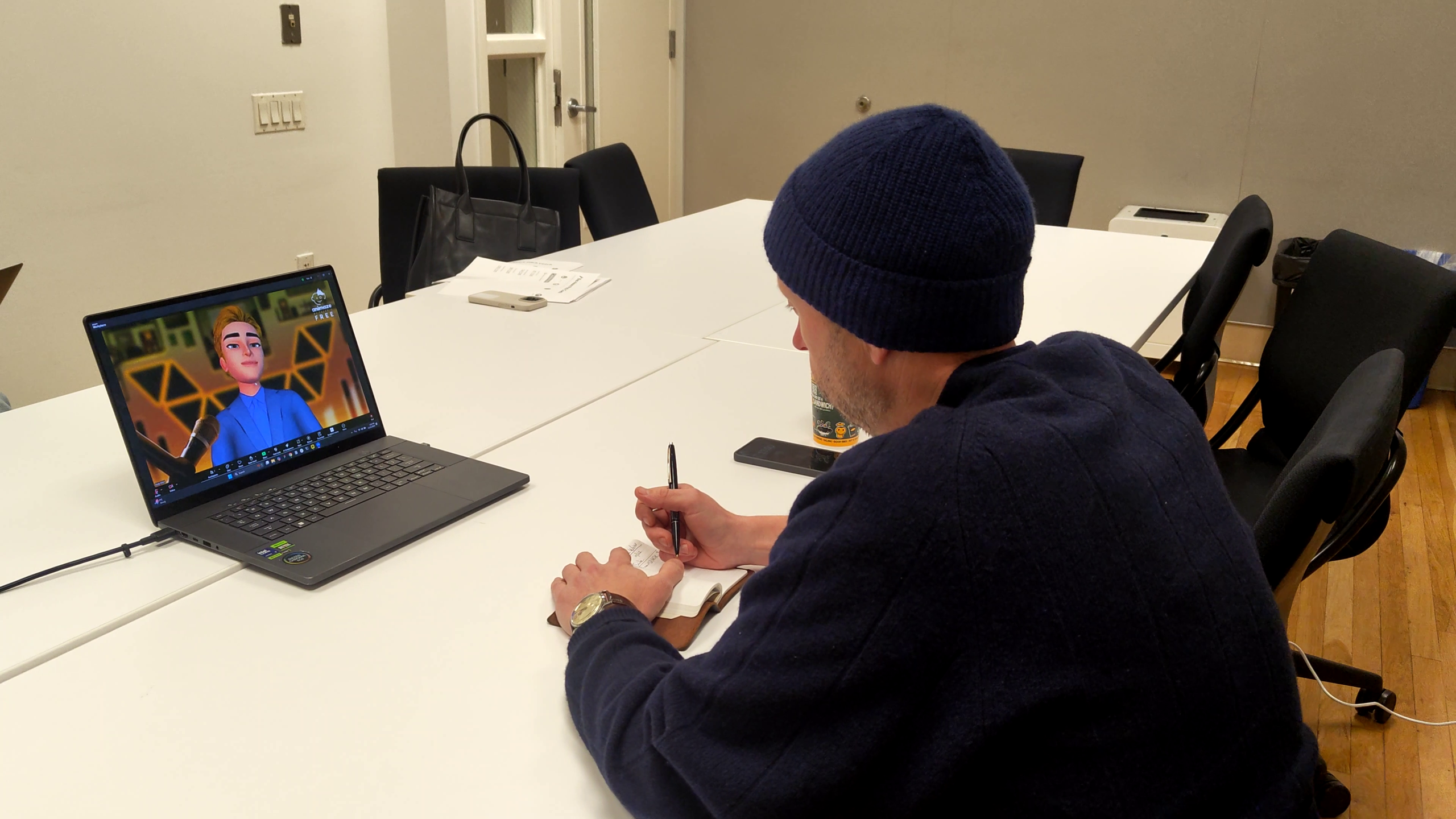
VideoAsk for founder pitch collection, VideoAsk for VC review & data collection, HeyGen for anonymizing plain founder pitches into avatar. 

Credits

Research and Design:
Prof. Rhea Alexander, Director and Founder, Parsons E-Lab
Yash Sonwaney, Research Assistant

Product Development and Advisory:
Maya Georgieva, Senior Director of the Innovation Center, XR AI, and Quantum Labs
Diana Chalakova , Lab Assistant
Kelly Su, Lab Assistant

Introduction to experiment
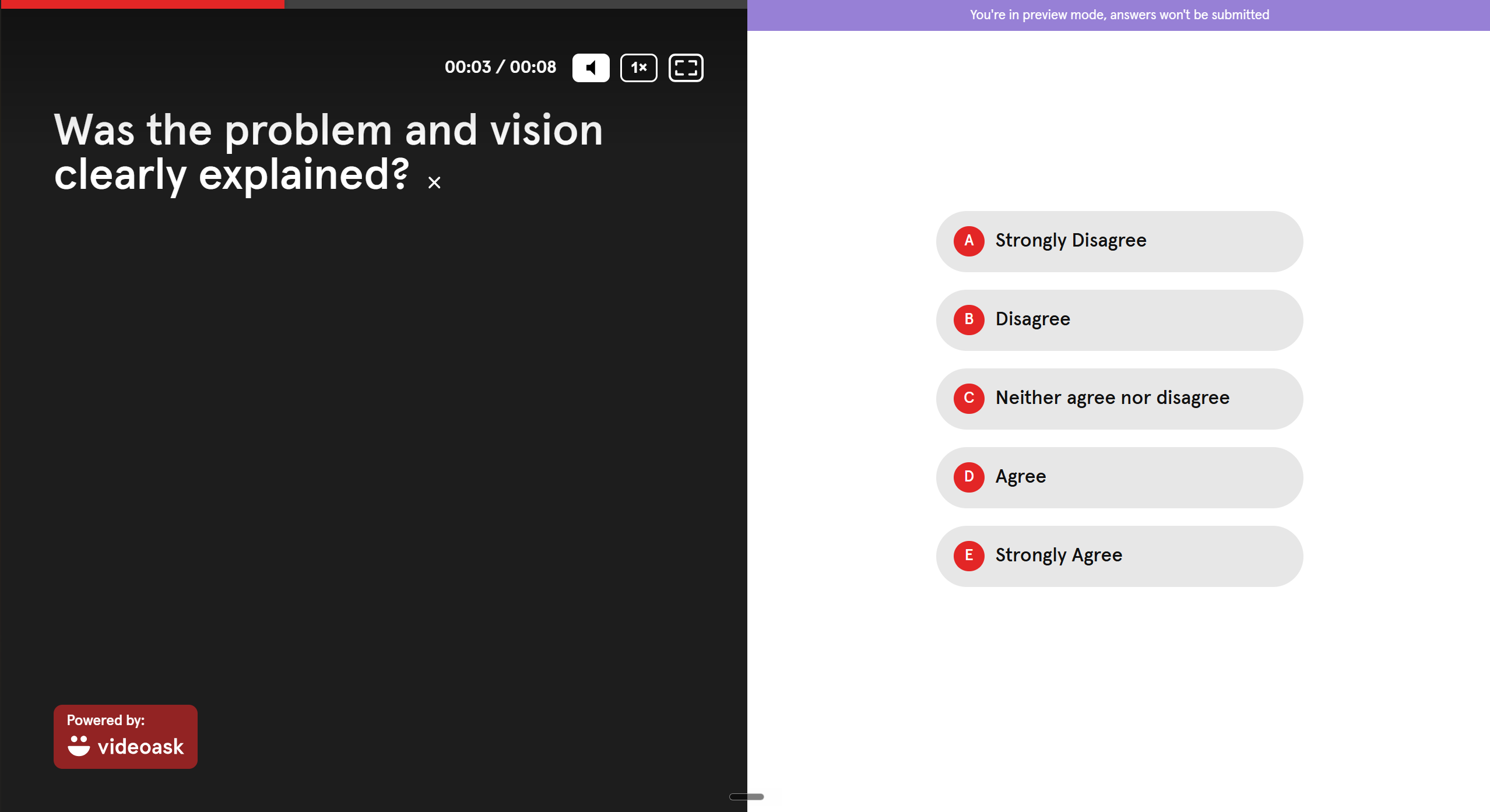
Allocator Questionnaire
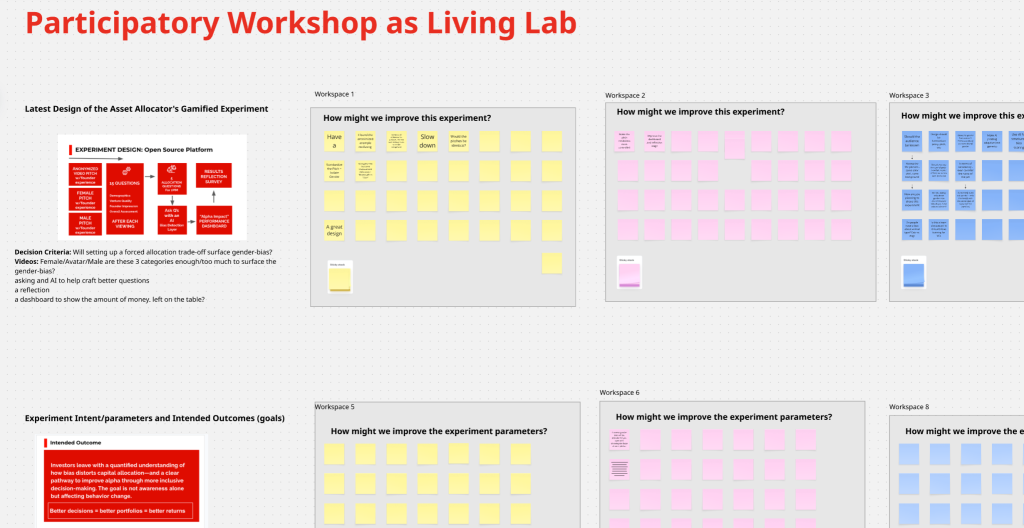
Testing & Feedback Collection at the Management & Social Justice Conference 2026
Iteration 2 Prototype Protocol

Iteration 1 (Fall 2025)

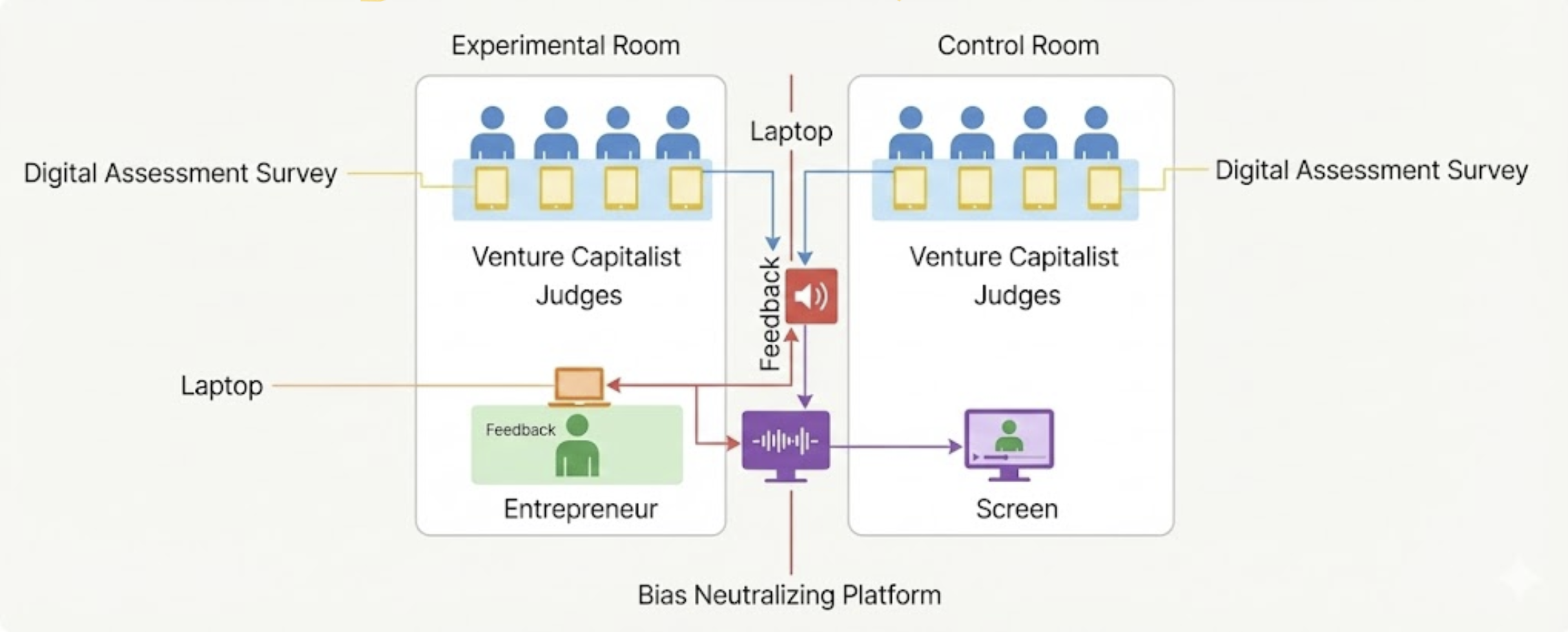
The first iteration used vibe-coded prototypes and anonymization plugins in Zoom and was tested through a two-room in-person experience with an applicable control group. 

How it Works

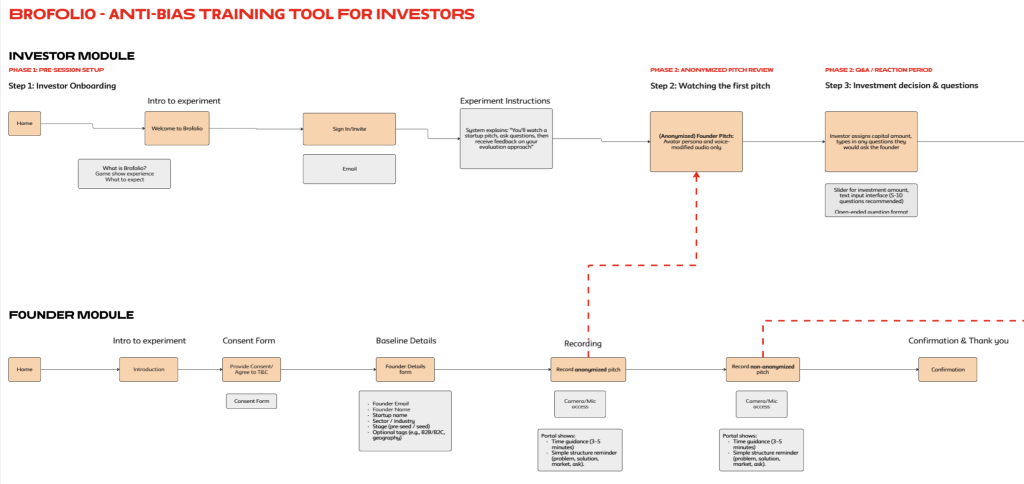
  1. Investors select from a library of video pitches without decks from founders at the pre-seed/seed stage, some of which are anonymized.
  2. Watches two video pitchs by founders
    1. Condition A (Anonymized): No founder photos, 5min talking head video using an avatar and voice modulator, Gender-neutral language, sanitized bios
    2. Condition B (Traditional): 5min “talking head” video, live-action on-camera founder pitching at seed/pre-seed stage
  3. Investor shares their responses to a questionnaire and submits reactions and questions via text input into the AI
  4. Behind-the-scenes AI analysis (using trained AI model API)
    1. Each question is analyzed for: Promotional focus (growth, opportunities, strengths, vision) and Preventative focus (risks, concerns, obstacles)
    2. Bias indicators (disproportionate scrutiny, personal attribute vs. business questions)
  5. Investor completes a comprehensive survey measuring:
    1. Investment decisions: Likelihood (1-7), Yes/No/Unsure, check size, portfolio allocation
    2. Founder perceptions: Confidence, knowledge, resilience, leadership, data presentation, coachability, Q&A effectiveness
    3. Risk assessments: Market, execution, team, technology, funding risks
    4. Qualitative responses: Strongest/weakest aspects, additional info needed, founder-opportunity fit, desired co-founder attributes, 3-word founder description
  6. BroFolio Bias Report is presented with:
    1. Overall and per-question bias score
    2. Semi-mean humor opening (attention-grabbing roast)
    3. Warm guidance (constructive coaching)
    4. Visual charts showing promotional vs. preventative ratio
    5. Question breakdown with classifications
    6. Actionable recommendations

Designed with behavioral economists and neuroscientists to create self-awareness andan open mindset for improvement through subtle humor and empathy.

Stage

Iteration 5: developing the tool on a server to collect and build a library of seed/pre-seed pitches

Tools used

Animaze and Zoom for pitch obfuscation, Vibe-coded entirely using Claude Code.

Credits

Research and Design
Prof. Rhea Alexander, Director and Founder, Parsons E-Lab

Product Development
AI Product Design and Development:
Yash Sonwaney, Research Assistant

Video & Voice Anonymization: 
Rudy Ofori, Research Assistant

Bias Report
Prototype Testing Workshop
Testing Protocol