Avery Pasold
Life After Death
Prompt: Identify and research an aspect of an artist or designer’s work that intrigues you (this could be their working process, the materials they use; their concepts or ideas; their audience; their research; their use of color, their political or social concerns, etc.) Select one work by your chosen artist that best embodies your interests and their creativity. Propose and make your own work in response, and “curate” it into an exhibition.
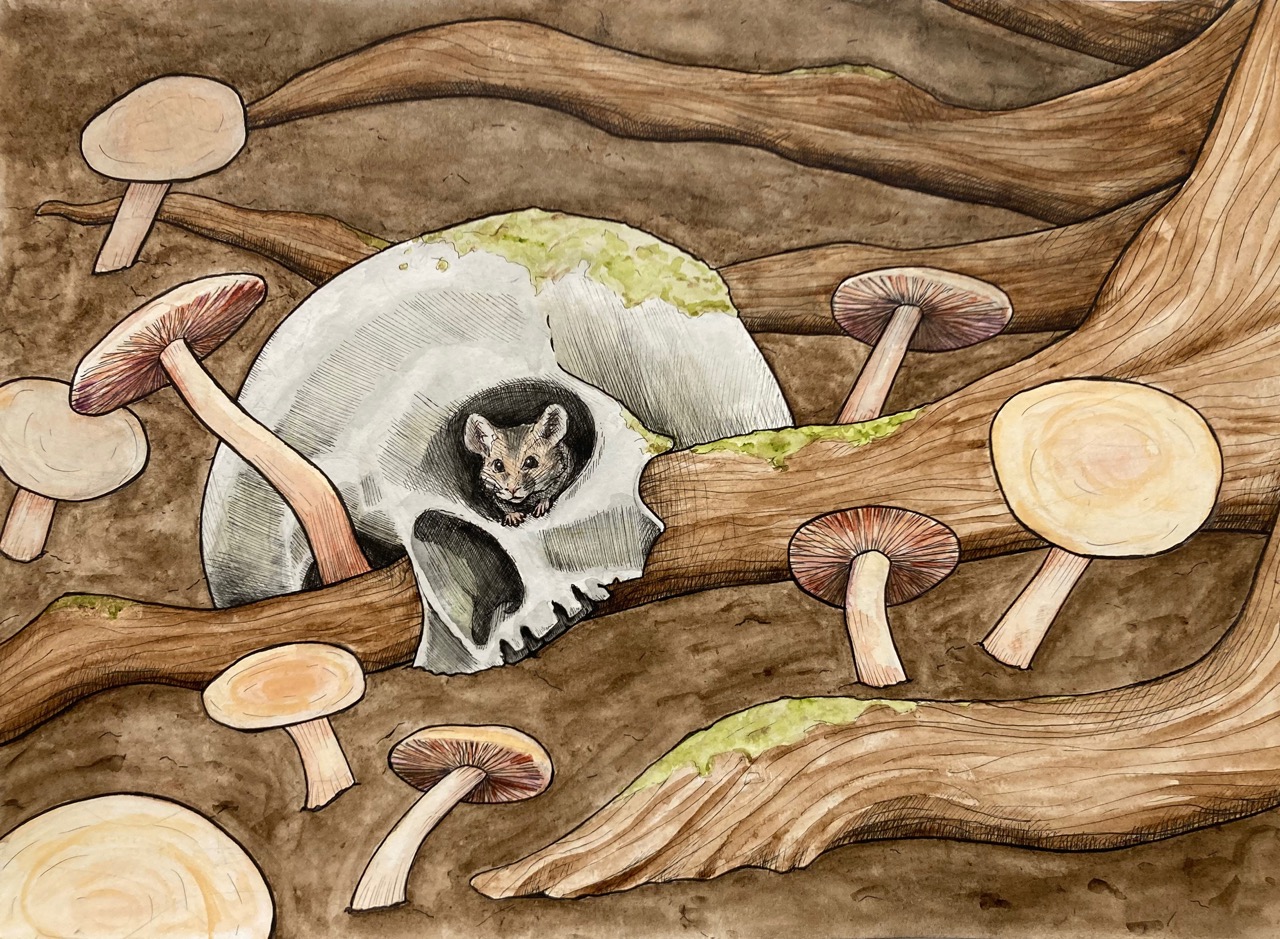
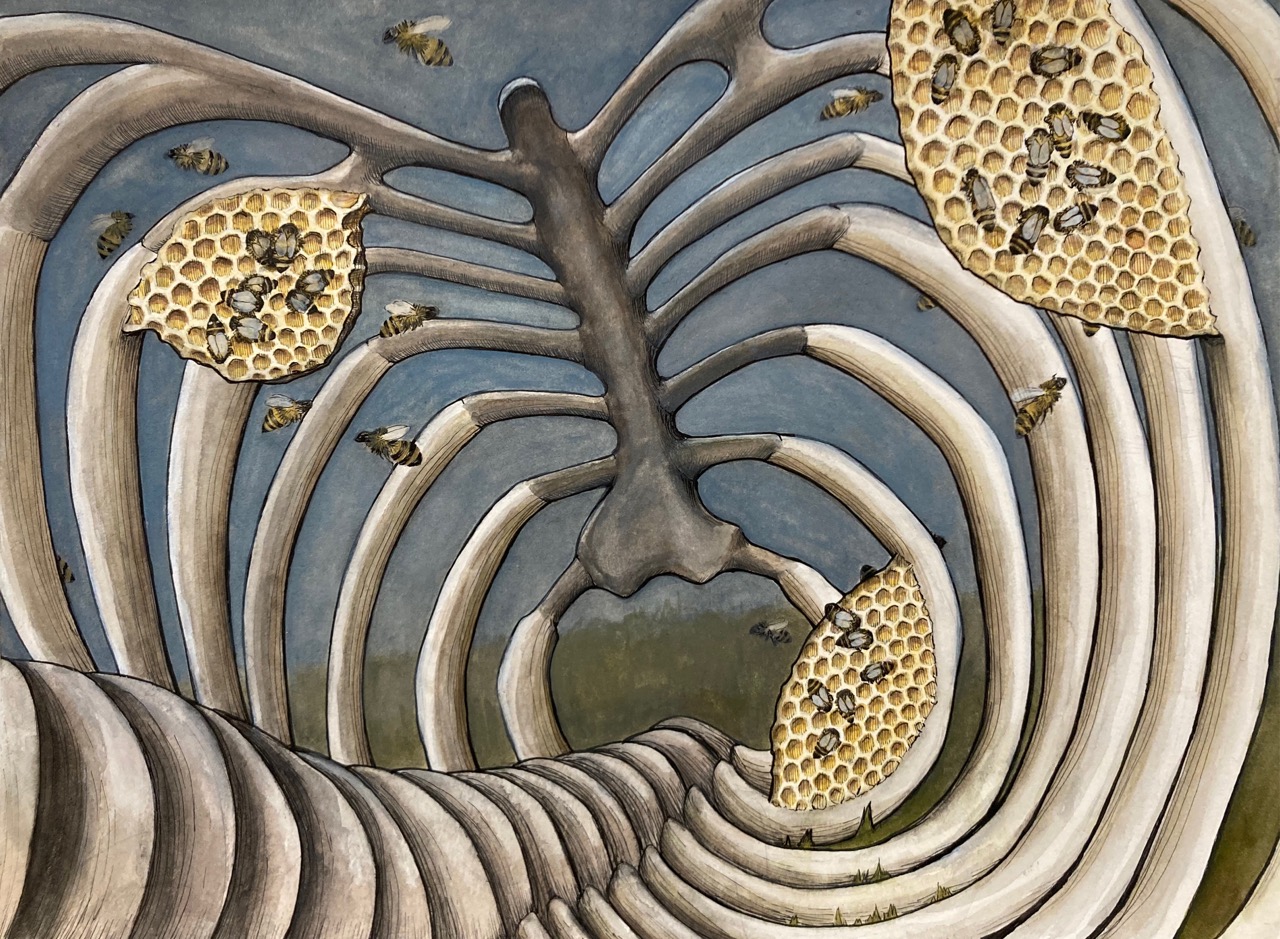
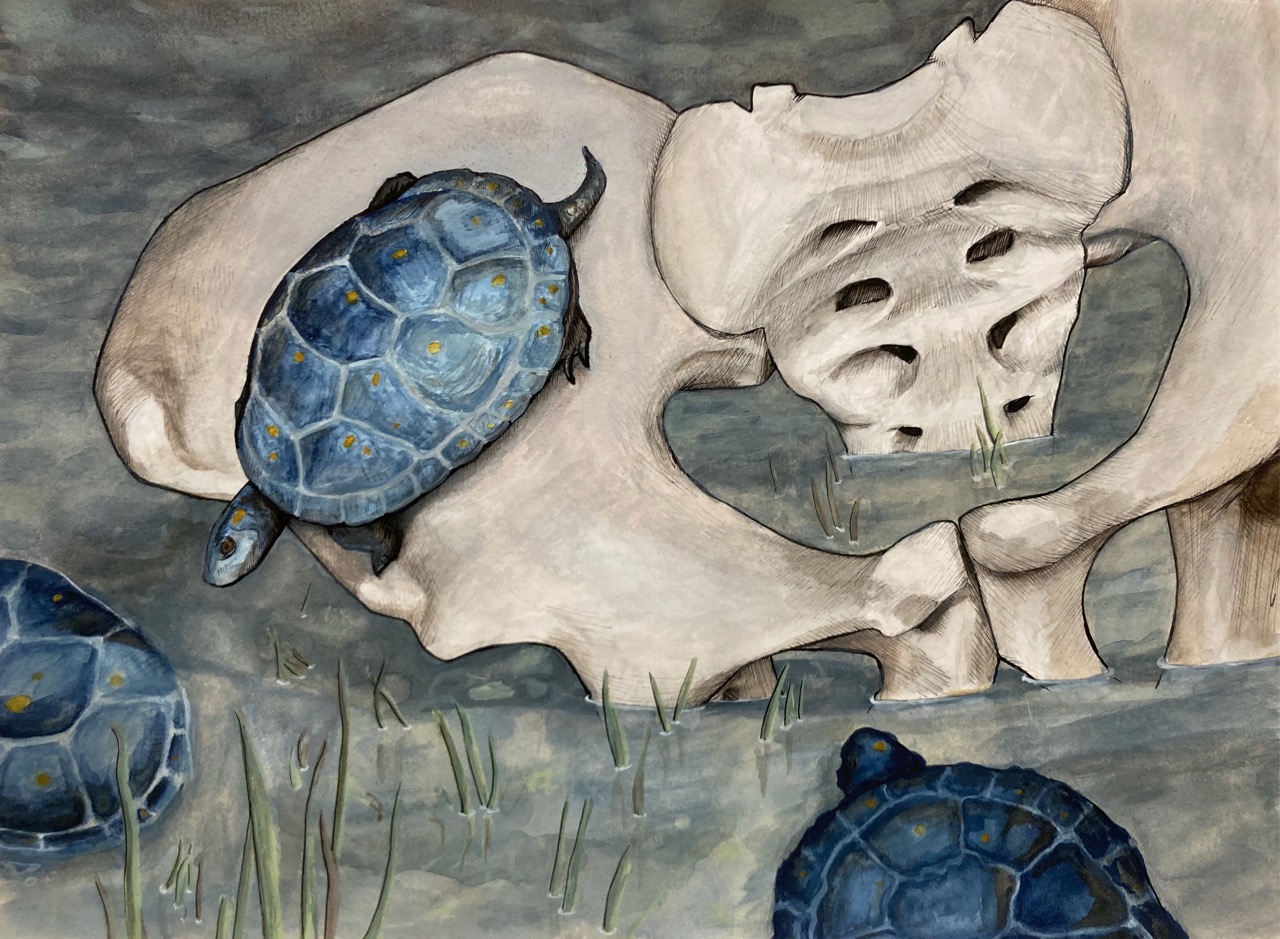
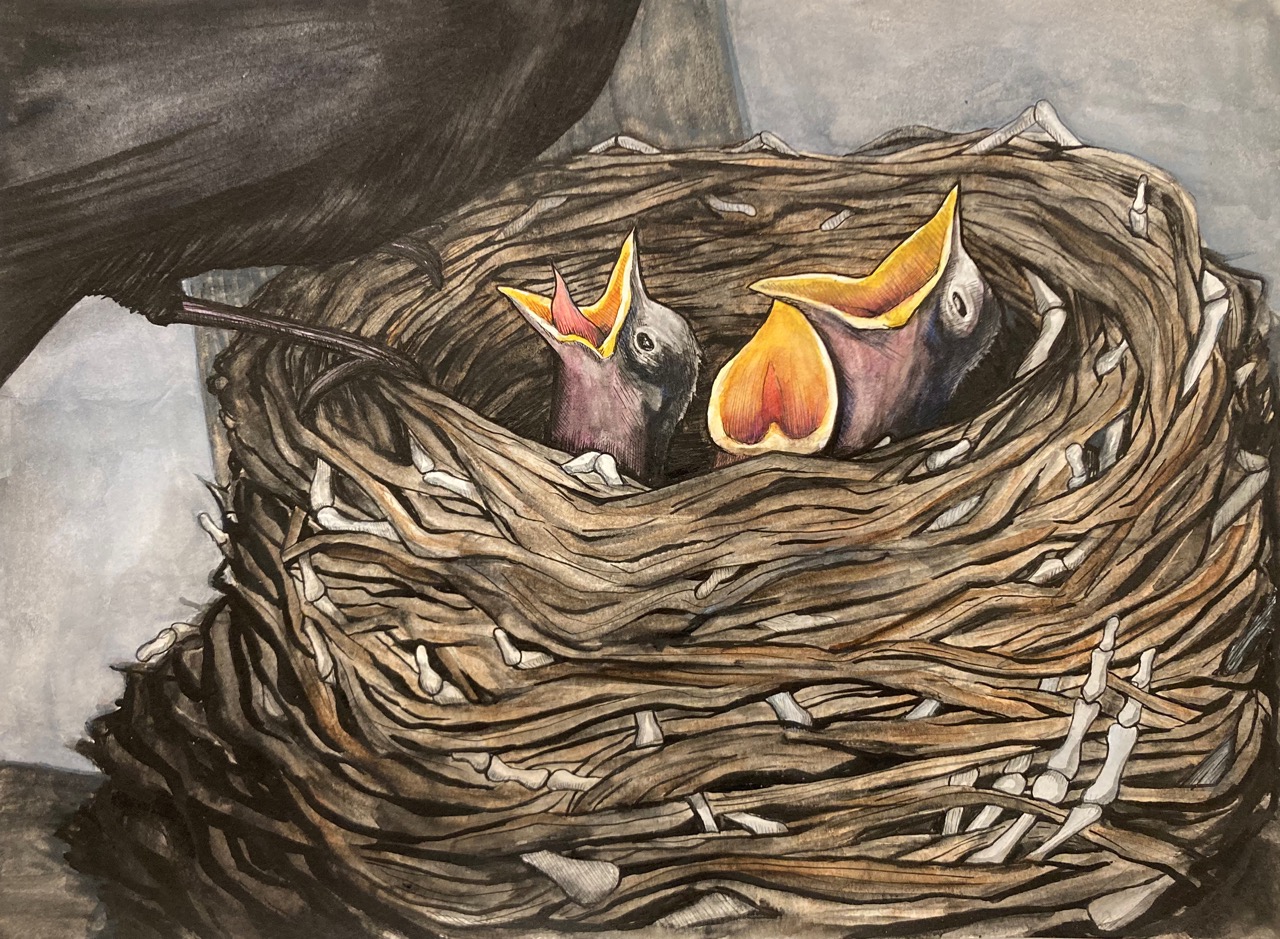
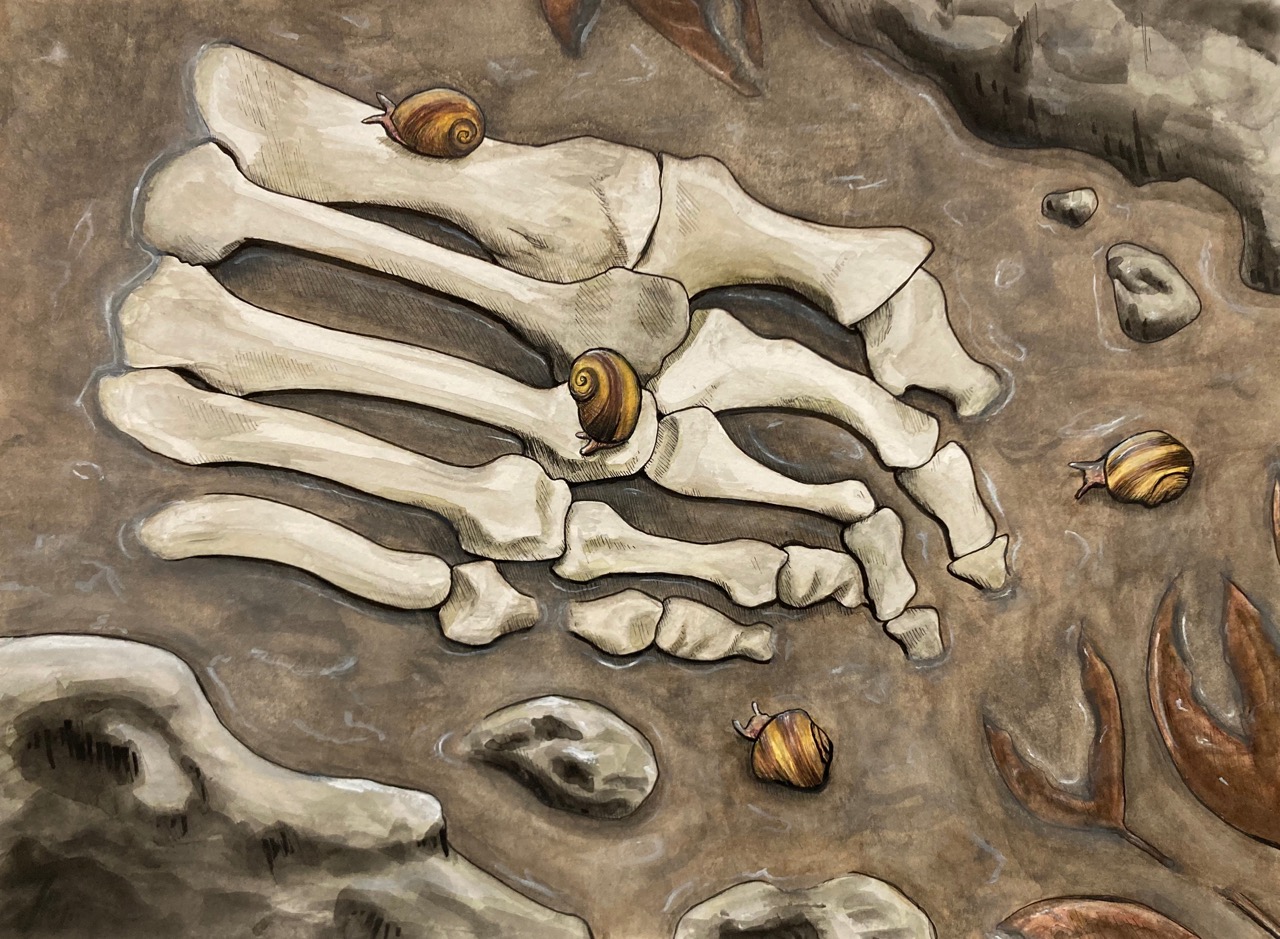
In these works, I explored how life and death co-exist, despite being two seemingly opposite states. This theme has been prevalent throughout art history, such as in memento mori art and vanitas paintings. However, I aimed to approach the theme from a different angle. Rather than reminding the viewer of impending death, I wanted to evoke contemplation of how dying can prompt life. To communicate this theme, I juxtaposed imagery of animal, plant, and fungi life with that of human bones. For instance, the first work I created depicts a human skull sunken into the earth, surrounded by tree roots and fungi and with a mouse peeking out of the eye socket. The human skull is not just a symbol of human death, but also a part of the habitat that allows for life. These illustrations are in conversation with Cecily Brown’s 2010 series Aujourd’hui Rose, monotypes in which she explored the concept of life and death through double images of skulls and young girls. After seeing her modern interpretation of such a longstanding theme, I was inspired to consider how I would approach it. Additionally, I was taken with her ability to create art that both welcomes and unsettles the viewer, a contrast I aim to achieve in my own work. Many people, especially those in the city, live their lives separate from the natural world, despite relying heavily on it. I want these works to act as reminders that we are a part of nature, and will be reclaimed by life after our deaths.